Asteraceae Allergy: Why "Natural" Cosmetics Can Still Be a Problem
Chamomile, arnica, calendula, and echinacea all belong to one enormous plant family with a real, well-documented allergy risk -- and the connections between them go beyond skin contact alone.
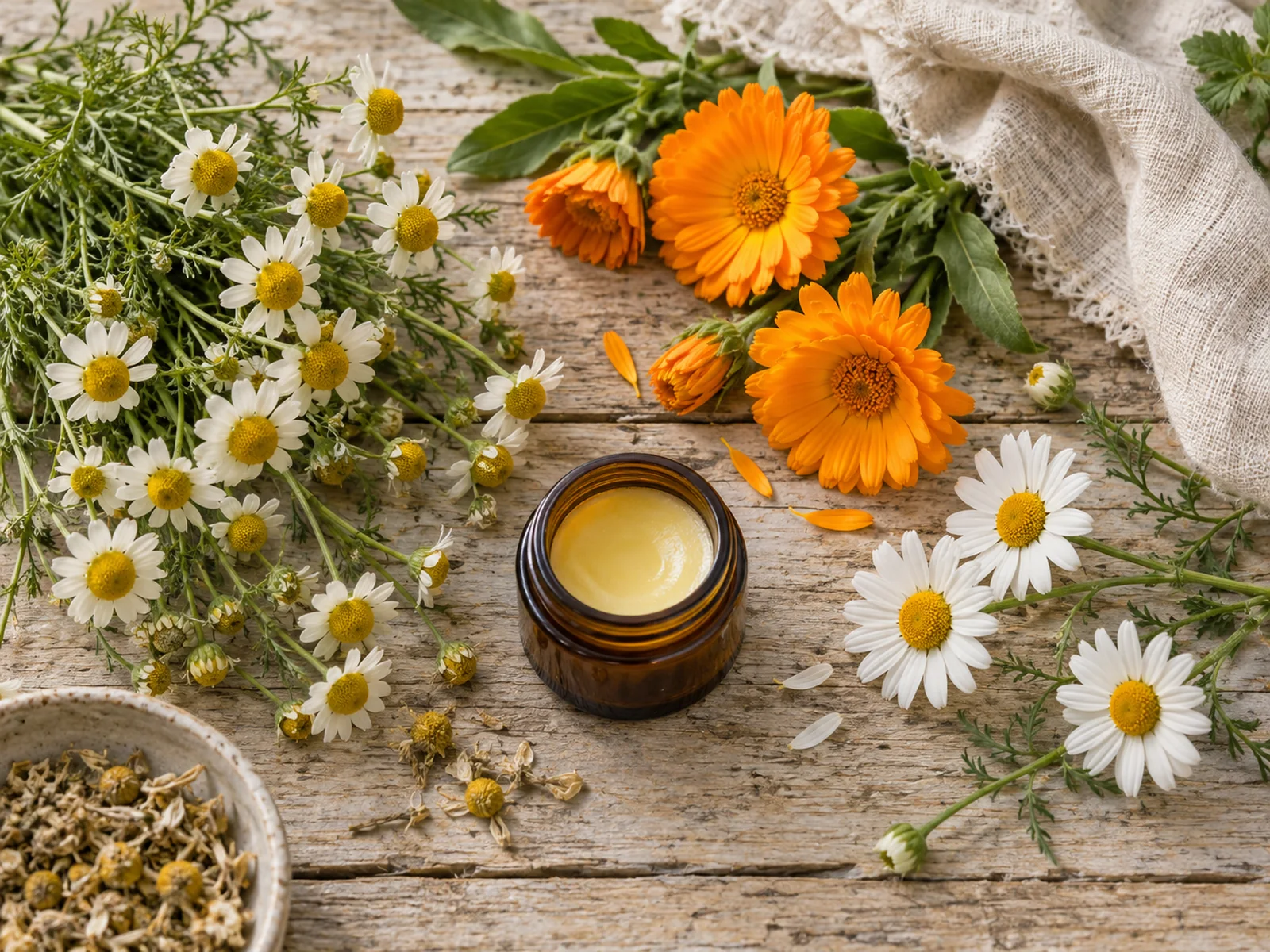
This library's chrysanthemum and primrose piece introduced sesquiterpene lactone allergy, but chrysanthemum is just one member of a genuinely enormous plant family: Asteraceae, also called Compositae, accounts for roughly 10% of all flowering plant species and includes many plants marketed as gentle, natural ingredients in skincare and herbal products.
A much bigger family than one flower
Beyond chrysanthemum, Asteraceae includes chamomile, arnica, calendula (marigold), echinacea, feverfew, yarrow, tansy, dandelion, and even ragweed, lettuce, and chicory -- plants that show up in cosmetics, herbal supplements, teas, and, in the case of lettuce and chicory, food. Standard patch-test panels for this allergy family typically include a "Compositae mix" made from German chamomile, yarrow, tansy, arnica, and feverfew extracts, reflecting how routinely this allergy shows up in clinical practice.
It isn't only a skin-contact issue
People with seasonal allergies to weed pollens, particularly ragweed, can also experience reactions to herbal products made from cross-reactive Asteraceae plants such as chamomile, calendula, and echinacea -- an oral or systemic angle distinct from topical contact allergy. There's also a documented case of occupational contact urticaria from handling both lettuce and chicory, showing the cross-reactivity extends into food-handling contexts as well.
What this means practically
Someone with a confirmed Asteraceae/Compositae allergy is generally advised to be cautious with the whole family of related products, not just the specific plant that caused a known reaction -- a "gentle, natural" label on a chamomile or calendula-containing cream doesn't exempt it from this cross-reactivity risk. For someone with seasonal ragweed or related weed-pollen allergies who hasn't had a topical reaction before, it's still reasonable to patch test new herbal skincare products, particularly those prominently featuring chamomile, arnica, calendula, or echinacea.
If a reaction happens
A rash appearing after using a new botanical product -- especially one containing any Asteraceae ingredient -- is a reasonable prompt for patch testing, covered in more detail elsewhere in this library, to identify the specific allergen and understand which related plants and products to avoid going forward.