Birch Bark: A Traditional Material Central to Anishinaabe Life
Birch bark isn't a food, but it's one of the most versatile traditional materials in the Great Lakes region -- and harvesting it correctly is its own real skill.
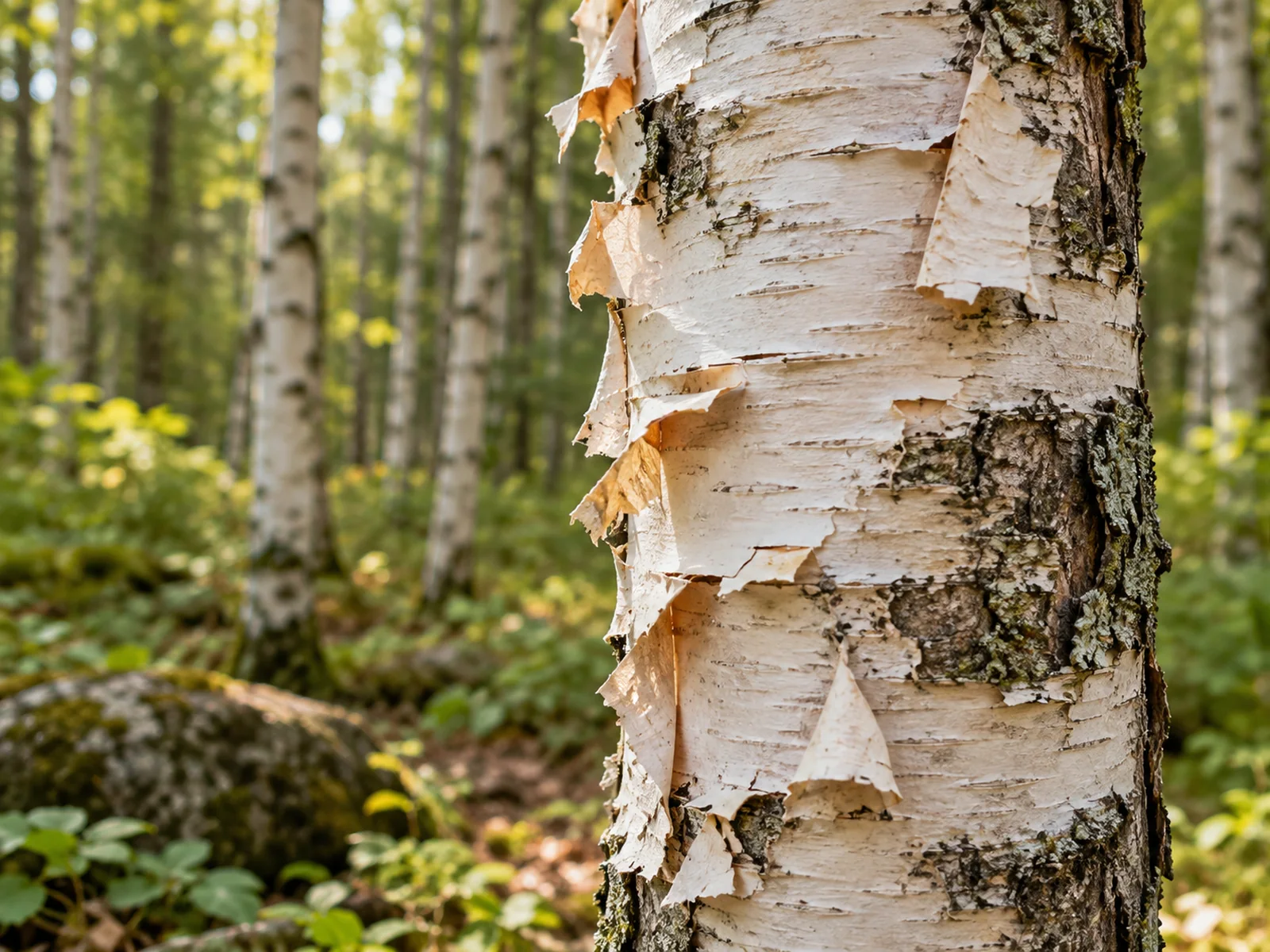
Birch bark, called wiigwaas in Ojibwe, is not a food, but it is one of the most versatile and essential traditional materials of the Great Lakes region -- used for shelter, transportation, containers, and art among Anishinaabe communities for generations, and still actively used and taught today.
Harvest timing is its own real skill
According to Native Harvest, an Ojibwe-run organization and a subdivision of the White Earth Land Recovery Project, the traditional time to gather birch bark is late June into early July -- described simply as "when the flies start biting." During this window the bark can be peeled from the tree while sap is actively running, which allows the bark to separate cleanly and gives the tree its best chance to heal and regrow bark without permanent damage.
What birch bark was actually used for
Birch bark's traditional uses were genuinely broad: covering wigwam dwellings, constructing canoes (wiigwaas jiimaan), making watertight containers and cooking vessels, and in burial practices. A distinct artistic tradition called birch-bark biting -- perforating paper-thin sheets of bark to create pictographic designs -- was practiced by Ojibwe, Cree, and other Algonquin peoples, including for scrolls used in the Midewiwin (Grand Medicine Society) ceremonial tradition.
Not just any birch bark works
Paper birch (also called white birch) is the species genuinely suited to canoe and container construction. Gray or wire birch, sometimes also loosely called "white birch," is not suitable for the same craft work despite the similar common name. Sweet or black birch is a different species entirely, valued instead as a source of wintergreen flavor rather than for its bark.
A living practice, not a museum piece
In 2019, Georgian Bay Anishinaabek Youth led a community birch bark canoe build (wiigwaas jiimaanke) at the Sail Parry Sound Sailing School, guided by experienced Anishinaabek canoe builders from across the Great Lakes region and involving more than 850 participants over 19 days. Projects like this reflect birch bark craft as an actively taught and practiced tradition today, not simply a historical artifact.