Foraging Legally: Land Access, Permits, and Personal-Use Rules
Whether you can legally collect pine cones, needles, or anything else from the woods depends entirely on whose land you're standing on. Here's how to check before you gather.
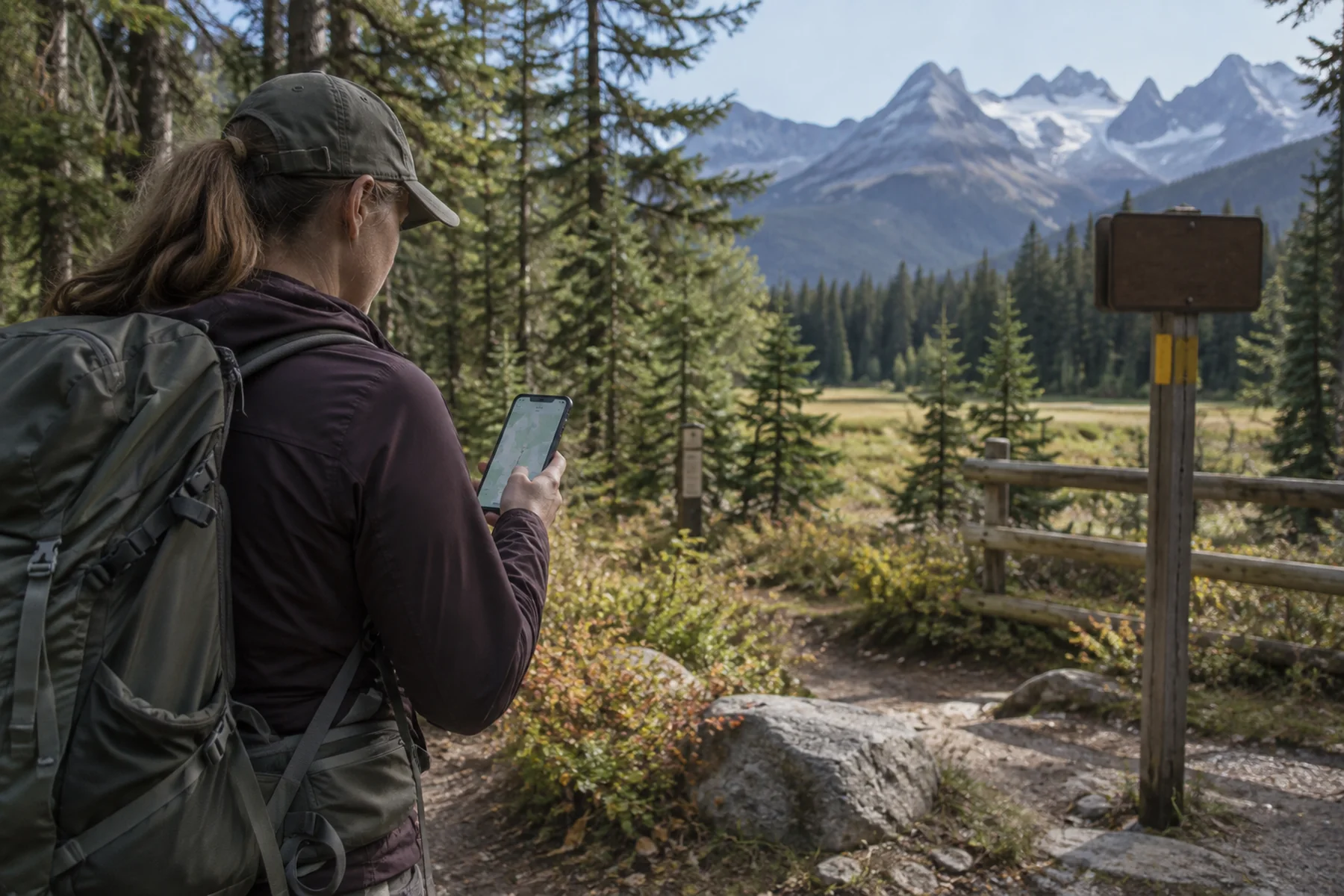
A documented occurrence of a plant, mushroom, or pine cone doesn't establish that it's legal to collect it -- that depends on whose land it's on, how the land is designated, and how much you intend to take. What's perfectly fine on one patch of national forest can be prohibited a few miles away on state park land.
Three legal layers to check
Federal land (national forests, BLM land), state land (state parks, state forests, wildlife areas), and local land (city parks, nature preserves) each have their own rules, and they don't default to the same answer. Municipal parks typically prohibit harvesting outright. State parks vary widely -- some allow picking a handful of edible fruit or mushrooms for personal use with no permit, while others treat pine cones the same as any other natural object and prohibit removing them at all. Federal land, particularly BLM and national forest land, tends to be the most permissive for small-quantity personal use, though this still varies by specific forest unit and district.
BLM and national forest land: generally the most permissive
The Bureau of Land Management generally allows collecting small amounts of plants, seeds, berries, flowers, nuts, cones, and mushrooms for personal use across most of its land, as long as the species isn't federally threatened, endangered, or a BLM special-status species. National forest land follows a similar personal-use pattern -- pine cones in particular are frequently welcomed for family and craft use on forests like the Hoosier National Forest, and fruit, nuts, and mushrooms are commonly allowed in reasonable quantities without a permit. Larger or commercial-quantity collection is a different matter: national forests like the Siuslaw issue Special Forest Product permits for cones, seeds, and berries, with real fees (in the range of 20 to 50 cents per bushel in some districts) and specific rules about designated collection areas and distance from trails, campgrounds, and streams.
What "personal use" actually means
Personal use generally means an amount for your own household consumption or use, not for resale -- often described in practical terms like what you or your household would use within a week. Commercial collection, meaning anything harvested with the intent to sell, almost always requires a separate permit and fee structure, even on land that's otherwise permissive for personal use. Cutting live trees, stripping bark from living trees, or removing rooted plants generally requires a permit even where casual collection of fallen material doesn't.
A practical approach before you collect
Identify what type of land you're on before assuming any rule applies -- a phone call or a look at the managing agency's website (BLM.gov, the USDA Forest Service's site, or the specific state park or forest system's page) is usually enough to get a clear answer for that specific unit. If a permit is required, most agencies make the application process straightforward, often with modest fees for personal-use quantities. On private land, the simplest rule holds regardless of any public-land nuance: if you didn't grow it and don't own the land, ask the landowner before you take anything.