"Fragrance-Free" and "Unscented" Aren't the Same Thing
Choosing fragrance-free skincare is good advice for sensitive or reactive skin -- but the label alone doesn't guarantee an irritation-free product, and "unscented" can be a different, less reliable claim entirely.
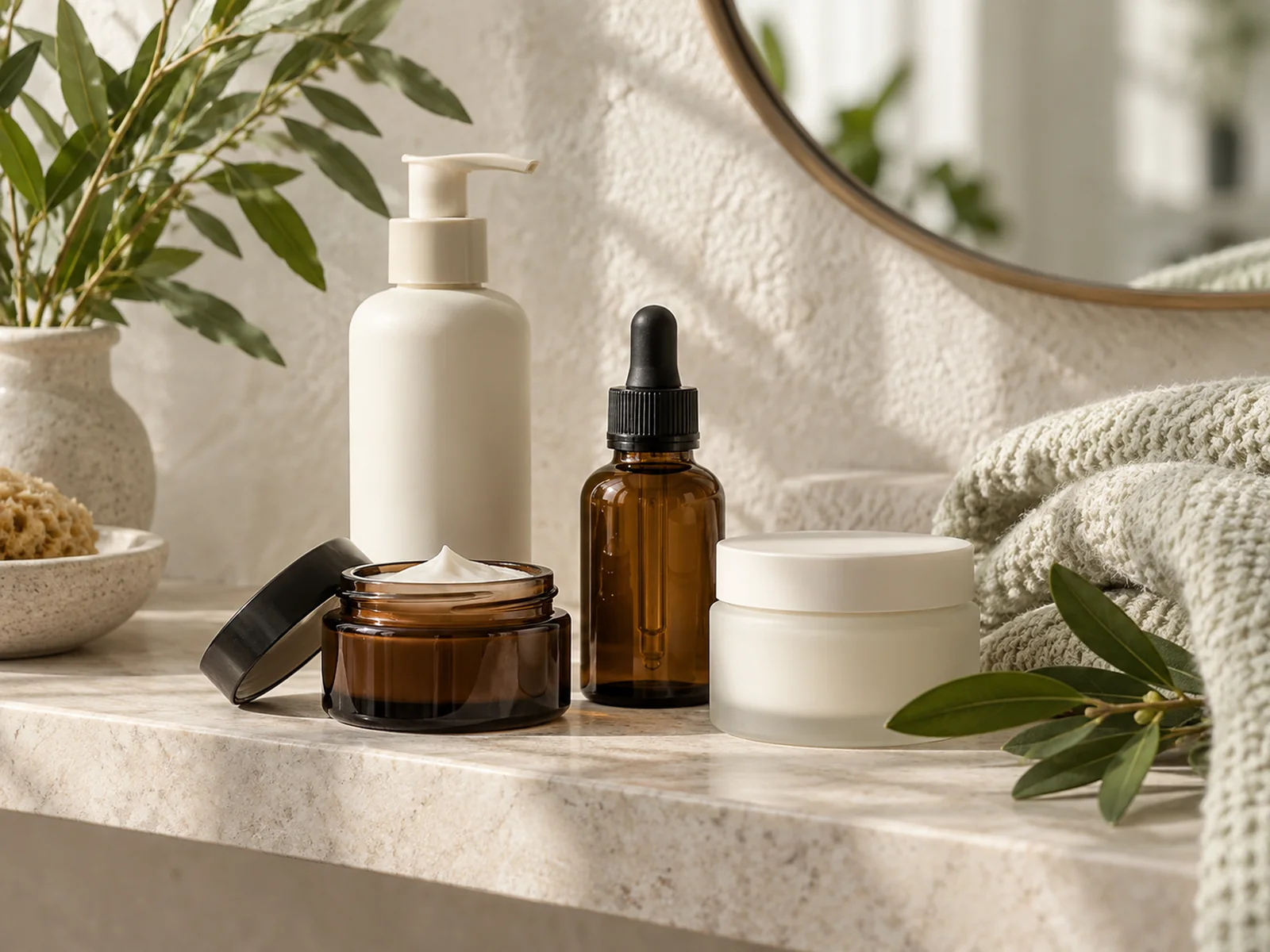
Choosing fragrance-free products is genuinely good, well-supported advice for people with eczema, rosacea, or reactive skin -- fragrance is one of the most common triggers of allergic contact dermatitis from cosmetics and skincare. But the label itself needs a closer look than most people give it, because "fragrance-free" and "unscented" aren't interchangeable, and neither claim guarantees the product won't cause a reaction.
Two different label claims
A genuinely fragrance-free product contains no added fragrance ingredients at all. "Unscented," by contrast, often means a masking fragrance has been added specifically to cover the natural smell of the other ingredients -- the product simply doesn't smell like anything to most people, but that's frequently because a fragrance chemical is doing that masking work. For someone with a true, diagnosed fragrance allergy, an unscented product can still trigger the same reaction a heavily perfumed one would.
Fragrance isn't the only thing that can go wrong
Removing fragrance addresses one common trigger, but it doesn't address every possible irritant in a formula. Preservatives (some of which are well-documented skin sensitizers), harsh surfactants, drying alcohols, and even botanical extracts can still cause irritation or allergic reactions in people with a compromised skin barrier, regardless of whether the product is labeled fragrance-free. This is worth remembering for anyone who has switched to fragrance-free products and is still having flares -- the fragrance may genuinely not be the problem.
A specific trap: "natural" botanical extracts
Botanical extracts marketed as gentle or natural -- chamomile is a common example -- are still capable of triggering a genuine allergic reaction in someone already sensitized to related plants, as covered elsewhere in this library's discussion of chrysanthemum and Compositae/Asteraceae allergy. A product can be entirely fragrance-free and still contain an ingredient that causes a reaction for a specific person.
A practical approach
For sensitive or reactive skin, look for products that are genuinely fragrance-free (confirmed on the ingredient list, not just the front label), with a short ingredient list generally favoring fewer potential triggers. If a fragrance-free switch hasn't resolved a persistent reaction, patch testing -- covered in more detail elsewhere in this library -- can help identify whether a different ingredient, rather than fragrance, is actually responsible.