Gardener's Hand Dermatitis: When It's the Accumulation, Not One Plant
Most reactions in this library trace back to a single plant. Gardener's hand dermatitis is different -- a gradual skin-barrier breakdown from repeated wet work, soil contact, and plant exposure over a season.
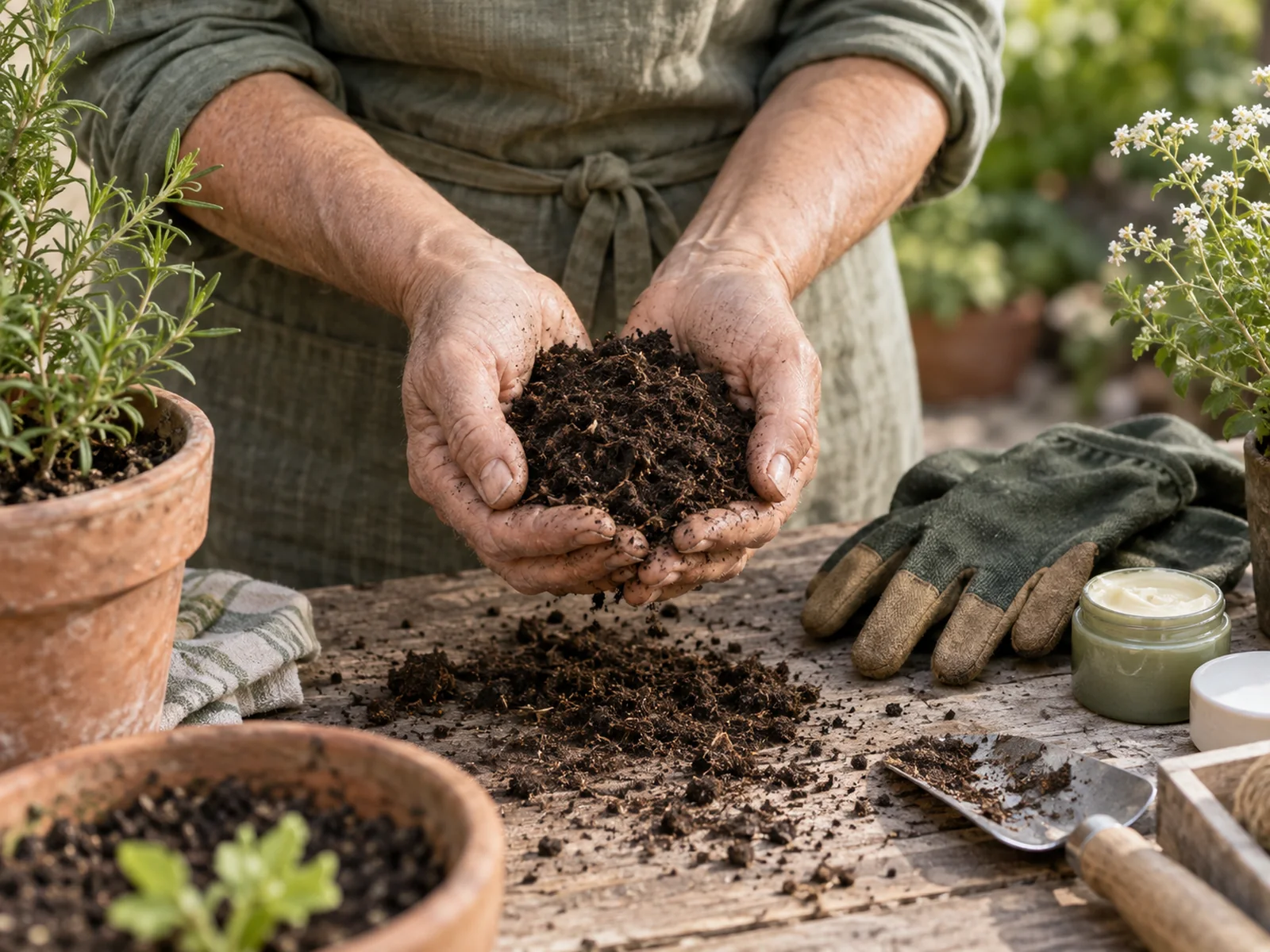
Most of the reactions covered in this library trace back to a single plant encounter -- a sting, an allergen, a phototoxic burn. Gardener's hand dermatitis is different: it's a recognized form of occupational irritant contact dermatitis that builds gradually from the cumulative wear of regular gardening itself, rather than any one exposure.
Why it builds up rather than strikes all at once
Frequent hand-washing, repeated contact with wet soil, plant saps, and fertilizers, and the mechanical wear of digging and handling rough material all chip away at the skin's protective barrier over time. Documented occupational studies of gardeners and greenhouse workers describe this as a real, recognized pattern distinct from a single allergic or irritant reaction to one specific plant -- the skin simply becomes progressively more vulnerable across a gardening season.
What prevention evidence actually shows
A 2018 Cochrane systematic review of workplace interventions for preventing occupational irritant hand dermatitis found that moisturizers, alone or combined with barrier creams, may offer a real protective effect -- but rated the evidence quality as low, and the results did not reach statistical significance. This is worth stating honestly rather than overselling: the signal is plausible and consistent with clinical experience, but it isn't proven at a high level of certainty. Gloves remain widely recommended by dermatology sources even though this particular review didn't formally test them.
Practical prevention
Wearing gloves suited to the task -- heavier gloves for thorny or sharp plants, vinyl or similar for wet, soil-heavy work -- limits repeated direct contact. Applying moisturizer regularly, especially after washing hands, helps support the skin barrier through a gardening season rather than only after a problem develops. Rinsing off soil and plant residue promptly rather than letting it sit on skin, and giving hands a genuine rest between long gardening sessions, both fit the same underlying idea: this is a cumulative-exposure problem, so cumulative-protection habits are what actually help.
When it needs more than home care
Persistent, cracked, or worsening hand dermatitis that doesn't improve with gloves and regular moisturizing is a reasonable reason to see a dermatologist -- particularly since occupational hand dermatitis can sometimes involve a specific allergen (see the library's patch testing guide) rather than pure irritation, and identifying that distinction changes what actually helps.