How Acorn Leaching Works: From Bitter to Edible
Raw acorns are bitter and hard to digest -- but the fix is a genuinely elegant piece of food science: tannin is water-soluble, and repeated rinsing is all it takes.
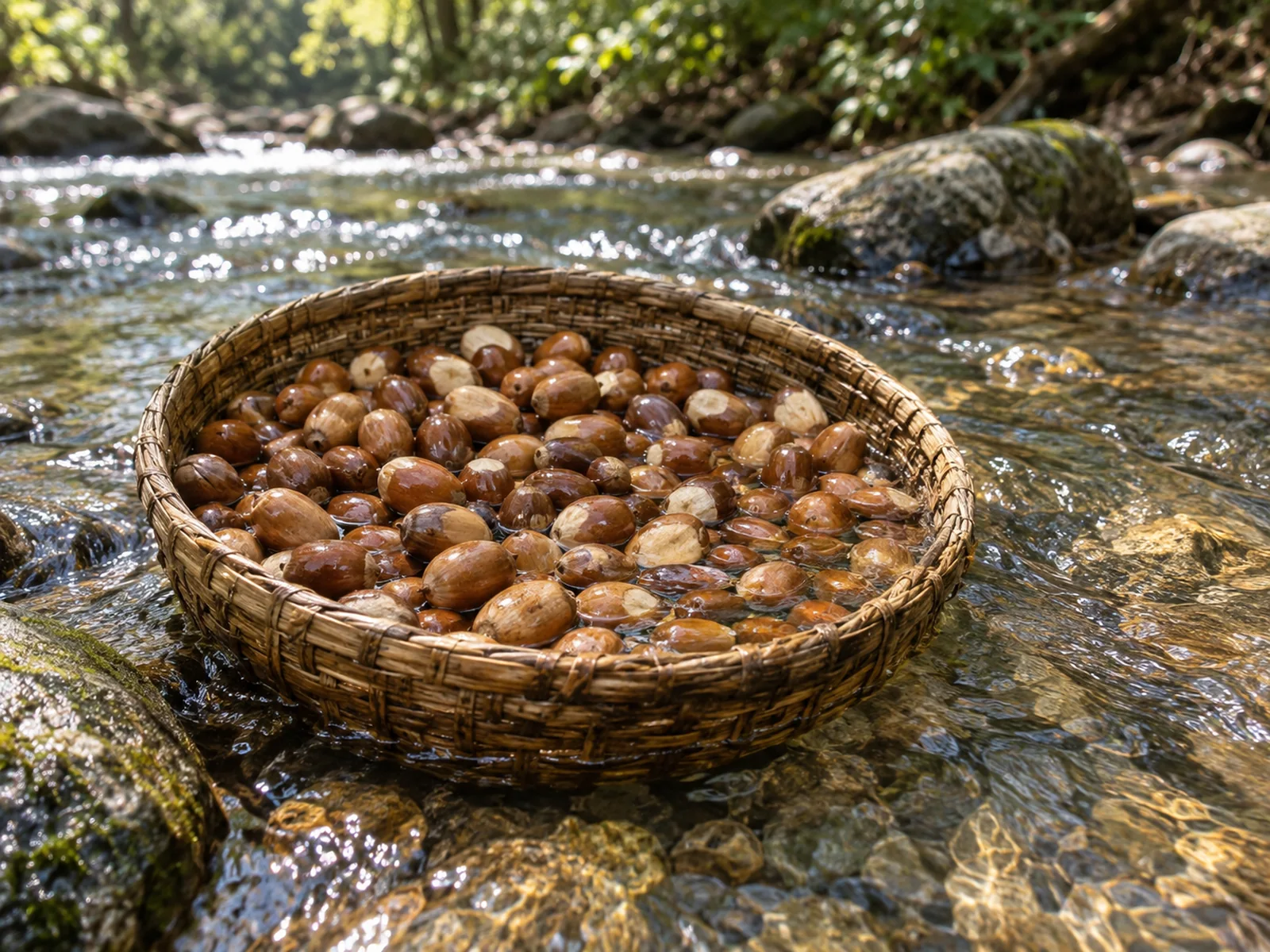
Most acorns are far too bitter and tannin-rich to eat straight from the tree -- but the traditional fix for this is a genuinely elegant piece of food science, refined by California Indigenous communities over generations: tannin is water-soluble, so repeated rinsing removes it.
The underlying science is simple, even if the technique took skill
Tannic acid, the compound responsible for acorn bitterness and for binding proteins and minerals in a way that reduces digestibility, dissolves readily in water. That single property is the entire basis for every traditional leaching method -- cold, hot, or filtered through sand, all of them work by repeatedly exposing ground or whole acorns to fresh water until the tannin has dissolved out.
Cold-water leaching
Shelled acorns or ground acorn meal are soaked in cold water, with the water strained out and replaced with fresh water one or more times a day. Depending on the acorn's natural tannin level, this method can take anywhere from several days to one to two weeks, with the process considered complete once the water stays clear and a small taste test confirms the bitterness is gone.
Hot-water and boiling leaching
Boiling cracked or ground acorns and repeatedly discarding and replacing the water removes tannin considerably faster than cold leaching, though it requires more active attention and tends to produce a darker finished flour than the cold-water method.
Not every acorn needs the same amount of work
Tannin content varies meaningfully by oak species, which shaped which acorns different communities preferred to gather. Black oak acorns, favored historically by the Yokuts of California's Central Valley and Sierra foothills, are valued for their high fat content but still require leaching. Gambel oak acorns, by contrast, are naturally sweet enough that they typically don't require leaching at all -- a genuinely useful practical distinction for anyone considering which oak species is actually worth the effort to process.
After leaching
Once the tannin has been removed, ground acorn meal can be cooked into a porridge -- known in some California Indigenous communities as wiiwish or shawii -- or dried and baked into breads or cakes. Properly dried, leached acorn flour has traditionally been stored for extended periods, providing food through seasons when other resources were scarce.