Maple Sap Tapping: How It Actually Works
Maple sugaring is a genuinely ancient Great Lakes tradition, still actively practiced -- and it depends on a narrow, specific weather window most people never think about.
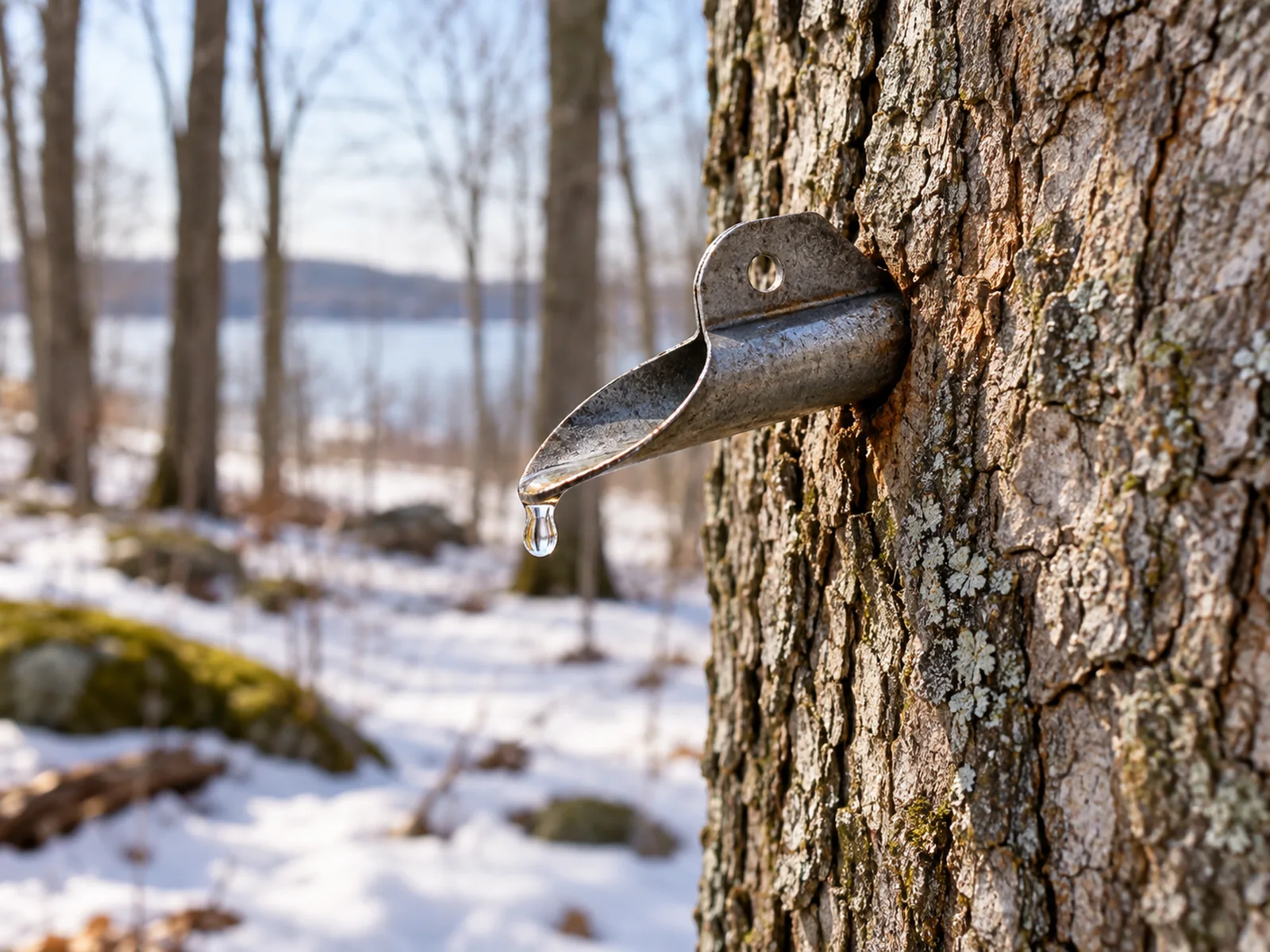
Maple sugaring -- tapping maple trees for their sap and processing it into sugar or syrup -- is a genuinely ancient tradition across the Great Lakes region, developed and refined over generations by Anishinaabe peoples, including the Ojibwe, Odawa, and Potawatomi, and still actively practiced today.
A narrow weather window drives everything
Sap only flows well during a specific seasonal pattern: freezing nights followed by warming days in early spring, a rhythm that creates the pressure changes inside the tree needed to push sap upward and out through a tap. This window is short and weather-dependent, which is why timing has always mattered as much as technique -- traditional Anishinaabe communities named this season specifically, calling it Ziinzibaakwadoke-giizis (Sugar Making Moon) in some Ojibwe communities, though naming and exact timing vary by community and location.
The traditional tapping method
A traditional tap, or spile, was historically carved from cedar or another suitable wood and inserted into a cut or hole in the bark of a mature maple tree, allowing sap to drip out and be collected in birch bark containers. Before metal tools were available, some traditions used hot-stone boiling to reduce the collected sap, later transitioning to metal kettles over open fire once available.
Sap is more than just sugar water
Beyond the sucrose that gives sap its sweetness, the sap itself carries vitamins, minerals, and dietary fiber that become concentrated as the liquid is boiled down -- a detail worth remembering, since maple sap in its raw, unprocessed state is a genuinely different product from refined maple syrup or sugar found in stores.
A living tradition, not just history
Maple sugaring continues today among Anishinaabe communities across the Great Lakes region. The 1854 Treaty Authority, an inter-tribal natural resource management organization protecting off-reservation hunting, fishing, and gathering rights for the Grand Portage and Bois Forte bands under the 1854 Treaty of La Pointe, actively monitors the timing of the sugar maple sap run as part of its ongoing climate-change adaptation planning -- a genuinely current example of this tradition continuing to shape resource management today, not simply a historical footnote.