Pampas Grass, Yucca, Agave, and Thistle: Cuts and Punctures, Not Poison
These four common landscaping plants can genuinely injure skin -- but through mechanical force, not toxins. Pampas grass cuts; yucca, agave, and thistle puncture.
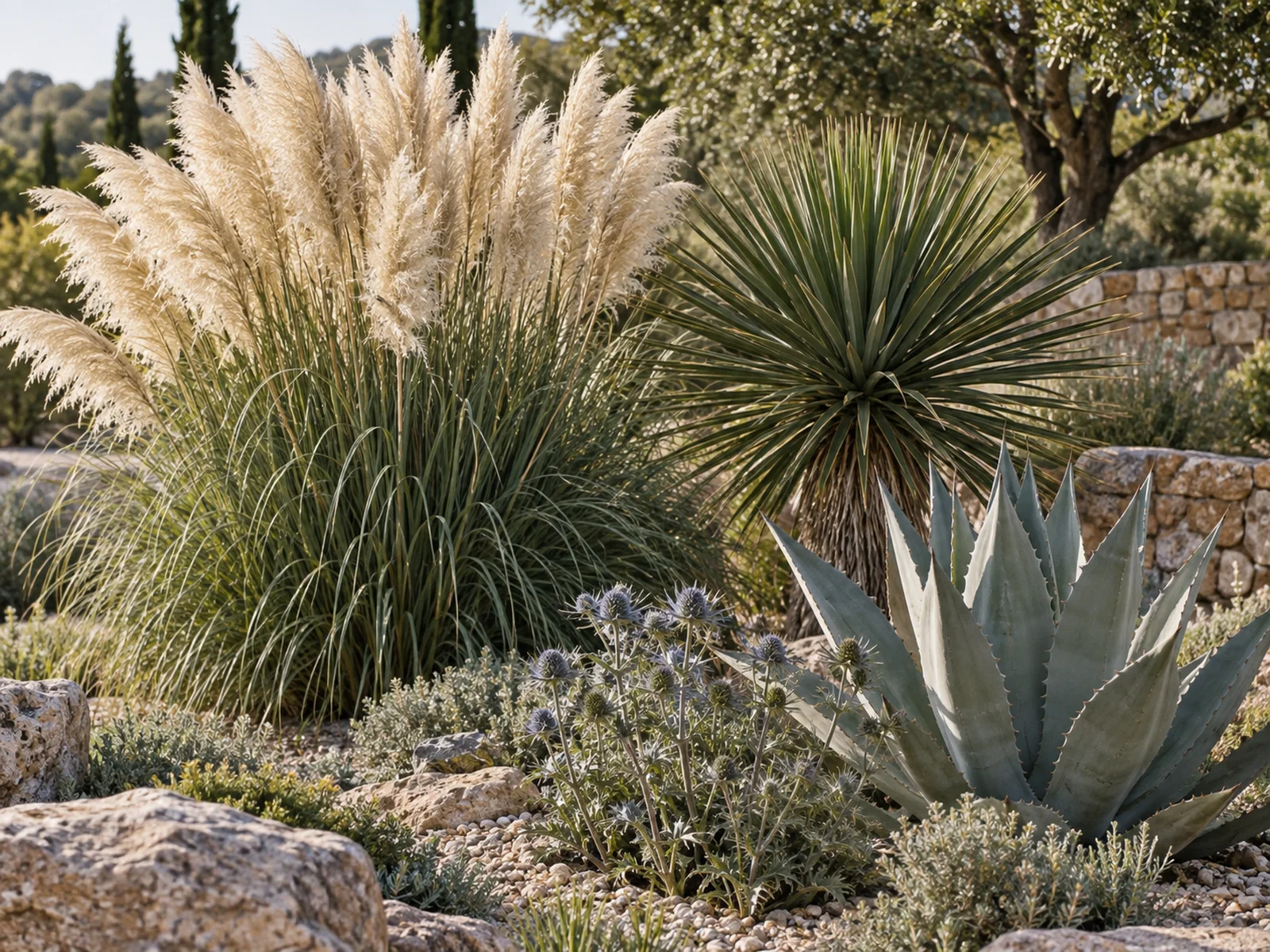
Pampas grass, yucca, agave, and thistle are popular landscaping plants precisely because of their dramatic, architectural foliage -- and that same foliage can cause real injury. Unlike most of the plants covered in this library, the risk here is purely mechanical: these plants don't need any toxin to hurt you, just sharp structure and enough contact force.
Pampas grass: cuts, not punctures
Pampas grass leaf blades have fine, saw-toothed edges reinforced with silica, capable of slicing skin as cleanly as a paper cut -- but because the blades can run several feet long, the resulting cut is often longer and can be surprisingly deep. This is a genuine hazard during routine garden maintenance, not just careless handling; experienced gardeners routinely wear thick gloves, long sleeves, and sometimes eye protection, since fine leaf fragments can become airborne when cutting the plant back.
Yucca and agave: puncture wounds from rigid, sharp tips
Yucca and agave leaves taper to stiff, needle-like points capable of puncturing skin on contact, particularly at the height of a child's face or eyes when the plants are placed near walkways. This is a different injury pattern from pampas grass -- a puncture rather than a slicing cut -- and worth accounting for when planning where these plants go in a yard.
Thistle: spines on leaves and stems
Thistles carry sharp spines along their leaf margins and stems, causing puncture-type injuries similar in mechanism to yucca and agave, though generally smaller and more numerous per contact. As with embedded cactus spines covered elsewhere in this library, thistle punctures can leave small fragments in the skin that cause lingering local irritation if not fully removed.
What helps
For pampas grass cuts, clean the wound and treat it like any laceration -- press to control bleeding, clean thoroughly, and consider whether the depth or length of the cut warrants medical attention. For punctures from yucca, agave, or thistle, gently clean the area and watch for any embedded plant fragments; a cool compress can ease discomfort from any of these injuries. Deep punctures, cuts near the eyes, wounds that won't stop bleeding, or any sign of infection are reasonable reasons to seek medical care rather than treating this as routine yard-work discomfort.