Poison Ivy: Identification, First Aid, Natural Comfort Measures, and Safety
How to recognize poison ivy, what to do in the first minutes after contact, which comfort measures actually help, and when a reaction needs medical care.
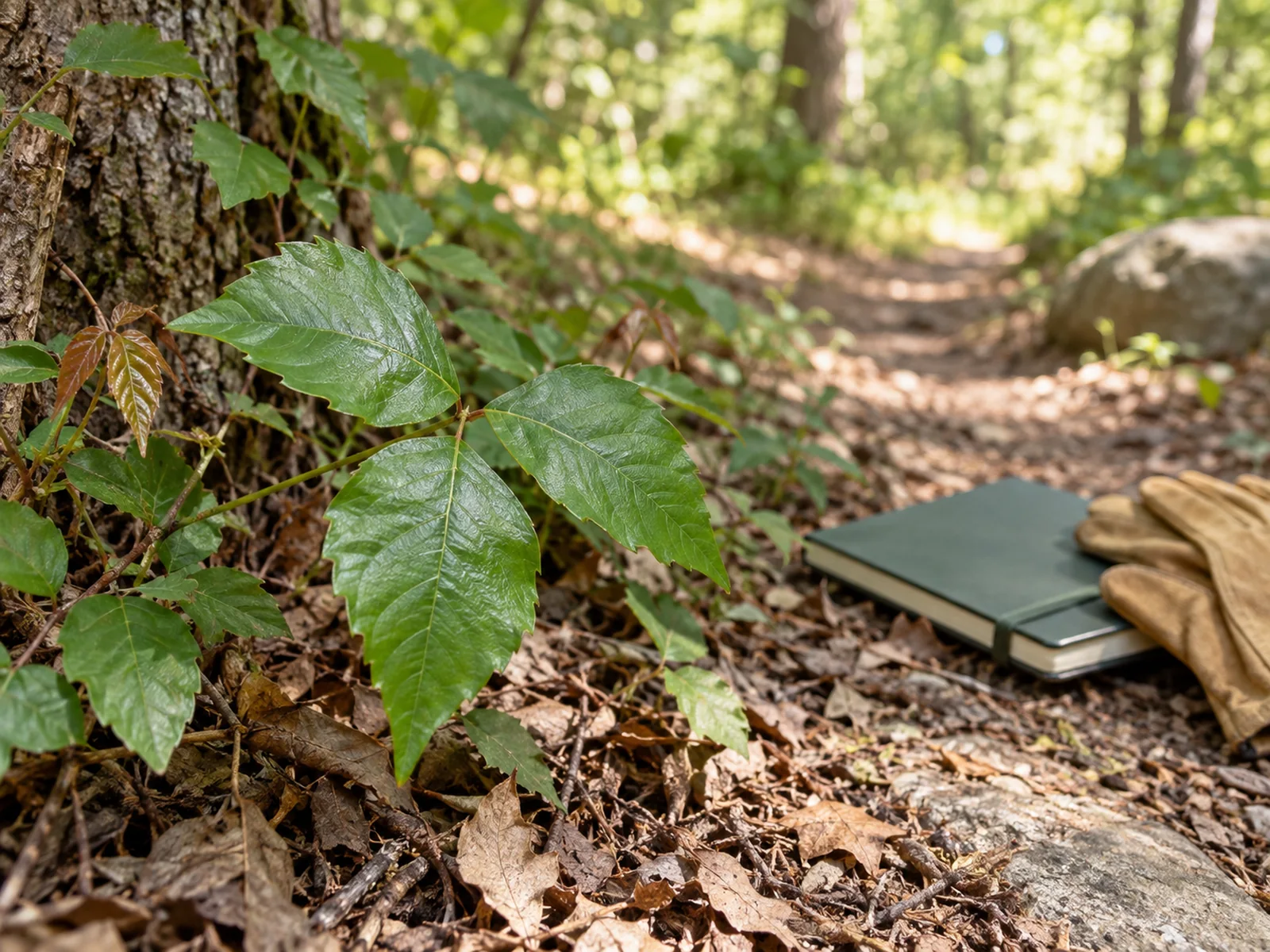
Poison ivy (Toxicodendron radicans, with the related Toxicodendron rydbergii in more northern regions) is found throughout the continental United States except Alaska, Hawaii, and parts of the West Coast. Its rash comes from urushiol, an oil in the plant's sap -- not from the plant being touched with a bare hand once, but from that oil actually reaching skin, clothing, tools, or pet fur. Even brushing past the leaves can transfer it.
How to identify it
Each leaf has three glossy leaflets with smooth or toothed edges -- the source of the old warning rhyme "leaves of three, let it be." It grows as a vine climbing trees and poles, or as a low trailing shrub. Leaf color shifts with the season: reddish in spring, green through summer, then yellow, orange, or red in fall. It may produce small greenish-white flowers and whitish-yellow berries. The plant is not actually toxic to touch in a poison sense -- the reaction is an allergic response to the urushiol oil in its sap, not a systemic poisoning.
What to do first -- decontamination, not comfort
Wash the exposed skin with lukewarm, soapy water (or rubbing alcohol, or dish soap formulated for hand dishwashing) as soon as possible -- the sooner this happens after contact, the better the chance of removing the oil before it triggers a reaction or spreads. Scrub under the fingernails too. Remove and wash all clothing that touched the plant or the rash, separately from other laundry. If a pet may have brushed against the plant, wash it with pet shampoo while wearing gloves -- thin latex gloves do not reliably block urushiol, so use vinyl, nitrile, or dish-washing-style gloves instead.
Comfort measures for minor, already-washed skin
Once the skin has been washed, cool compresses, a colloidal oatmeal bath, and calamine lotion (avoiding the face and genitals) can temporarily relieve itching. Keeping fingernails short helps limit skin damage from scratching, which can increase infection risk.
What not to do
Do not treat a rash as poison ivy unless you are reasonably confident that plant caused it -- other rashes need different care. Blister fluid itself does not spread the rash to new areas or to other people; only remaining urushiol oil on skin, clothing, or objects does, which is why washing exposed items matters more than worrying about a weeping blister. Do not burn poison ivy -- inhaling smoke that carries urushiol particles can cause a serious respiratory reaction.
When to get medical care
Seek care for a rash covering a large portion of the body, swelling especially involving the face or genitals, numerous blisters or significant oozing, fever, or signs of infection such as increasing redness, warmth, pus, or red streaking. Seek emergency care for difficulty breathing or swallowing.