Wood Nettle vs. Stinging Nettle: Same Sting, Different Plant
Wood nettle looks and stings like the more familiar stinging nettle, but it's a different, native North American species -- and by some accounts, its sting is even more potent.
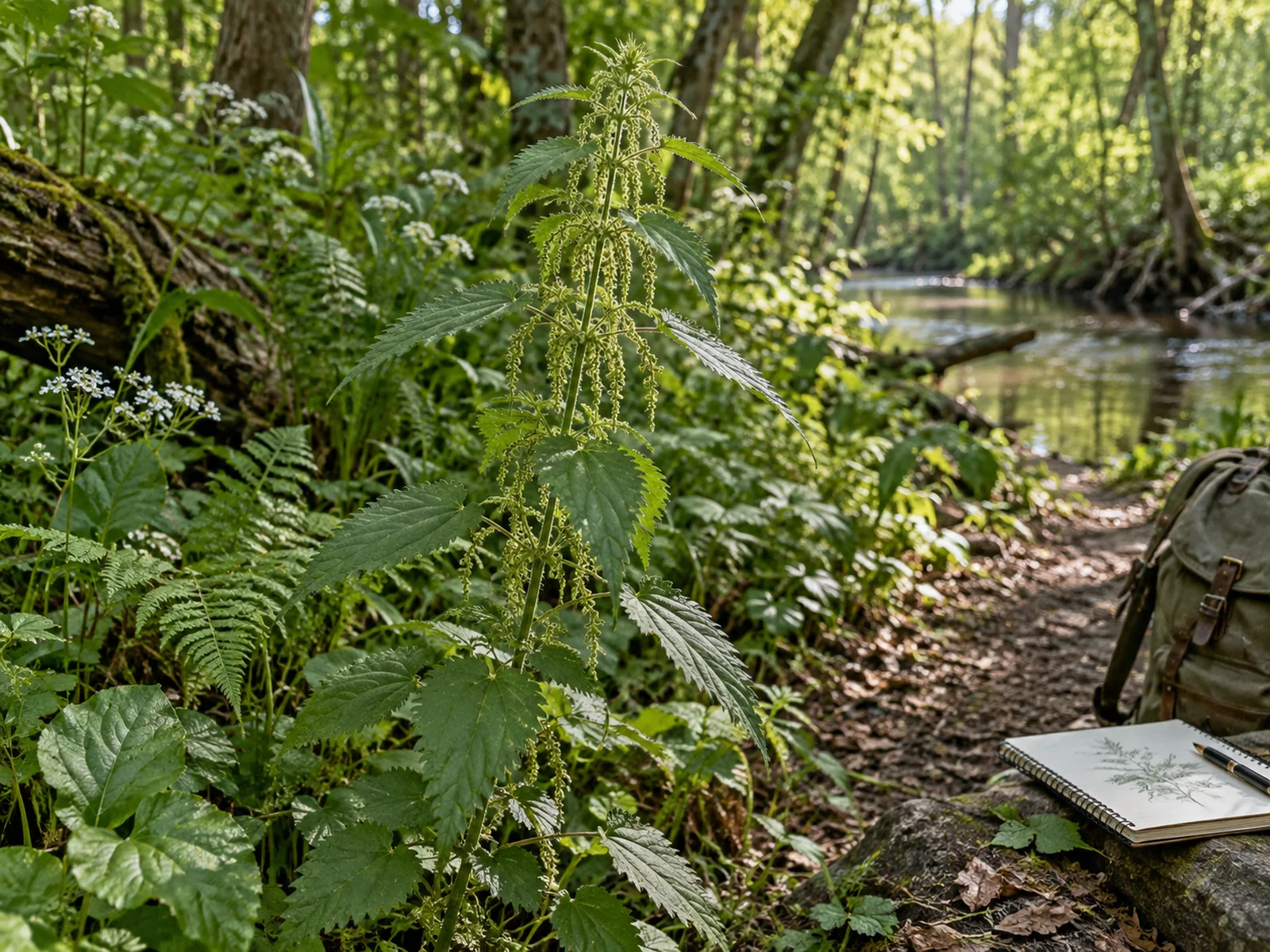
Wood nettle (Laportea canadensis) is frequently mistaken for the common stinging nettle (Urtica dioica) covered elsewhere in this library -- both sting through the same basic needle-like hair mechanism, and both cause burning, redness, and sometimes blistering. But wood nettle is a genuinely different plant: native to North American woodlands rather than introduced from Europe, and belonging to an entirely different genus.
How to tell them apart
The clearest field distinction is leaf arrangement. Wood nettle's lower and middle leaves are alternate along the stem, while common stinging nettle always has leaves arranged in opposite pairs. Wood nettle also tends to favor shaded, moist woodland floodplains and streamsides, while stinging nettle is more of a generalist, often found in sunnier disturbed areas, roadsides, and gardens.
A shared mechanism, slightly different chemistry
Like common stinging nettle, wood nettle's stinging hairs work as tiny hypodermic-needle-like structures that break on contact and inject irritant compounds, producing the characteristic burning, itching, and sometimes blistering reaction. Research comparing related nettle species has found real differences in the specific terpene and chemical composition between them, which may help explain reported differences in sting intensity, though the core injection mechanism is shared across the nettle family.
What helps
First aid is the same as for common stinging nettle: avoid rubbing the area, which can drive embedded hair fragments deeper, and a cool compress can ease the burning discomfort while it resolves, usually within a day. Blistering that is extensive or doesn't improve is a reasonable reason to seek medical evaluation.