01
Why people use it
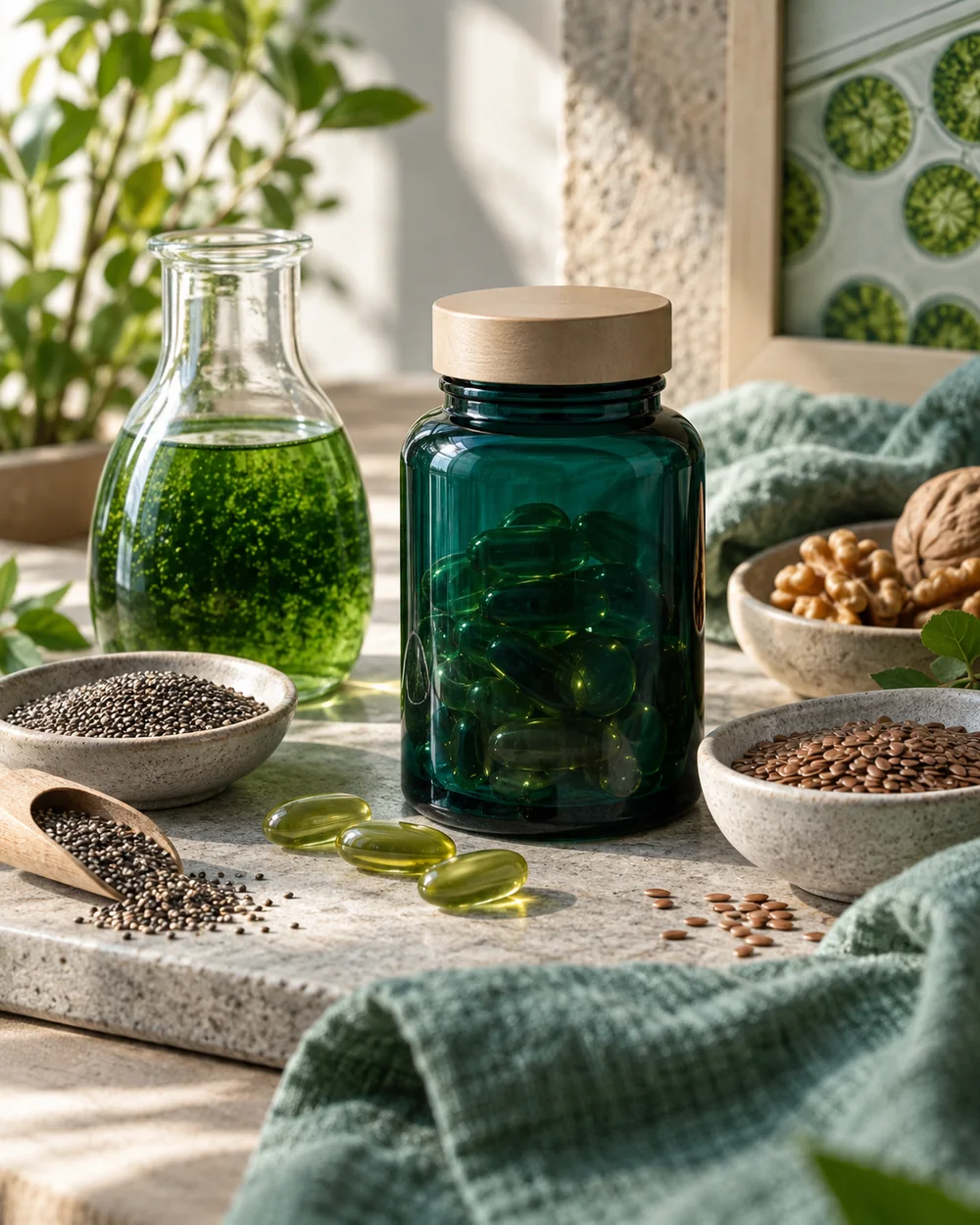
Fish get their DHA and EPA from the microalgae they consume; algal oil supplements draw from that same original source directly, giving vegans and vegetarians a genuine, bioequivalent alternative to fish oil rather than a weaker substitute.
- ✓Vegan/vegetarian DHA and EPA intake
- ✓Omega-3 supplementation for people who avoid fish oil
02
What the evidence says
Algal oil is explicitly recognized by NCCIH as a vegetarian source of DHA (and, in some products, EPA), and peer-reviewed bioavailability research has found it comparable to fish oil in raising blood DHA and EPA levels -- separate from the broader, more mixed evidence on what omega-3 supplementation accomplishes clinically.
Hover, focus or tap each label for context.
These labels summarize the available context; they are not a clinical recommendation.03
Common forms
Hover, focus or tap a form to see what it means.
Safety note
Know before you use it
Plant sources of omega-3 like flaxseed and walnuts provide ALA, which the body converts to EPA and DHA only in small, inefficient amounts -- ALA-rich foods are not a reliable substitute for direct DHA/EPA intake if that's specifically the goal. As with any supplement, checking a product's dose and third-party testing status is worthwhile, and anyone taking blood-thinning medication should discuss omega-3 supplementation with a clinician, since higher doses can have mild blood-thinning effects.
Sources & review
- Omega-3 Supplements: What You Need To KnowNCCIH
- Comparative Bioavailability of DHA and EPA from Microalgal and Fish Oil in AdultsPubMed
- Bioavailability and potential uses of vegetarian sources of omega-3 fatty acids: a review of the literaturePubMed