01
Why people use it
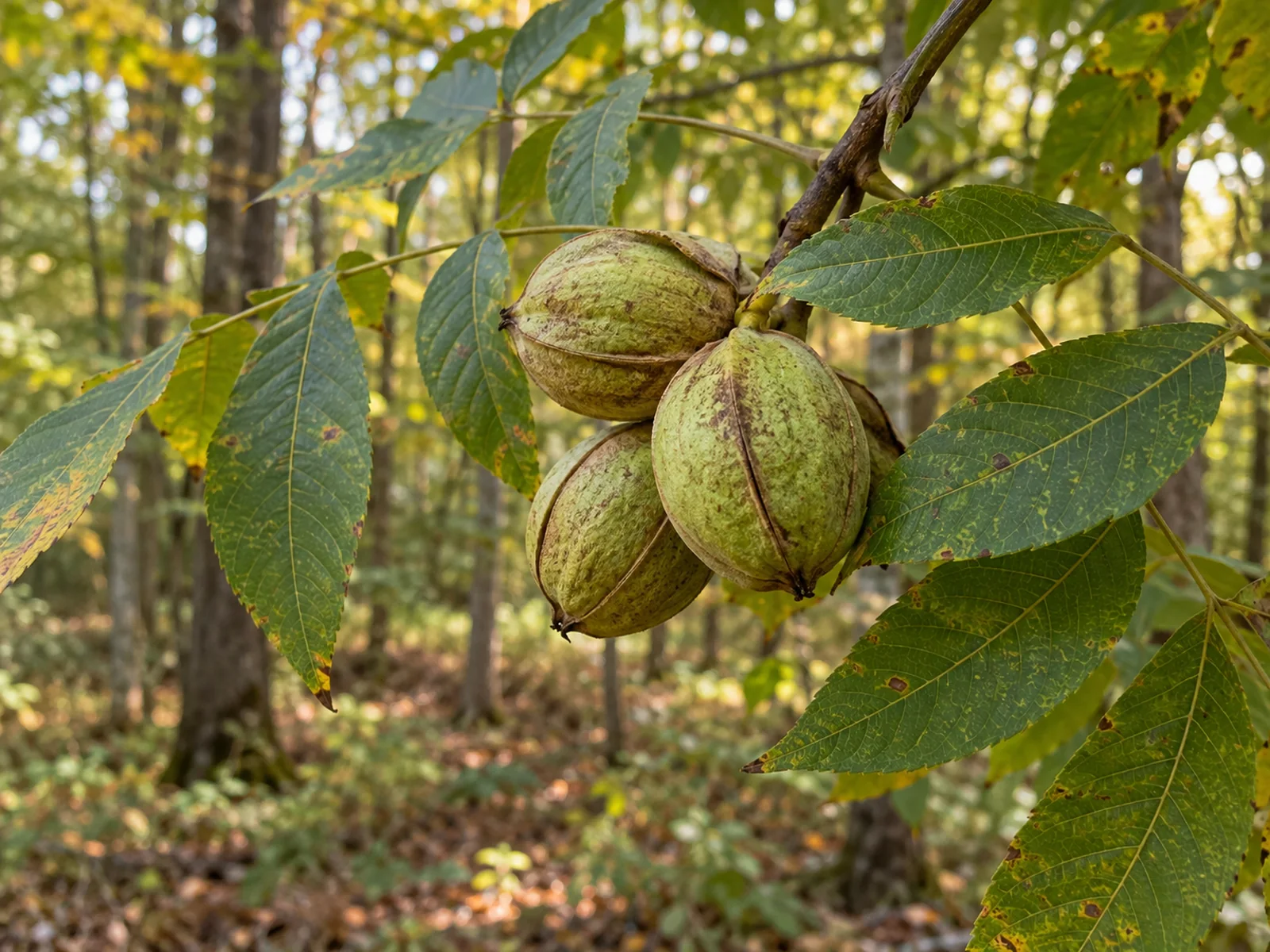
A rich, oily nut native to the Eastern Woodlands, historically processed into kanuchi -- a traditional Cherokee soup -- among other preparations.
- ✓Traditional staple food (kanuchi and similar preparations)
- ✓Fresh-eating nut
- ✓Traditional winter food storage
02
What the evidence says
Hickory nuts are a genuine, historically significant high-fat, high-protein wild food; the evidence here concerns nutrition composition and traditional food use, not treatment of any health condition.
Hover, focus or tap each label for context.
These labels summarize the available context; they are not a clinical recommendation.03
Common forms
Hover, focus or tap a form to see what it means.
Safety note
Know before you use it
As with any tree nut, allergy is a genuine safety consideration. Correct species identification matters, since edible hickories are sometimes confused with less palatable species in the same genus.
Sources & review
- KanuchiWikipedia
- Cherokee Eats: KanuchiCherokee Phoenix
- Beyond the Forest Canopy: Indigenous Foods of the Southeastern WoodlandsGrub Americana
Editorial and clinical review required before production indexingLast reviewed September 12, 2026