01
Why people use it
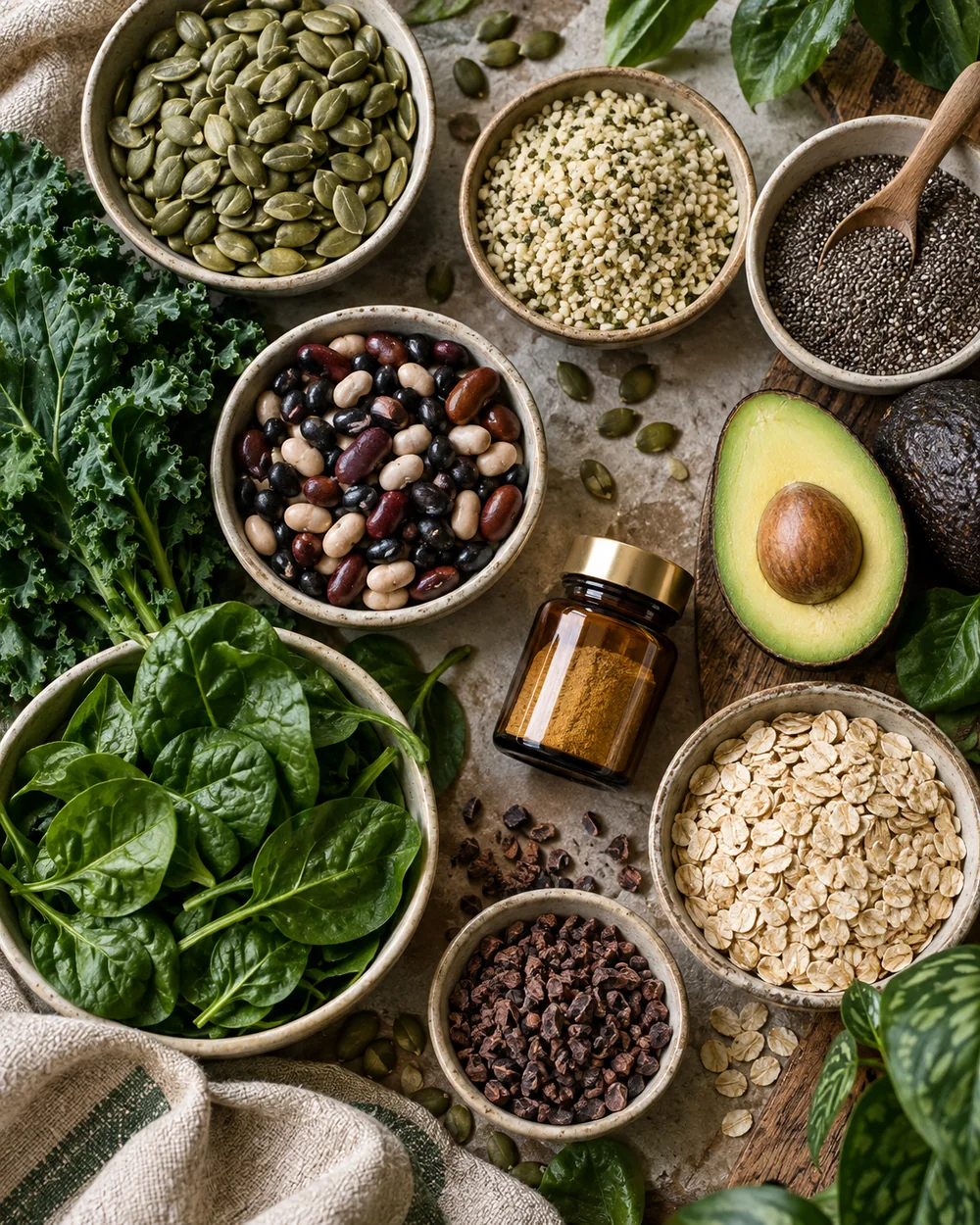
Magnesium is genuinely well-supplied by a varied plant-based diet -- the NIH does not list vegans among its identified at-risk groups for magnesium deficiency, making this one nutrient where "eat a variety of whole plant foods" is close to the whole answer.
- ✓Supporting normal muscle and nerve function
- ✓Blood sugar and blood pressure regulation
- ✓Protein synthesis and bone structure
02
What the evidence says
NIH guidance identifies specific groups at elevated risk of magnesium deficiency -- people with gastrointestinal diseases, type 2 diabetes, older adults, and people with alcohol dependence -- and a plant-based diet is not among them; if anything, the foods a varied vegan diet tends to emphasize are the same foods NIH identifies as good magnesium sources.
Hover, focus or tap each label for context.
These labels summarize the available context; they are not a clinical recommendation.03
Common forms
Hover, focus or tap a form to see what it means.
Safety note
Know before you use it
Magnesium naturally present in food is not a safety concern and does not need to be limited, since the kidneys clear excess in healthy people. Magnesium taken as a supplement or medication is a different matter -- doses above the upper intake limits (which are lower than the recommended dietary amount, since the recommended amount already assumes food intake alongside it) can cause diarrhea, nausea, and cramping, and should not be exceeded without a clinician's guidance. People with kidney disease should discuss magnesium supplementation with a clinician specifically, since impaired kidney function reduces the ability to clear excess magnesium.
Sources & review
- Magnesium - ConsumerNIH Office of Dietary Supplements
- Magnesium - Health Professional Fact SheetNIH Office of Dietary Supplements
- Vegan Guide to MagnesiumYour Vegan Journey (citing NIH ODS and EPIC-Oxford data)