01
Why people use it
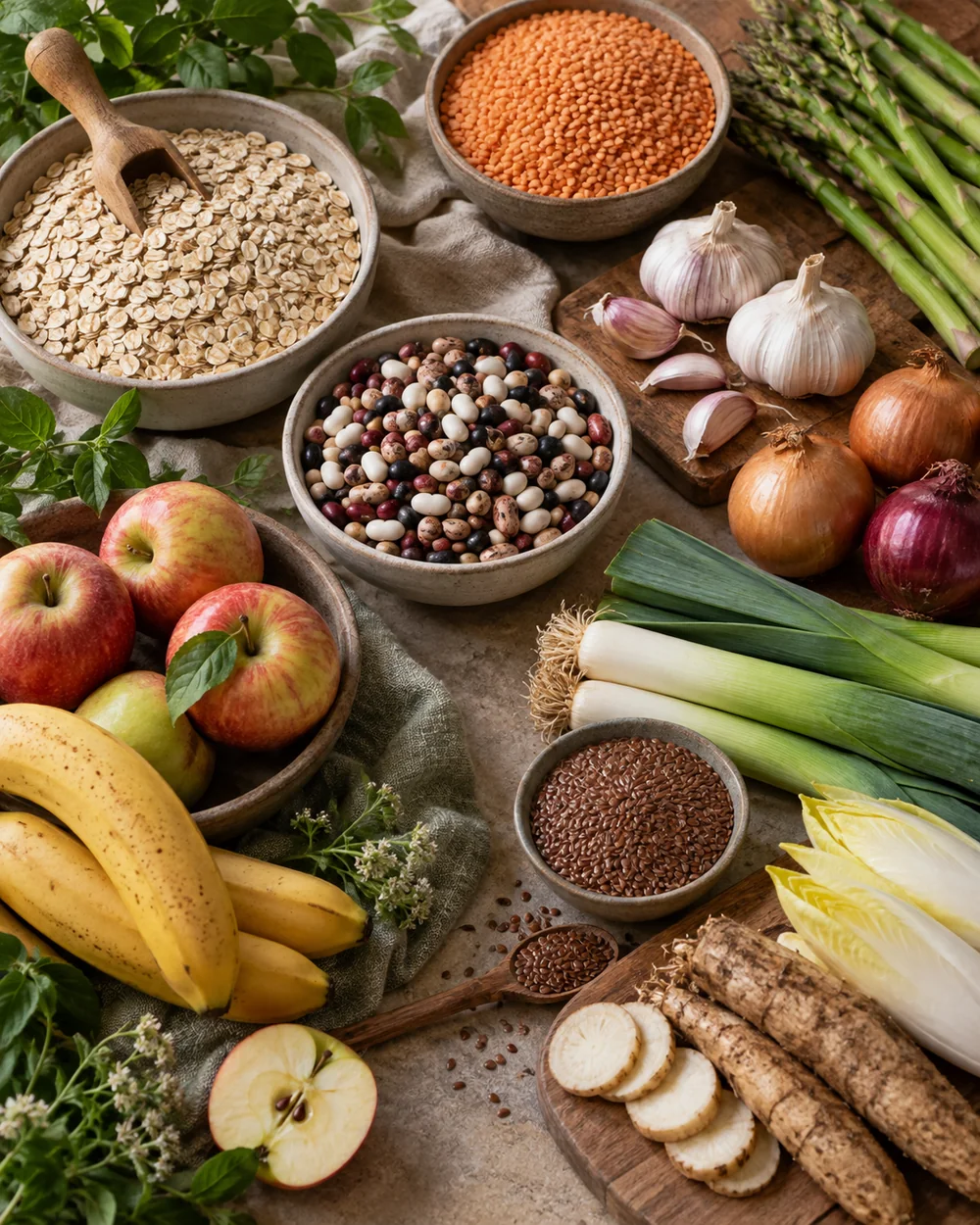
Prebiotic fibers like inulin feed beneficial gut bacteria and are naturally abundant in a plant-based diet -- but the effective doses used in research are well above typical intake, and ramping up too quickly is a well-documented cause of real digestive discomfort.
- ✓Feeding beneficial gut bacteria (Bifidobacterium and Lactobacillus)
- ✓Short-chain fatty acid production supporting gut barrier function
02
What the evidence says
The International Scientific Association for Probiotics and Prebiotics has published a formal consensus definition of what qualifies as a prebiotic, and inulin and fructooligosaccharides are among the most well-established, with clinical research showing measurable increases in beneficial Bifidobacterium populations.
Hover, focus or tap each label for context.
These labels summarize the available context; they are not a clinical recommendation.03
Common forms
Hover, focus or tap a form to see what it means.
Safety note
Know before you use it
The average person's prebiotic fiber intake from food is only about 1-4 grams daily, well below the 5-20 gram range used in clinical research -- jumping straight to an effective research-level dose, especially from a concentrated supplement, is a well-documented cause of bloating, gas, and cramping, particularly for anyone with an already sensitive digestive system or a condition like IBS. Increasing prebiotic fiber gradually, and pairing supplement doses with adequate water intake, is a more realistic and comfortable approach than a sudden jump. Anyone with small intestinal bacterial overgrowth (SIBO) or a diagnosed digestive condition should discuss prebiotic fiber and FODMAP content specifically with a clinician or dietitian before increasing intake.
Sources & review
- Prebiotic Fiber Benefits and Best Food SourcesBio-K+ (citing ISAPP consensus definition)
- Prebiotic Foods: The Complete ListBiome Guide (citing Gibson et al. ISAPP consensus statement, Nature Reviews Gastroenterology & Hepatology)
- Inulin as a multifunctional prebiotic: from gut modulation to systemic health benefitsFood Quality and Safety / Oxford Academic