01
Why people use it
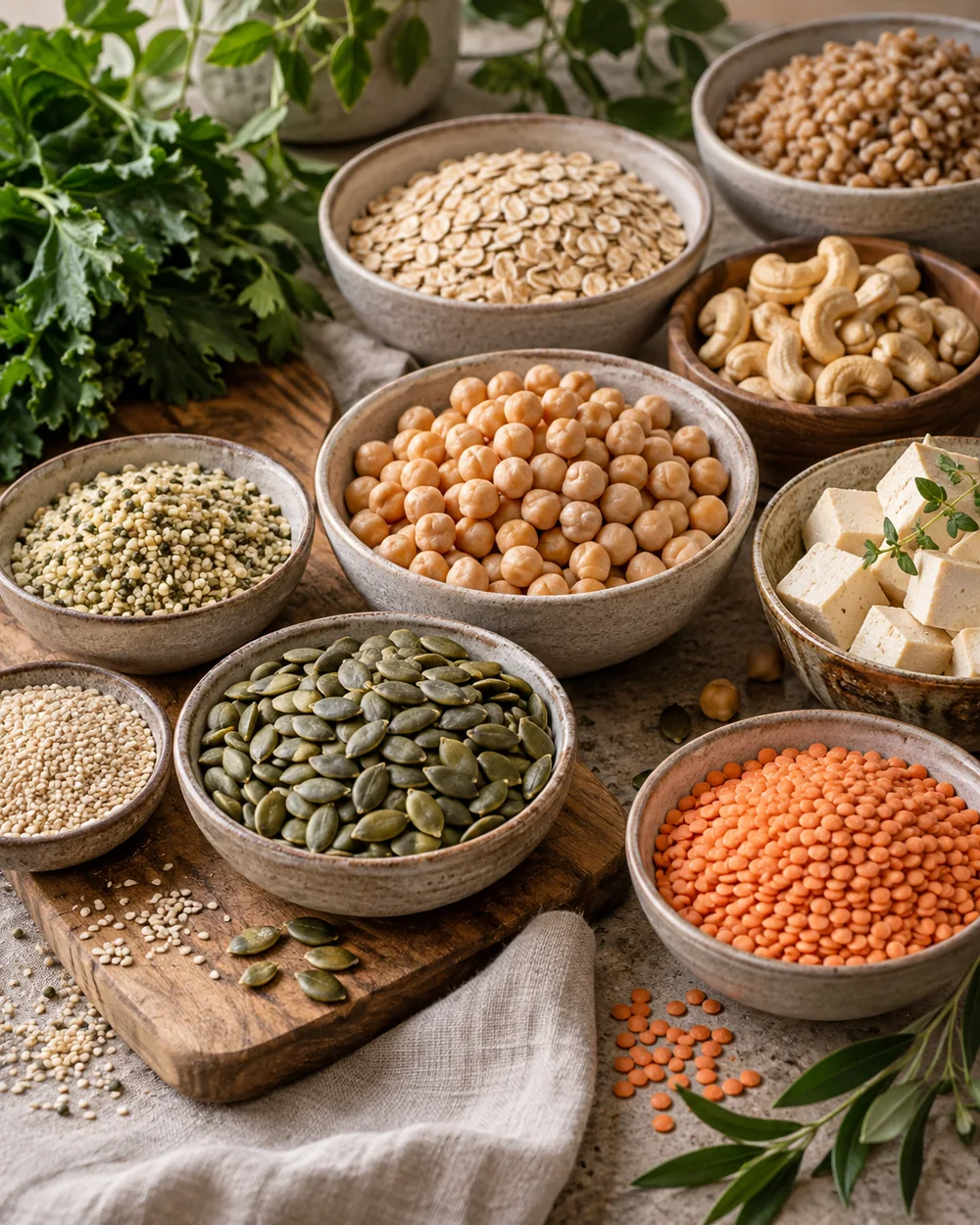
Zinc is genuinely present in plant foods, but phytates in legumes, whole grains, and seeds reduce how much of it the body absorbs -- a real, NIH-acknowledged reason vegans and vegetarians typically need a higher intake target than omnivores.
- ✓Immune function support
- ✓Wound healing
- ✓Taste perception and normal growth
02
What the evidence says
NIH's own health-professional guidance states directly that zinc bioavailability from vegetarian diets is typically lower than from diets that include meat, because phytates in the legumes and whole grains vegetarians and vegans commonly eat bind zinc and inhibit its absorption -- and that this leads to lower dietary zinc intakes and lower serum zinc levels in people following vegetarian and vegan diets compared to those who include animal products.
Hover, focus or tap each label for context.
These labels summarize the available context; they are not a clinical recommendation.03
Common forms
Hover, focus or tap a form to see what it means.
Safety note
Know before you use it
Because plant-based zinc is less bioavailable, vegans are commonly advised to target meaningfully higher zinc intakes than the standard RDA to compensate -- roughly 50% higher is a commonly cited adjustment, though individual needs vary and this is not a substitute for personalized dietary guidance. Zinc and iron compete for absorption, so if supplementing both, taking them at different times of day is a reasonable practice. Zinc supplementation above the tolerable upper intake level can interfere with copper absorption and cause other adverse effects; discuss any zinc supplement with a clinician, particularly at doses beyond a standard multivitamin amount.
Sources & review
- Zinc - Health Professional Fact SheetNIH Office of Dietary Supplements
- Vegan Zinc Guide: How to Get Enough Zinc on a Plant-Based DietVegan Easy
- ZincVegan Health (citing NIH ODS)