→
Explore Seeds & grains
3 published entries in this Apothecary category.
 Seeds & grains
Oats
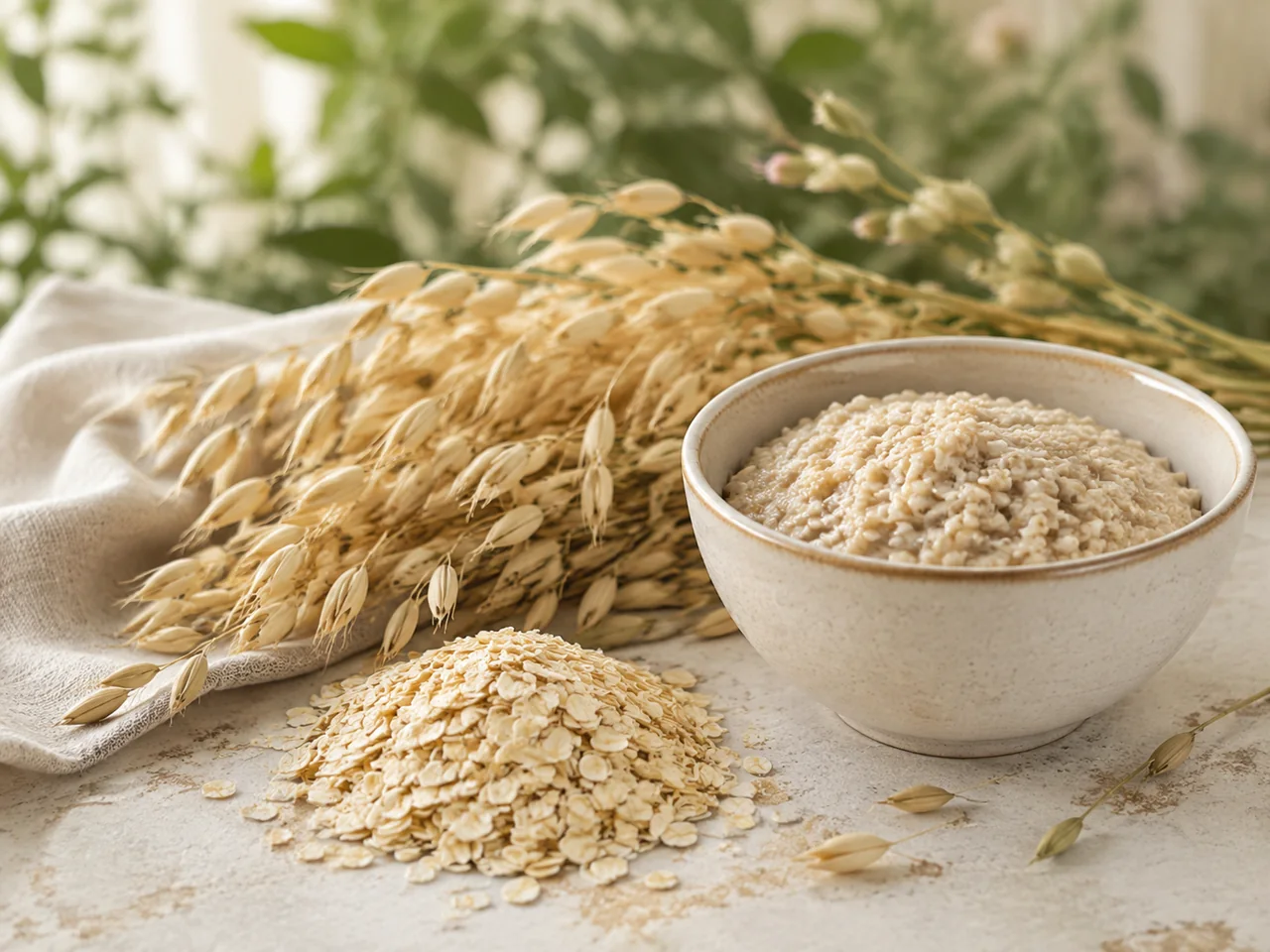
Avena sativaOats are the grains of Avena sativa, eaten as a whole-grain food and used in distinct herbal and topical preparations.
Open entry → Seeds & grains
Flaxseed
Linum usitatissimumFlaxseed has culinary, historical or practitioner context documented in the original Holistic FAQs collection. This page preserves that record while separating forms, modern research and safety.
Open entry → Seeds & grains
Chia seed
Salvia hispanicaChia seed has culinary, historical or practitioner context documented in the original Holistic FAQs collection. This page preserves that record while separating forms, modern research and safety.
Open entry →- Barley
- Quinoa
- Flaxseed
- Chia seed
01
Seeds, grains and pseudograins
Cereal grains come from grasses. Quinoa is commonly described as a pseudograin, while chia and flax are culinary seeds. They can fill similar pantry roles without being botanically identical.
02
Whole grains versus refined grains
A whole grain retains the bran, germ and endosperm. Refining changes the food structure and can remove naturally occurring fiber and nutrients, although some refined products are enriched.
03
Fiber, fullness and plant-based meals
Grains and seeds can contribute fiber, texture and energy to meals. The amount and kind vary substantially, so each item page uses product-specific context instead of making one claim for the entire category.
04
Processing changes the experience
Grinding, flaking, cooking and portion size can change texture, cooking time and digestion. “Grain” is not one uniform nutritional category, and an intact kernel is not interchangeable with every flour or instant product.
05
Gluten and cross-contact
Wheat, barley and rye contain gluten. Oats require separate cross-contact and tolerance considerations for people with celiac disease. Gluten guidance is attached to the specific grain and product label.
06
Food first, evidence clearly labeled
This collection separates ordinary food use from concentrated extracts, traditional preparations and topical products. Evidence and safety notes apply to the named form, not automatically to every product made from the plant.
S
Cornerstone sources
- Whole GrainsUSDA MyPlate
- Eating, Diet, & Nutrition for Celiac DiseaseNational Institute of Diabetes and Digestive and Kidney Diseases