01
Why people use it
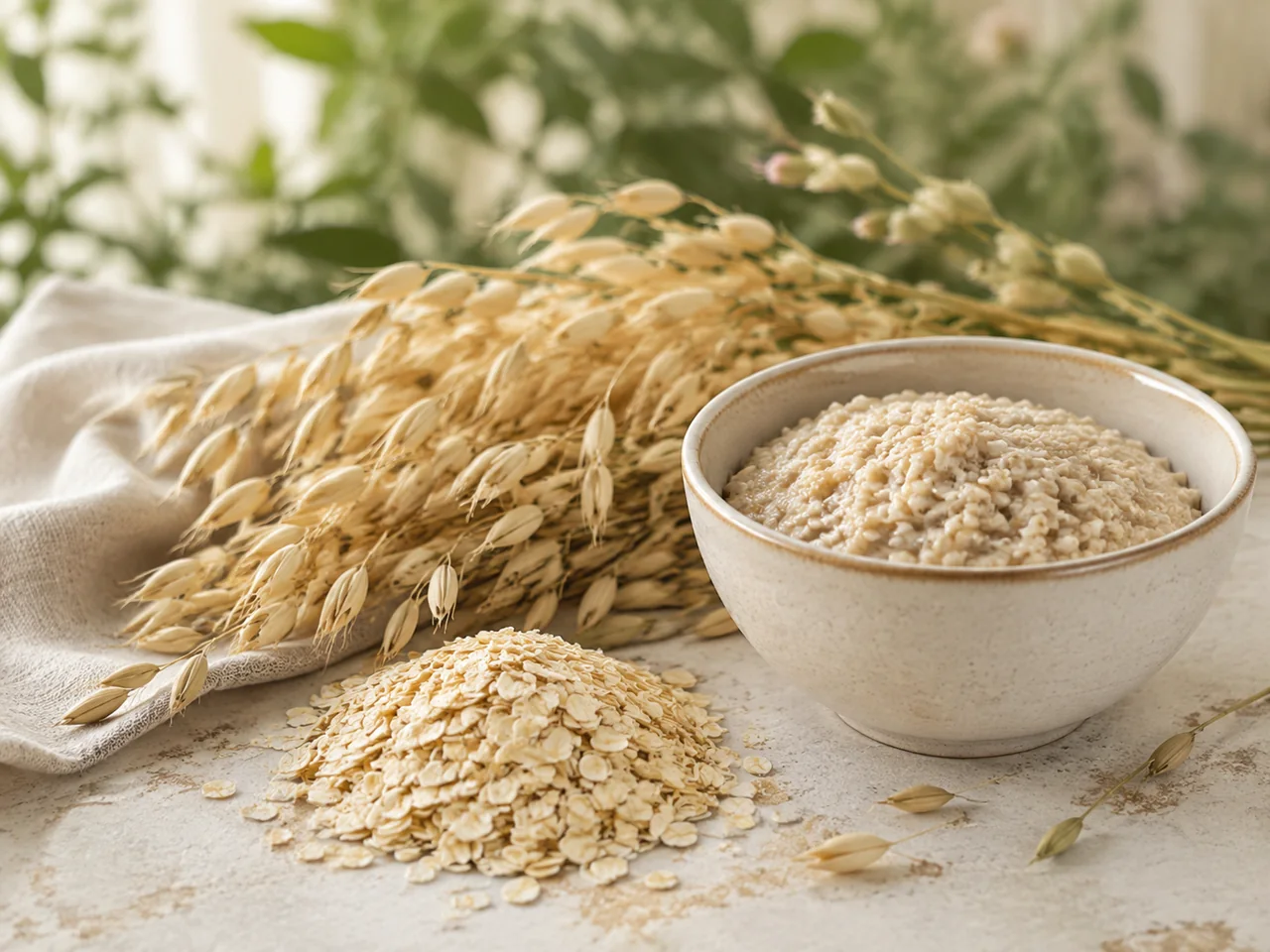
Oats are the grains of Avena sativa, eaten as a whole-grain food and used in distinct herbal and topical preparations.
- ✓Whole-grain meals
- ✓Soluble beta-glucan intake
- ✓Cholesterol-conscious eating
- ✓Digestive regularity and fullness
- ✓Traditional oat-straw preparations
- ✓Topical colloidal oatmeal
02
What the evidence says
Multiple systematic reviews of randomized trials report that oat beta-glucan can lower LDL and total cholesterol. Effects depend on the amount and properties of beta-glucan and should not be generalized to every oat product or preparation.
Hover, focus or tap each label for context.
These labels summarize the available context; they are not a clinical recommendation.03
Common forms
Hover, focus or tap a form to see what it means.
04
Food and nutrition context
Rolled oats provide carbohydrate, fiber, protein and mostly unsaturated fat. The reference panel below uses 40 g (about 1/2 cup dry) of USDA whole-grain old-fashioned rolled oats. Values are rounded estimates; flavored, fortified and differently processed products vary, so the package Nutrition Facts label remains the product-specific source.
- Total fat
- 2.4 g3% DV
- Sodium
- Less than 1 mg0% DV
- Total carbohydrate
- 27.5 g10% DV
- Dietary fiber
- 4.2 g15% DV
- Protein
- 5.4 g
- Iron
- 1.7 mg9% DV
- Potassium
- 140 mg3% DV
Percent Daily Values use current FDA adult reference values for a 2,000-calorie diet.
USDA FoodData Central, Foundation food 2346396 ↗Source checked September 7, 2026. Values are rounded.+
How processing changes oats
Groats, steel-cut oats, rolled oats and instant oats begin with the same grain but differ in cutting, steaming and flaking. Less processed forms usually take longer to cook. Blood-glucose response also depends on portion, preparation and what accompanies the oats, so no form should be described as universally “blood-sugar safe.”
+
Traditional and practitioner context
Oat straw and milky oats appear in Western herbal practice as nourishing or restorative preparations. These are practitioner and traditional contexts, not established clinical treatments, and they are not interchangeable with oatmeal or oat bran.
+
Topical use is a separate form
Colloidal oatmeal is finely processed oatmeal formulated for topical use. It is recognized in the United States as an over-the-counter skin-protectant ingredient when products meet the applicable monograph requirements. Kitchen oatmeal is not an equivalent substitute for a formulated topical product.
Safety note
Know before you use it
Cross-contact with wheat, barley or rye is common. People with celiac disease who include oats should choose products labeled gluten-free and discuss individual tolerance with their clinician or dietitian. Introduce large increases in fiber gradually. A food allergy or reaction to a topical oat product requires appropriate medical advice.
Read the complete Oats guide
A food-first guide to oat nutrition, beta-glucan and cholesterol evidence, processing, blood-sugar context, gluten cross-contact, herbal preparations and colloidal oatmeal.
Open the full guideQuestions about Oats
Are oats good for cholesterol? →
Are oats good for blood sugar control? →
What is the difference between oats and oatmeal? →
Sources & review
- Eating, Diet, & Nutrition for Celiac DiseaseNational Institute of Diabetes and Digestive and Kidney Diseases
- Food Labeling Guide: soluble fiber from whole oats and coronary heart disease claimU.S. Food and Drug Administration
- Effects of Oat Beta-Glucan Intake on Lipid Profiles: systematic review and meta-analysisPubMed / Nutrients
- The effect of oat beta-glucan on LDL cholesterol, non-HDL cholesterol and apoBPubMed / British Journal of Nutrition
- OTC Monograph M016: Skin Protectant Drug ProductsU.S. Food and Drug Administration