Harvesting and Preparing Piñon Pine Nuts: From Cone to Kitchen
Piñon nuts are one of the most calorie-dense wild foods in North America -- but their irregular harvest cycle and processing steps are part of why the tradition took real skill to sustain.
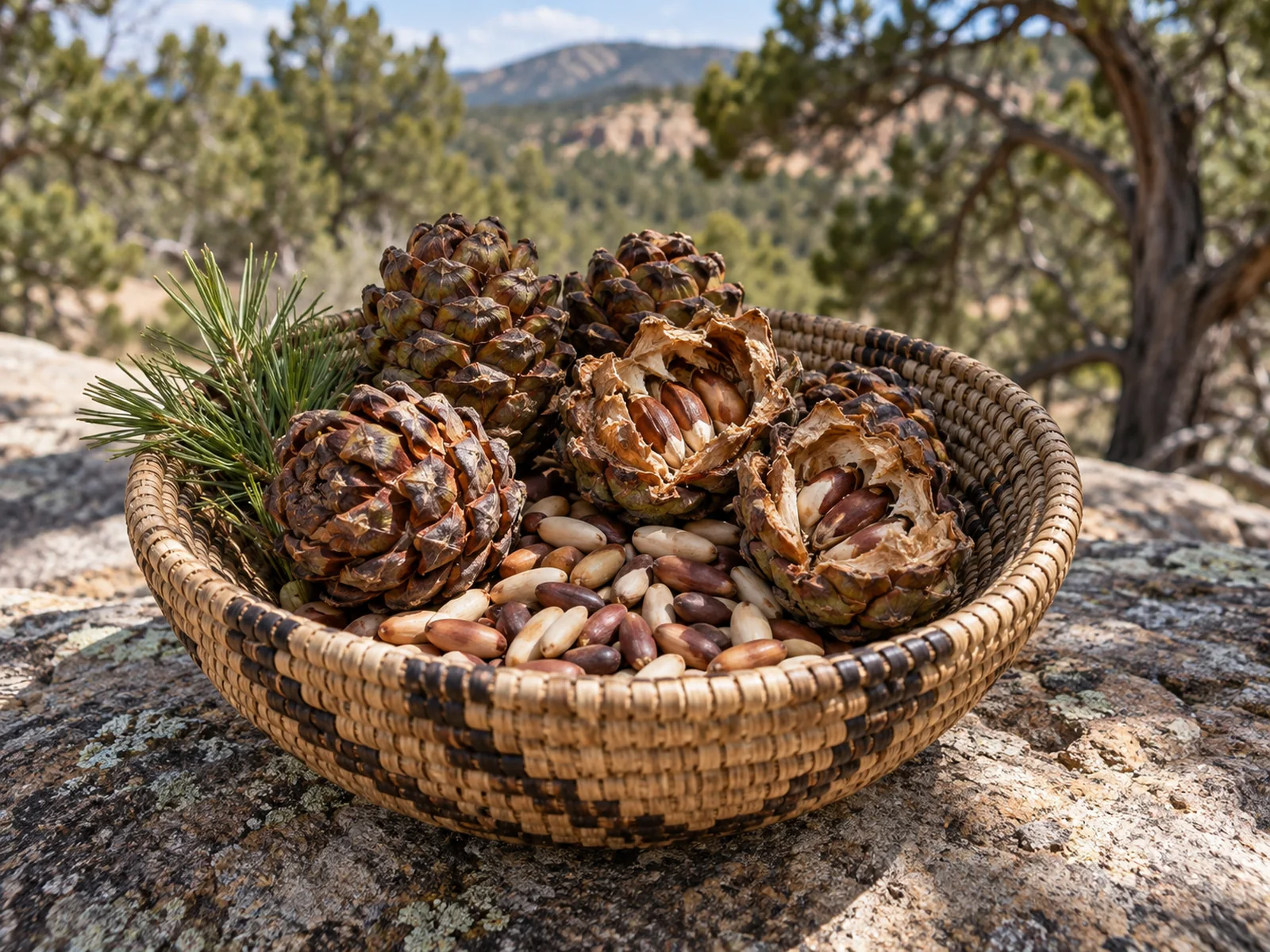
Piñon pine nuts are genuinely calorie- and fat-dense, but harvesting and preparing them the traditional way took real skill -- the crop is irregular, the timing window is narrow, and the raw cones aren't something you can simply pick up off the ground and eat.
Why timing matters more than for most wild foods
Piñon pines produce good nut crops irregularly -- typically every four to seven years, a pattern called masting, where a tree produces a large seed crop only intermittently rather than every season. Harvesters traditionally needed to gather cones before they fully opened and dropped their seeds, since fallen nuts are quickly reduced by insects and small mammals and are rarely still good for eating by the time they reach the ground. This narrow harvest window, combined with the crop's unpredictability, is part of why piñon harvest historically required real technical knowledge and often substantial group effort.
From cone to loose nut
Cones are typically gathered while still closed or just beginning to open, then exposed to heat (traditionally, controlled fire or sun) to encourage the cone scales to open and release the seeds. Once open, the seeds are separated from the cone and their thin outer shells, a labor-intensive step given how small each individual nut is relative to the amount of usable food it provides.
Roasting
Roasting piñon nuts, whether over an open fire or in a pan, is a traditional and still-common preparation that improves both flavor and shelf life. As with most nuts, roasting time and heat matter -- too little heat leaves the nut underdeveloped in flavor, while too much can scorch the delicate oils that make piñon nuts so calorie-dense in the first place.
A note on the scale of this tradition
Piñon nut harvest supported seasonal food economies for Ancestral Puebloan, Navajo, Hopi, Ute, Paiute, Shoshone, and Washo peoples across the Colorado Plateau and Great Basin for thousands of years, and continues today as both a subsistence and commercial practice throughout the Southwest. This is a genuinely long, well-documented tradition rather than a niche foraging curiosity, and it's worth approaching with that context in mind.