What Actually Makes Colloidal Oatmeal Work: Avenanthramides, Beta-Glucans, and Why Milling Matters
Colloidal oatmeal has real FDA-recognized status for eczema relief, but it works through specific compounds -- and the particle size from processing turns out to matter as much as the oats themselves.
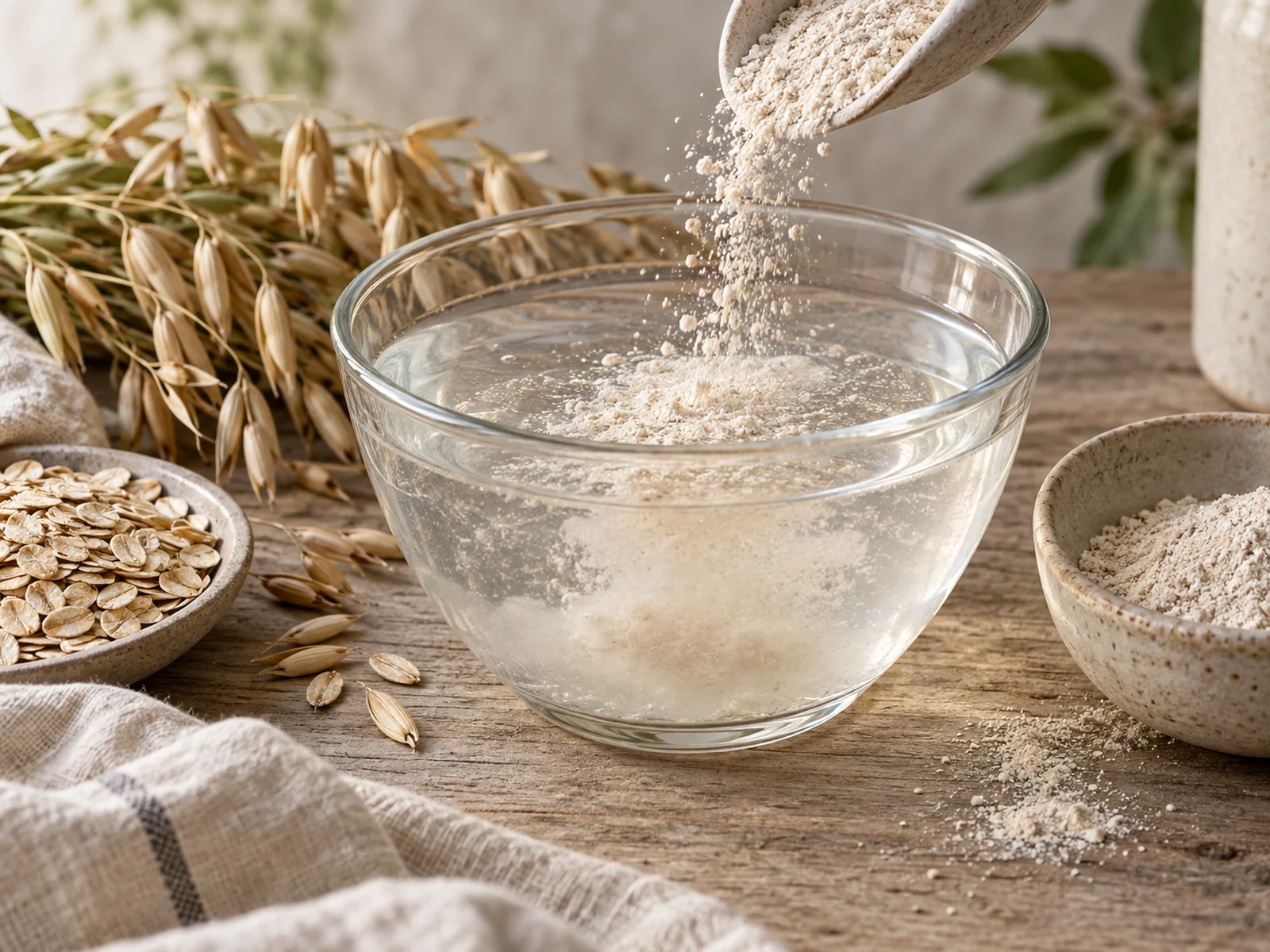
Colloidal oatmeal has one of the stronger evidence bases among "natural" skin ingredients -- strong enough that the FDA specifically recognizes it, by name, as an over-the-counter skin protectant for temporary eczema symptom relief. But the reasons it works are more specific than "oats are soothing," and the difference between colloidal oatmeal and the oats in your pantry matters more than it might seem.
Two compound groups do most of the work
Avenanthramides are phenolic compounds found in oats that have been shown to inhibit NF-κB activity and reduce the release of proinflammatory cytokines and histamine -- mechanisms directly relevant to inflammation and itch. Beta-glucans, a different class of compound, form a protective film on the skin's surface that helps retain moisture and shield against irritants. Together, research describes colloidal oatmeal as having anti-inflammatory, antipruritic (anti-itch), antioxidant, and skin-barrier-supporting effects, along with a prebiotic effect that supports beneficial skin bacteria.
Why "colloidal" is the important word
The difference between colloidal oatmeal and ordinary kitchen oatmeal isn't the oats themselves -- it's the processing. Colloidal oatmeal is milled fine enough to stay evenly suspended in water rather than settling to the bottom, which is what allows its active compounds to actually reach and coat the skin. Regular rolled or steel-cut oats added to a bath can still feel soothing, but the larger particle size means the same beta-glucans and avenanthramides aren't distributed or absorbed the same way -- this is a meaningful practical distinction, not a marketing one.
What the research shows
Clinical and real-world data support colloidal oatmeal for reducing itching, scaling, and dryness in eczema, and for improving skin barrier function measurably. One study following an emollient maintenance routine over six months found a significantly lower eczema flare rate in the group using a colloidal-oat-containing emollient compared with a control group, with a meaningfully longer time before flares occurred. It is generally well tolerated across age groups, including in infants, with a strong long-term safety record.
Using it well
Colloidal oatmeal products -- bath soaks, creams, lotions, and cleansers -- are widely available and generally well tolerated. As with any skin-protectant product, it provides temporary symptom relief rather than a cure, and it is not a substitute for prescribed treatment of diagnosed eczema or other skin conditions. People with a known oat allergy should avoid it.