01
Why people use it
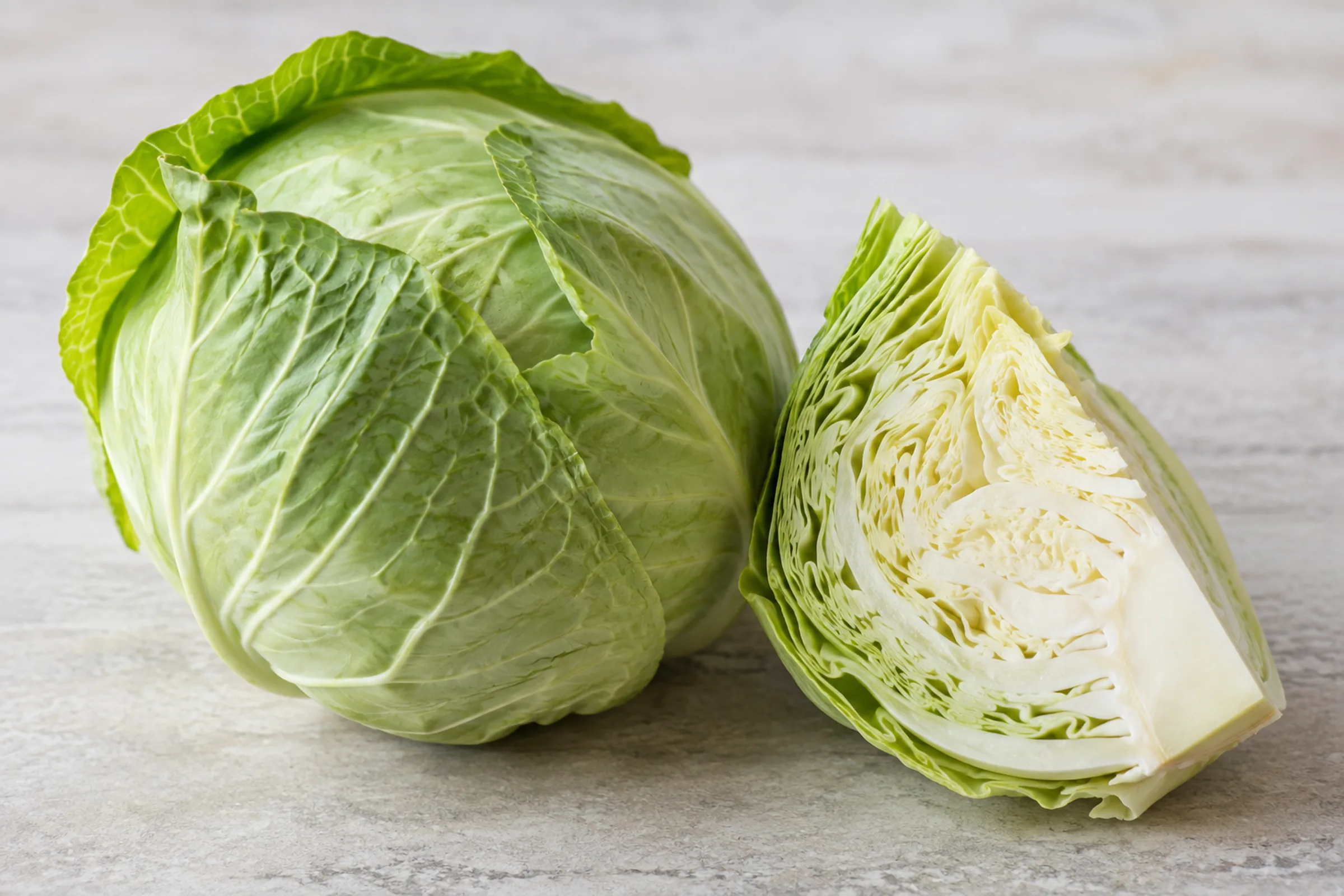
A cruciferous vegetable and a close relative of kale and broccoli, low in calories with a solid vitamin K, vitamin C and fiber profile.
- ✓Everyday vegetable nutrition
- ✓Vitamin C and K intake
- ✓Base for fermented preparations
02
What the evidence says
Cabbage's primary evidence base is compositional: USDA nutrient analysis shows a solid vitamin C, vitamin K, folate and fiber content relative to its very low calorie count. This describes established nutrient composition, not a clinical claim about treating or preventing a specific condition.
Hover, focus or tap each label for context.
These labels summarize the available context; they are not a clinical recommendation.03
Common forms
Hover, focus or tap a form to see what it means.
04
Food and nutrition context
Raw cabbage is low in calories with a solid vitamin C, vitamin K and fiber content. The reference panel below uses 100 g of raw cabbage (USDA FoodData Central, FDC 169975). Values vary somewhat between common (green), red, napa, and bok choy cabbage varieties, which are covered separately where relevant.
- Total fat
- 0.1 g0% DV
- Sodium
- 18 mg1% DV
- Total carbohydrate
- 5.8 g2% DV
- Dietary fiber
- 2.5 g9% DV
- Protein
- 1.3 g
- Vitamin K
- 76 mcg63% DV
- Vitamin C
- 37 mg41% DV
- Folate
- 43 mcg11% DV
- Potassium
- 170 mg4% DV
- Calcium
- 40 mg3% DV
- Iron
- 0.47 mg3% DV
Percent Daily Values use current FDA adult reference values for a 2,000-calorie diet.
USDA FoodData Central, FDC 169975 ↗Source checked September 13, 2026. Values are rounded.Safety note
Know before you use it
Cabbage carries a moderate vitamin K content, worth a consistent-intake note for people on warfarin or other vitamin K-sensitive blood thinners, though it is far lower than kale, chard or spinach. Like other cruciferous vegetables, raw cabbage contains goitrogenic compounds; cooking reduces this effect, and ordinary dietary amounts are not typically a concern outside of existing thyroid disease under a doctor's care. Cabbage is also a common cause of gas and bloating for some people due to its fermentable fiber content.
Sources & review
- FoodData Central: Cabbage, raw (FDC 169975)U.S. Department of Agriculture
- Vitamin K and Coumadin (Warfarin)NIH Office of Dietary Supplements