01
Why people use it
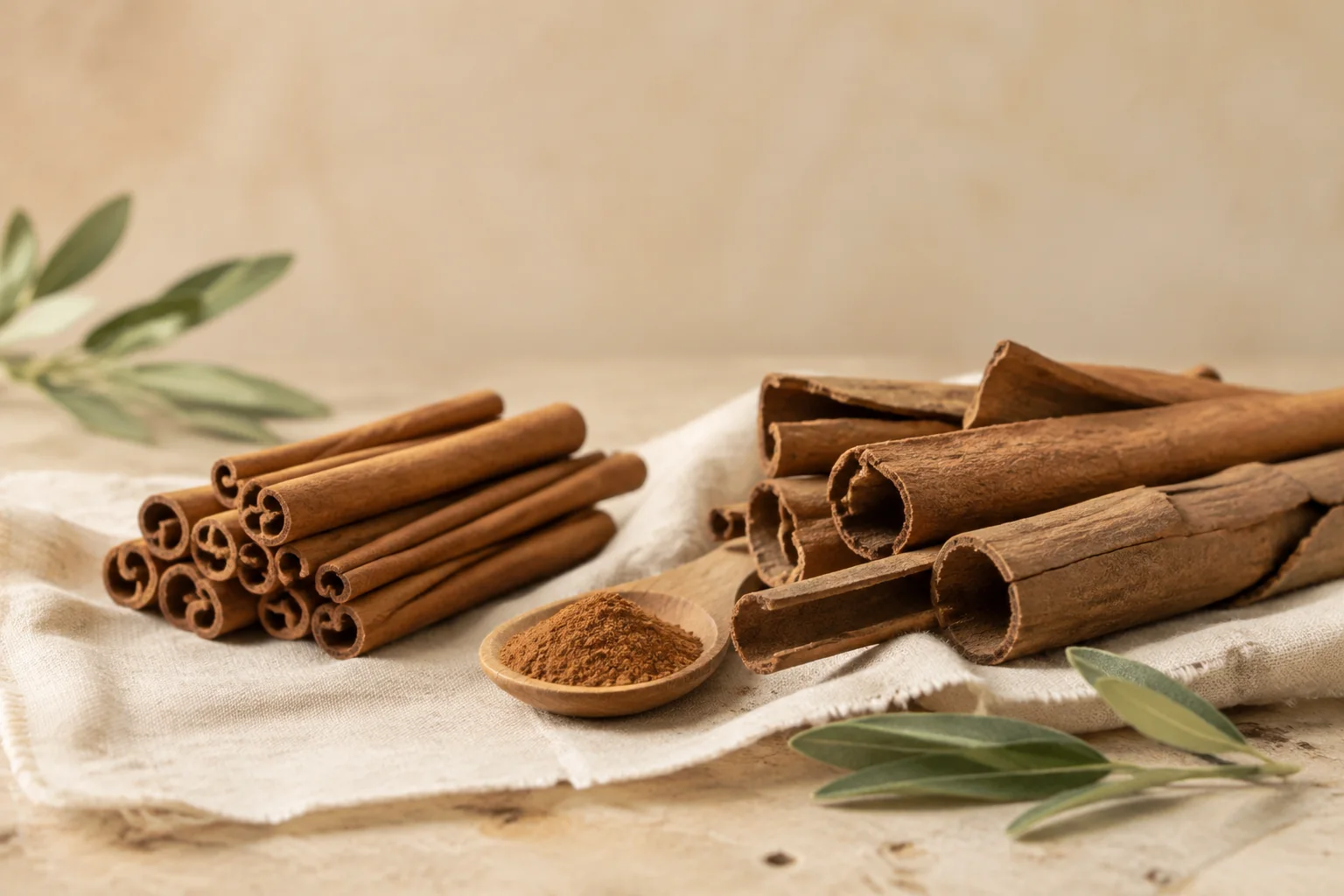
Cinnamon has culinary, historical or practitioner context documented in the original Holistic FAQs collection. This page preserves that record while separating forms, modern research and safety.
- ✓Historical and traditional record
- ✓Practitioner and community context
- ✓Botanical, food or preparation knowledge
- ✓Modern research where available
02
What the evidence says
The historical record and practitioner context are meaningful evidence lanes. Modern human research varies by topic and preparation and is presented separately; lack of modern study is not proof that a tradition has no value.
Hover, focus or tap each label for context.
These labels summarize the available context; they are not a clinical recommendation.03
Common forms
Hover, focus or tap a form to see what it means.
Evidence and safety apply to the exact species, plant or fungal part, preparation and amount discussed. Food, tea, powder, tincture, oil, extract, capsule and blend forms are not automatically interchangeable.
+
Traditional and practitioner context
Cinnamon bark has been valued for centuries in South Asian, Chinese, Middle Eastern and Persian culinary and healing traditions. It has commonly appeared in warming aromatic preparations connected with digestion, appetite, circulation and seasonal comfort, although species and preparation differ.
Safety note
Know before you use it
Species and form matter. Cassia cinnamon can contain more coumarin than Ceylon cinnamon. Culinary use is not equivalent to extracts or essential oil; review concentrated use with medicines, liver concerns or pregnancy.
Read the complete Cinnamon guide
An expanded guide to Cinnamon, preserving traditional and practitioner knowledge while separating preparation, modern research and safety.
Open the full guideQuestions about Cinnamon
What should you know about Cinnamon traditional uses, evidence and safety? →
Sources & review
- Original Holistic FAQs source recordPernilla’s Holistic FAQs archive