01
Why people use it
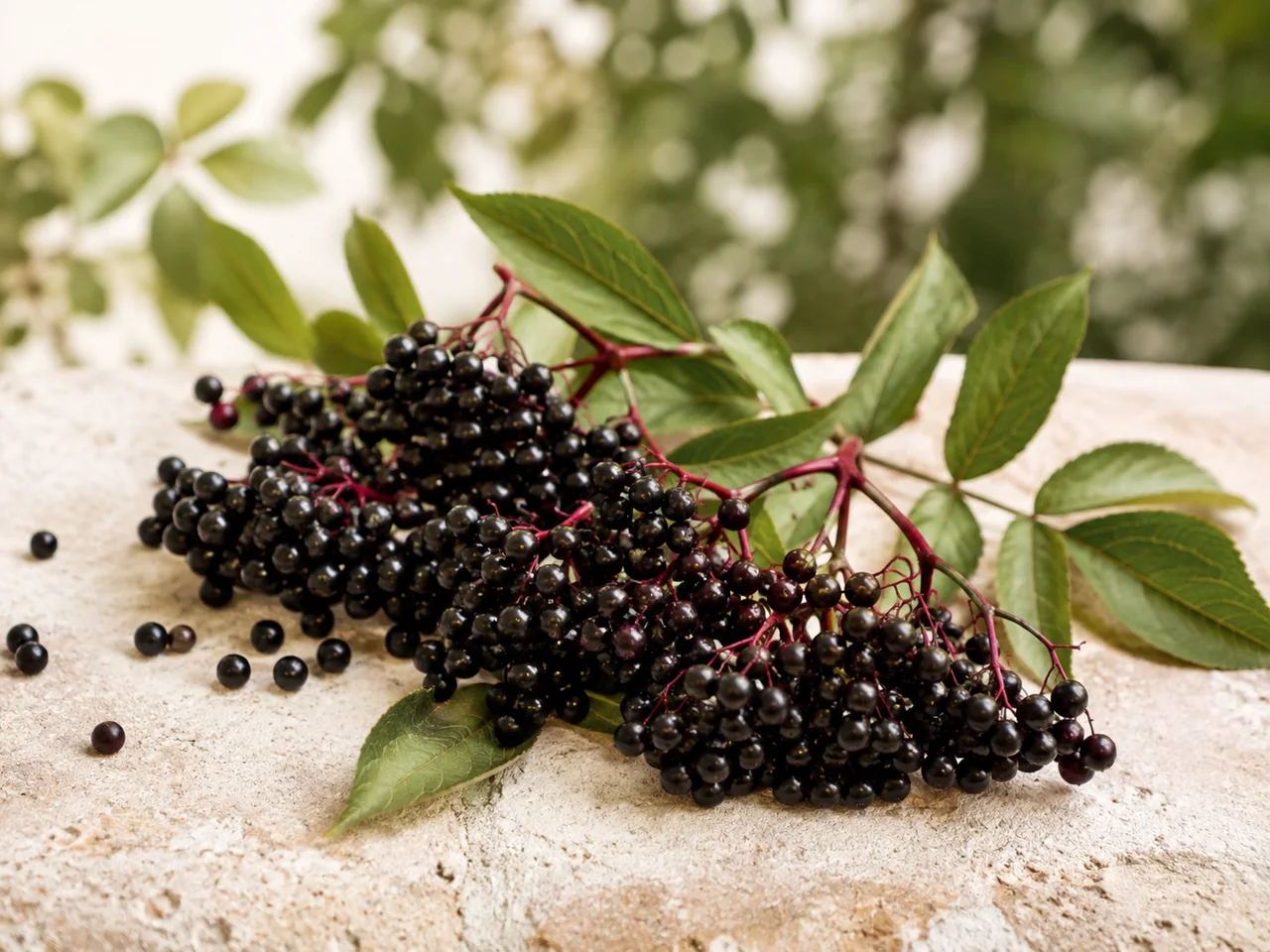
A dark berry with a long place in European seasonal wellness traditions.
- ✓Cooked preparations
- ✓Seasonal routines
- ✓Food tradition
02
What the evidence says
Small studies exist, but evidence is not conclusive for preventing or treating illness.
Hover, focus or tap each label for context.
These labels summarize the available context; they are not a clinical recommendation.03
Common forms
Hover, focus or tap a form to see what it means.
Safety note
Know before you use it
Raw or improperly prepared berries, leaves and stems can be toxic. Use correctly prepared products only.
Read the complete Elderberry guide
A complete guide to Elderberry uses, distinct preparations, traditional context, modern evidence and practical safety considerations.
Open the full guideQuestions about Elderberry
What should you know about Elderberry uses, forms, evidence and safety? →
Sources & review
- Elderberry: Usefulness and SafetyNational Center for Complementary and Integrative Health
Editorial reviewLast reviewed August 14, 2026