01
Why people use it
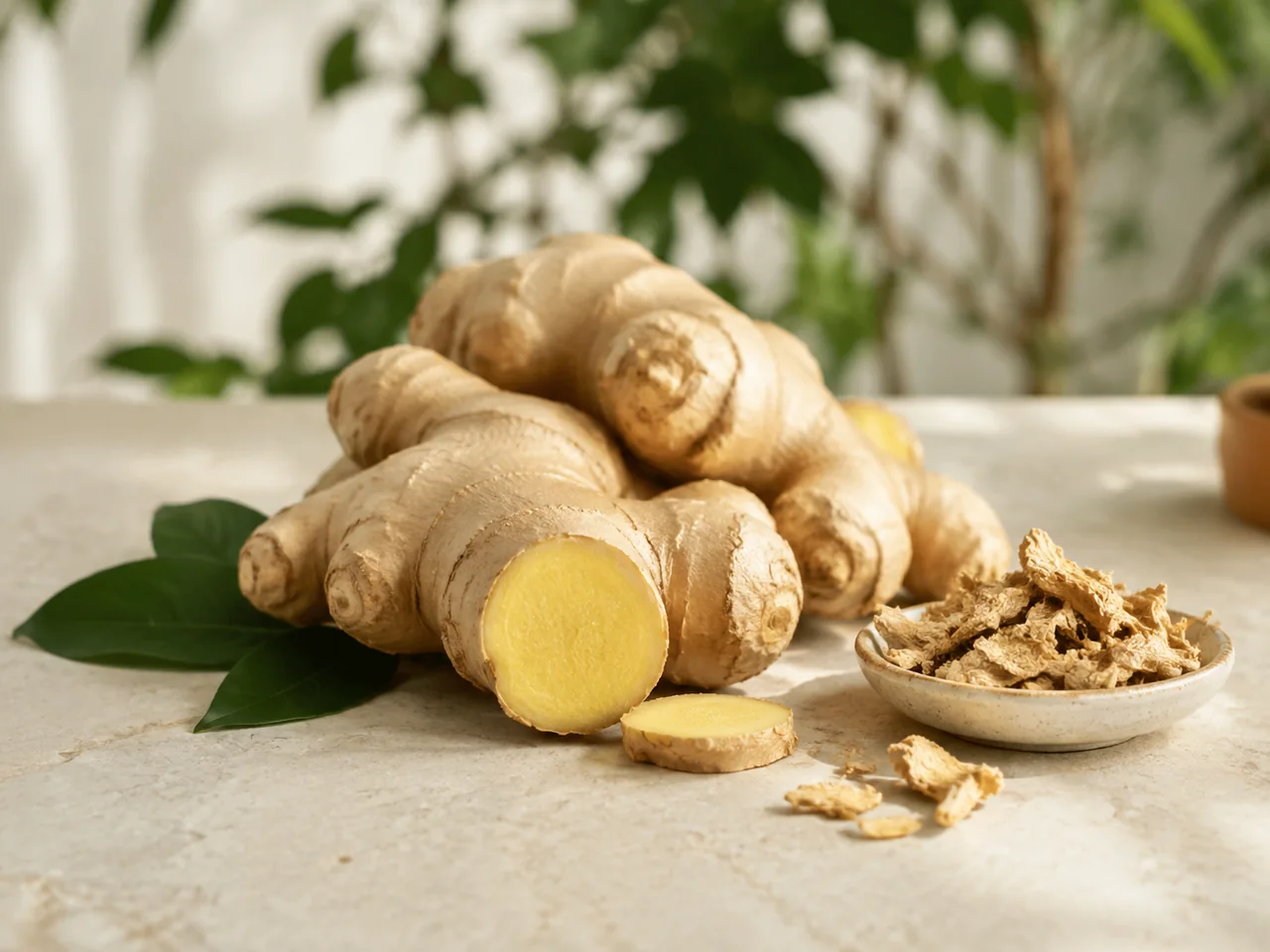
A warming culinary rhizome traditionally used for digestion and occasional nausea.
- ✓Digestive comfort
- ✓Nausea support
- ✓Warming tea
02
What the evidence says
Well studied for certain kinds of nausea; other uses remain traditional or emerging.
Hover, focus or tap each label for context.
These labels summarize the available context; they are not a clinical recommendation.03
Common forms
Hover, focus or tap a form to see what it means.
Safety note
Know before you use it
Concentrated ginger may interact with blood-thinning medicines. Ask a qualified clinician if pregnant, preparing for surgery, or taking medication.
Read the complete Ginger guide
A complete guide to Ginger uses, distinct preparations, traditional context, modern evidence and practical safety considerations.
Open the full guideQuestions about Ginger
Sources & review
- Ginger: Usefulness and SafetyNational Center for Complementary and Integrative Health
Editorial reviewLast reviewed August 28, 2026