01
Why people use it
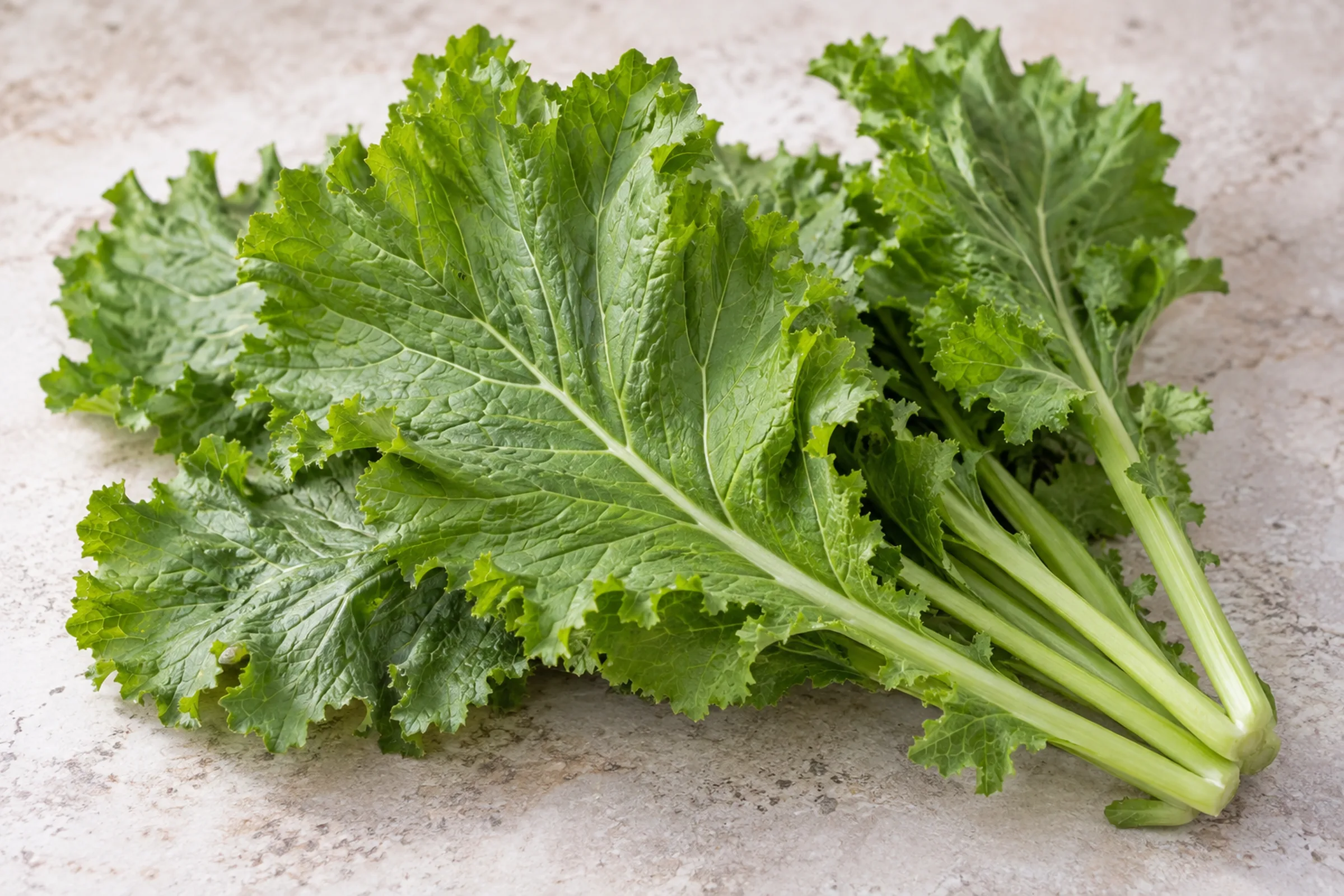
A peppery Brassica green notable for both a very high vitamin K content and a genuinely strong vitamin C content, unusual for the same leafy green to have both in quantity.
- ✓Everyday leafy-green nutrition
- ✓Vitamin K and C intake
- ✓Traditional Southern U.S. and South/East Asian cooking greens
02
What the evidence says
Mustard greens' primary evidence base is compositional: USDA nutrient analysis shows a very high vitamin K content alongside a genuinely strong vitamin C content -- an unusual combination, since most of the highest-vitamin-K greens (kale, chard, collards) are comparatively lower in vitamin C. This describes established nutrient composition, not a clinical claim about treating or preventing a specific condition.
Hover, focus or tap each label for context.
These labels summarize the available context; they are not a clinical recommendation.03
Common forms
Hover, focus or tap a form to see what it means.
04
Food and nutrition context
Raw mustard greens are low in calories while carrying a very high concentration of vitamin K alongside a genuinely strong vitamin C content relative to that calorie count. The reference panel below uses 100 g of raw mustard greens (USDA FoodData Central, FDC 169256). Cooking further concentrates the vitamin K and vitamin A content per gram (since the greens shrink substantially), while reducing vitamin C.
- Total fat
- 0.4 g1% DV
- Sodium
- 20 mg1% DV
- Total carbohydrate
- 4.6 g2% DV
- Dietary fiber
- 3.2 g11% DV
- Protein
- 2.9 g
- Vitamin C
- 70 mg78% DV
- Vitamin K
- 257 mcg214% DV
- Vitamin A
- 151 mcg RAE17% DV
- Calcium
- 115 mg9% DV
- Iron
- 1.6 mg9% DV
- Potassium
- 384 mg8% DV
- Folate
- 12 mcg3% DV
Percent Daily Values use current FDA adult reference values for a 2,000-calorie diet.
USDA FoodData Central, FDC 169256 ↗Source checked September 13, 2026. Values are rounded.Safety note
Know before you use it
Mustard greens are very high in vitamin K, which matters for people on warfarin or other vitamin K-sensitive blood thinners -- consistent day-to-day intake is the usual practical guidance. Like other cruciferous vegetables, raw mustard greens contain goitrogenic compounds; cooking reduces this effect, and ordinary dietary amounts are not typically a concern outside of existing thyroid disease under a doctor's care.
Sources & review
- FoodData Central: Mustard greens, raw (FDC 169256)U.S. Department of Agriculture
- Vitamin K and Coumadin (Warfarin)NIH Office of Dietary Supplements