01
Why people use it
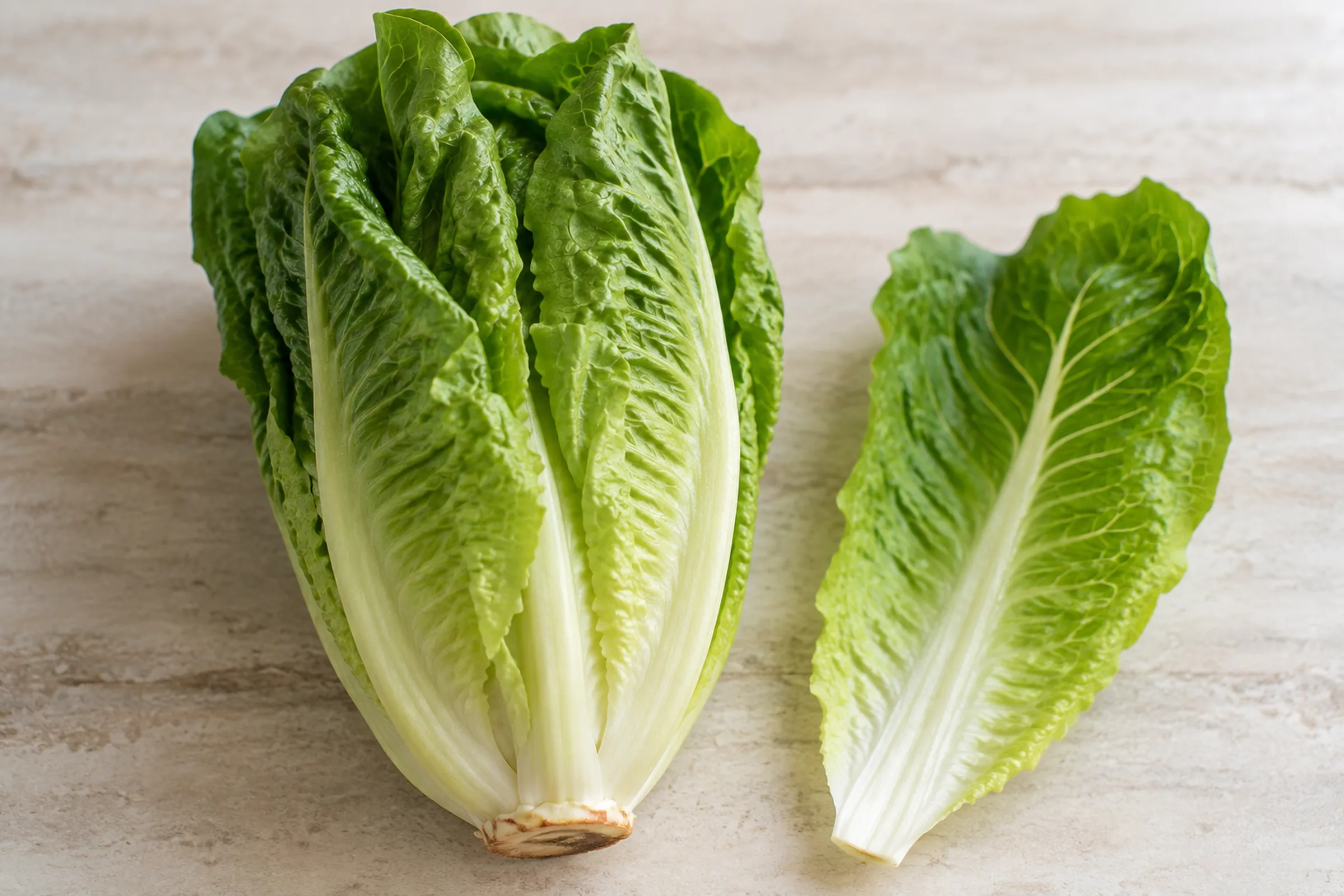
The most nutrient-dense of the commonly eaten lettuces, notable for real vitamin A, vitamin K and folate content that iceberg lettuce largely lacks.
- ✓Everyday leafy-green nutrition
- ✓Vitamin A, K and folate intake
- ✓Low-calorie salad base
02
What the evidence says
Romaine lettuce's primary evidence base is compositional: USDA nutrient analysis shows meaningful vitamin A, vitamin K and folate content relative to its very low calorie count -- genuinely higher than iceberg lettuce, which is often assumed to be nutritionally interchangeable with other lettuces. This describes established nutrient composition, not a clinical claim about treating or preventing a specific condition.
Hover, focus or tap each label for context.
These labels summarize the available context; they are not a clinical recommendation.03
Common forms
Hover, focus or tap a form to see what it means.
04
Food and nutrition context
Raw romaine lettuce is very low in calories while carrying meaningful vitamin A, vitamin K and folate content relative to that calorie count -- roughly 4-17 times more of these nutrients than iceberg lettuce, depending on the specific nutrient. The reference panel below uses 100 g of raw romaine lettuce (USDA FoodData Central, FDC 169247).
- Total fat
- 0.3 g0% DV
- Sodium
- 8 mg0% DV
- Total carbohydrate
- 3.3 g1% DV
- Dietary fiber
- 2.1 g8% DV
- Protein
- 1.2 g
- Vitamin K
- 103 mcg85% DV
- Vitamin A
- 436 mcg RAE48% DV
- Folate
- 136 mcg34% DV
- Iron
- 0.97 mg5% DV
- Potassium
- 247 mg5% DV
- Vitamin C
- 4 mg4% DV
Percent Daily Values use current FDA adult reference values for a 2,000-calorie diet.
USDA FoodData Central, FDC 169247 ↗Source checked September 13, 2026. Values are rounded.Safety note
Know before you use it
Romaine lettuce carries a meaningful vitamin K content, worth a consistent-intake note for people on warfarin or other vitamin K-sensitive blood thinners. Romaine has also been the specific lettuce type linked to several documented multi-state E. coli outbreaks in the U.S. in recent years; checking current FDA/CDC advisories before eating romaine during an active outbreak, and washing all leafy greens thoroughly, are reasonable general precautions.
Sources & review
- FoodData Central: Lettuce, cos or romaine, raw (FDC 169247)U.S. Department of Agriculture
- Vitamin K and Coumadin (Warfarin)NIH Office of Dietary Supplements