01
Why people use it
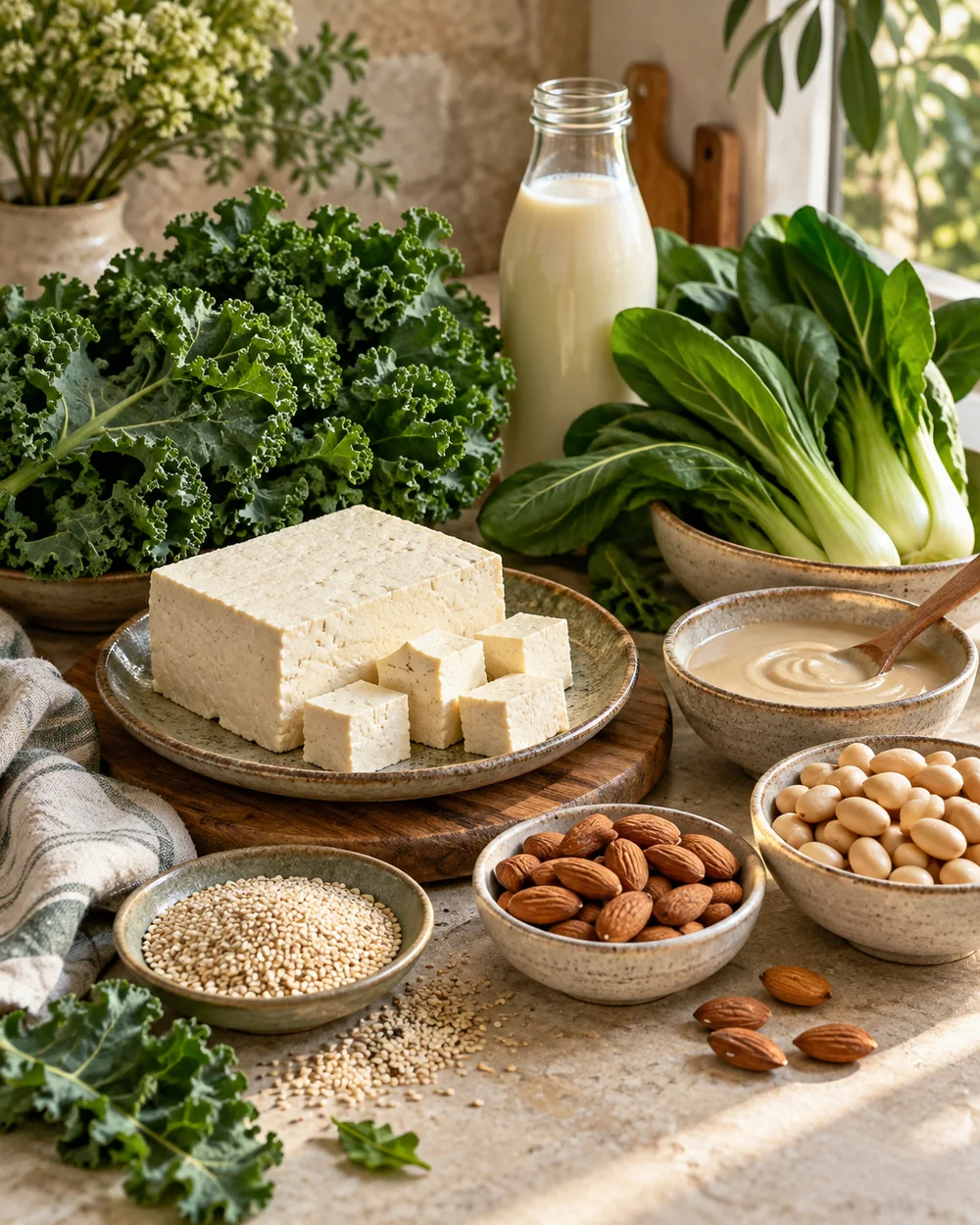
A fully plant-based diet can easily meet calcium needs, but the amount of calcium listed on a nutrition label isn't the amount the body actually absorbs -- oxalates and phytates make some vegetables far less useful calcium sources than others.
- ✓Bone and dental health support on a plant-based diet
- ✓Muscle contraction, nerve signaling, and blood clotting
02
What the evidence says
The core evidence here isn't about whether plants contain calcium -- they clearly do -- but about which plant foods deliver calcium the body can actually use, a distinction with real published absorption-rate data behind it.
Hover, focus or tap each label for context.
These labels summarize the available context; they are not a clinical recommendation.03
Common forms
Hover, focus or tap a form to see what it means.
Safety note
Know before you use it
Spinach, Swiss chard, and beet greens remain nutritious foods worth eating, but they should not be relied on as a primary calcium source given their low absorption rate; pairing a variety of calcium sources across the week is more reliable than counting on any single food. Anyone managing osteoporosis, kidney stones, or another condition involving calcium or oxalate metabolism should get personalized guidance from a clinician or registered dietitian rather than relying on general food-source information.
Sources & review
- Getting Plant-Based Calcium in the DietToday's Dietitian
- CalciumVegan Health (citing NIH ODS and Weaver absorption data)
- Sources of Calcium in a Vegan DietProVeg International