→
Explore Vitamins, minerals & vegan nutrition
22 published entries in this Natural Library category.
 Vitamins, minerals & vegan nutrition
Chromium
The single best-evidenced complementary intervention in this cluster, per one major review.
Open entry → Vitamins, minerals & vegan nutrition
Magnesium
A deficiency-correction story rather than a general standalone intervention.
Open entry → Vitamins, minerals & vegan nutrition
Alpha-Lipoic Acid
Real evidence for insulin sensitivity — a distinct, weaker question from its popular neuropathy use.
Open entry → Vitamins, minerals & vegan nutrition
L-Citrulline
An amino acid the body converts into L-arginine, the raw material for nitric oxide — the same vessel-relaxing signal PDE5 inhibitor drugs work by preserving.
Open entry → Vitamins, minerals & vegan nutrition
L-Arginine
The direct precursor the body uses to make nitric oxide, with a genuinely solid double-blind RCT in vasculogenic ED.
Open entry → Vitamins, minerals & vegan nutrition
Zinc
A clear mechanistic role in testosterone production — genuinely useful for correcting deficiency, not a general booster.
Open entry → Vitamins, minerals & vegan nutrition
Probiotics
"Probiotics" as a blanket category is too broad to be useful — the real, reproducible evidence is strain-specific.
Open entry → Vitamins, minerals & vegan nutrition
Glucosamine & Chondroitin
Likely the best-selling joint supplement category in the world — the recent evidence doesn't match the reputation.
Open entry → Vitamins, minerals & vegan nutrition
Algae Oil (Plant-Based Omega-3)
The direct, plant-based source of the same long-chain omega-3s found in fish oil — because algae, not fish, is where they actually originate.
Open entry →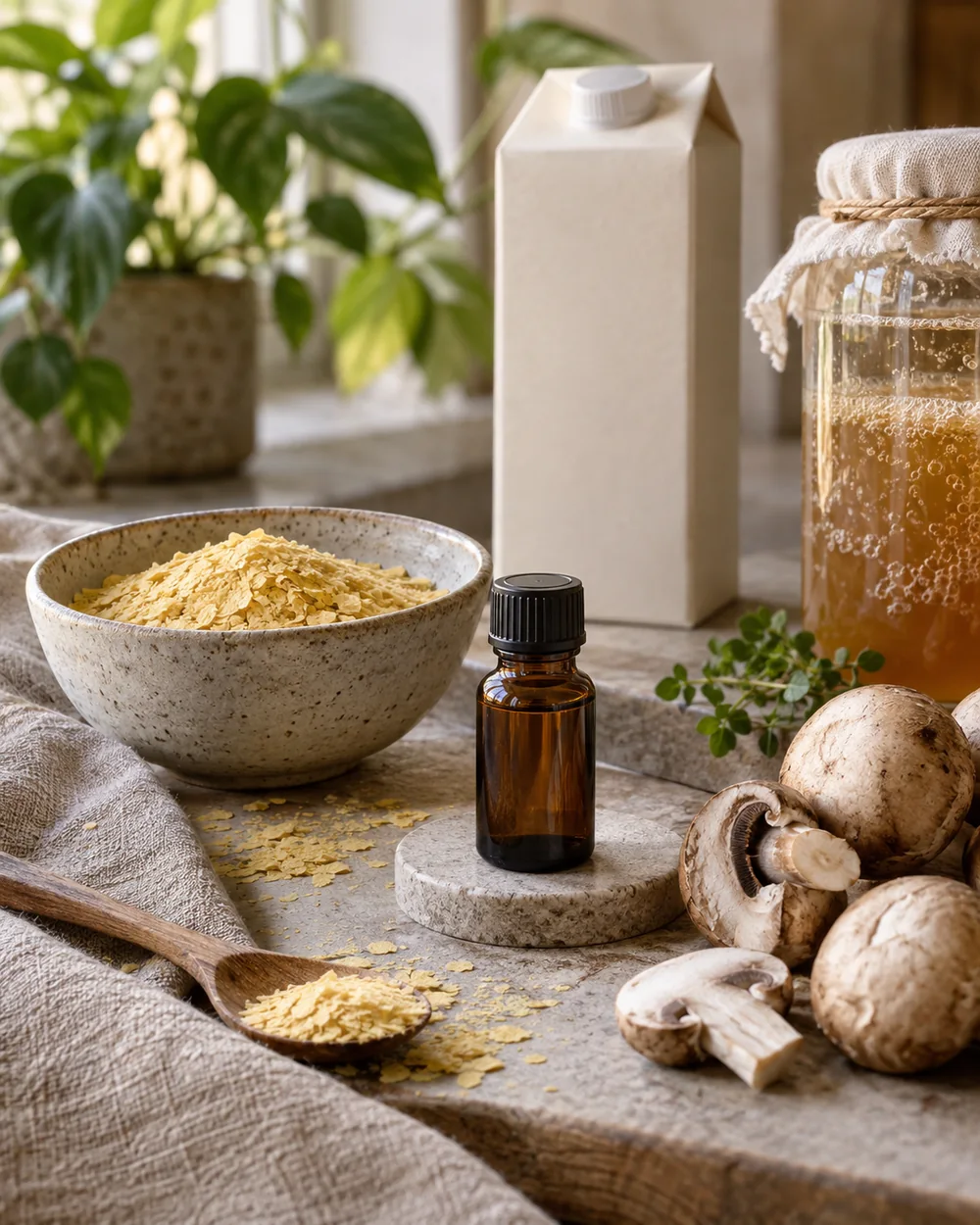 Vitamins, minerals & vegan nutrition
Vitamin B12 (Vegan Supplementation)
CobalaminAn essential nutrient that occurs reliably only in animal-derived foods, making fortified foods or supplementation a genuine requirement -- not an optional add-on -- for anyone eating a fully plant-based diet.
Open entry →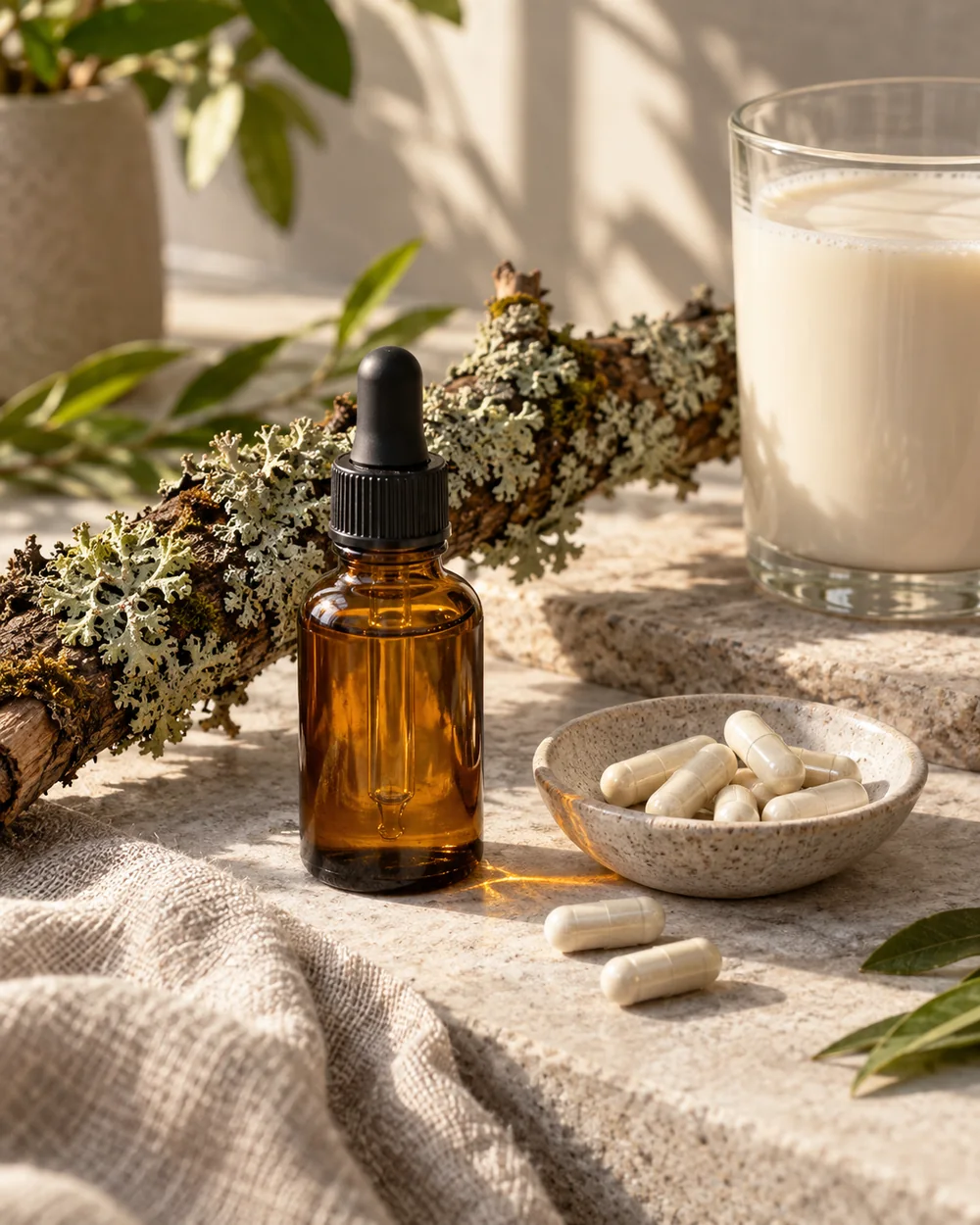 Vitamins, minerals & vegan nutrition
Vitamin D3 (Lichen-Derived, Vegan)
CholecalciferolMost vitamin D3 supplements are made from lanolin, a byproduct of sheep's wool, making them unsuitable for a vegan diet -- lichen offers a plant-based source of the identical D3 molecule rather than the less-effective D2 alternative.
Open entry →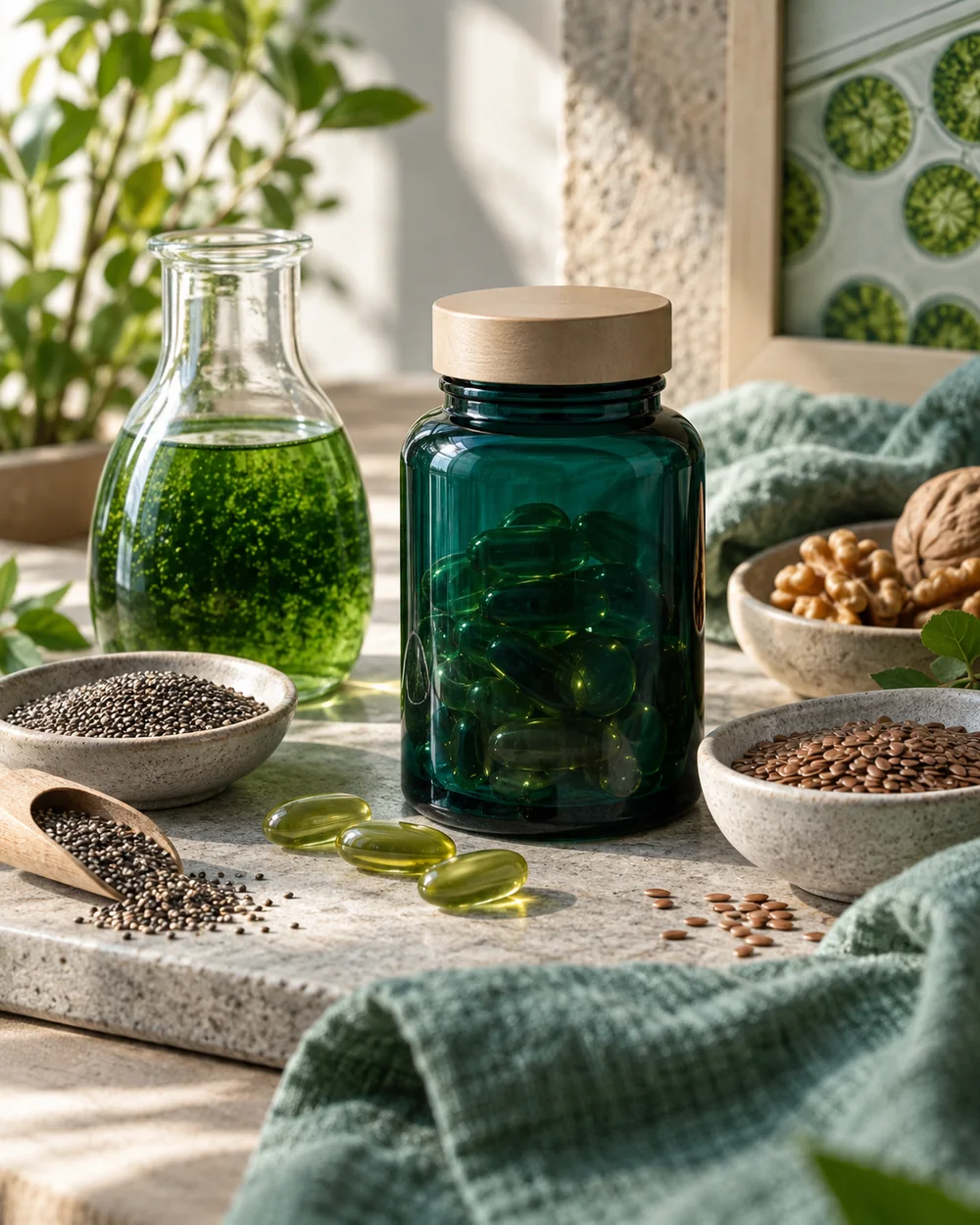 Vitamins, minerals & vegan nutrition
Algal Omega-3 (Vegan DHA/EPA)
Docosahexaenoic acid / eicosapentaenoic acid, from microalgaeFish get their DHA and EPA from the microalgae they consume; algal oil supplements draw from that same original source directly, giving vegans and vegetarians a genuine, bioequivalent alternative to fish oil rather than a weaker substitute.
Open entry →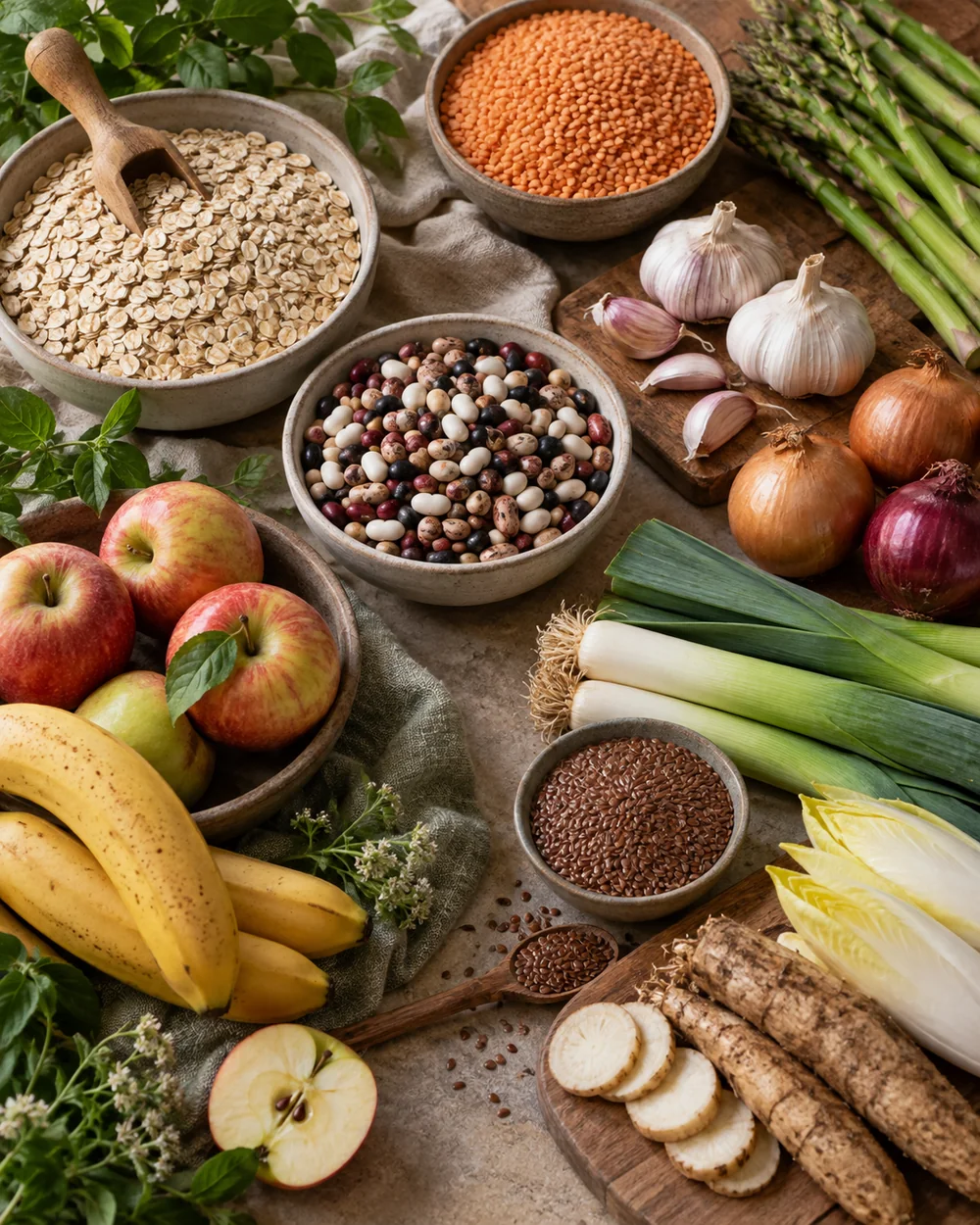 Vitamins, minerals & vegan nutrition
Prebiotic Fiber (Vegan Food Sources)
Prebiotic fibers like inulin feed beneficial gut bacteria and are naturally abundant in a plant-based diet -- but the effective doses used in research are well above typical intake, and ramping up too quickly is a well-documented cause of real digestive discomfort.
Open entry →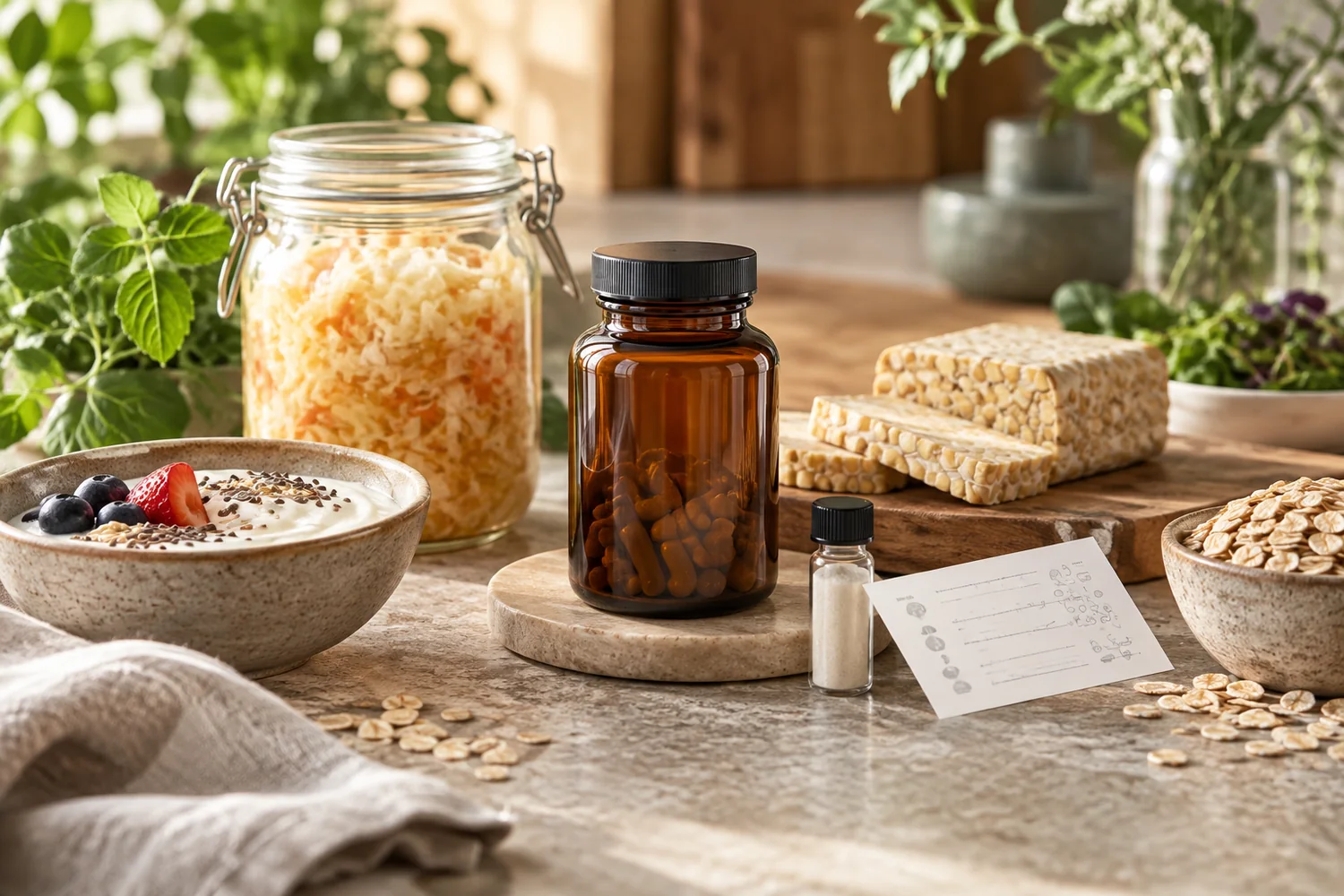 Vitamins, minerals & vegan nutrition
Probiotics (Strain-Specific Evidence & Fermented Foods)
Fermented foods and "probiotics" are commonly treated as interchangeable, but NCCIH is explicit that a genuine probiotic claim requires strain-specific identification and clinical testing that most fermented foods, including sauerkraut and tempeh, were never actually put through.
Open entry →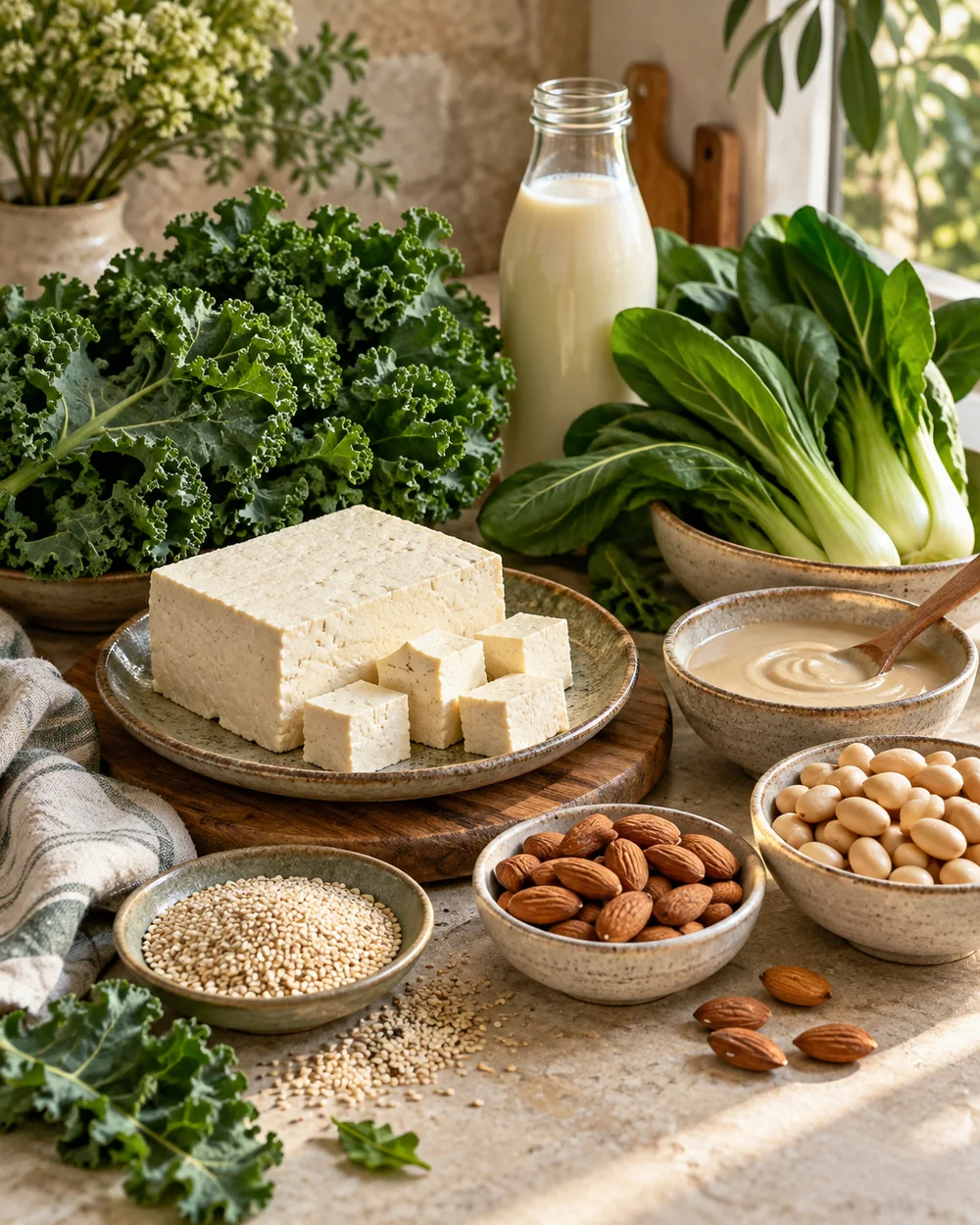 Vitamins, minerals & vegan nutrition
Calcium (Vegan Food Sources & Bioavailability)
CalciumA fully plant-based diet can easily meet calcium needs, but the amount of calcium listed on a nutrition label isn't the amount the body actually absorbs -- oxalates and phytates make some vegetables far less useful calcium sources than others.
Open entry →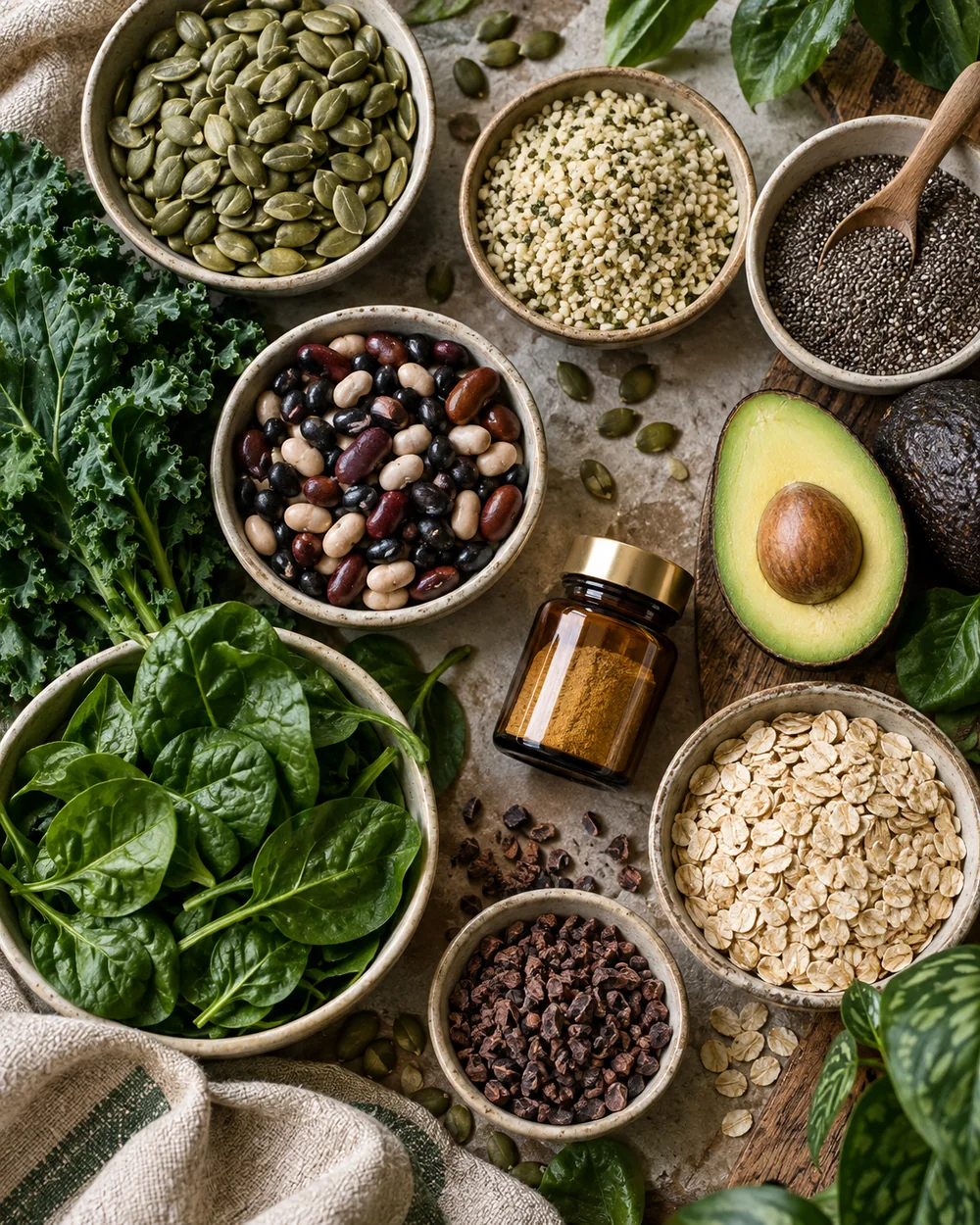 Vitamins, minerals & vegan nutrition
Magnesium (Vegan Food Sources)
MagnesiumMagnesium is genuinely well-supplied by a varied plant-based diet -- the NIH does not list vegans among its identified at-risk groups for magnesium deficiency, making this one nutrient where "eat a variety of whole plant foods" is close to the whole answer.
Open entry →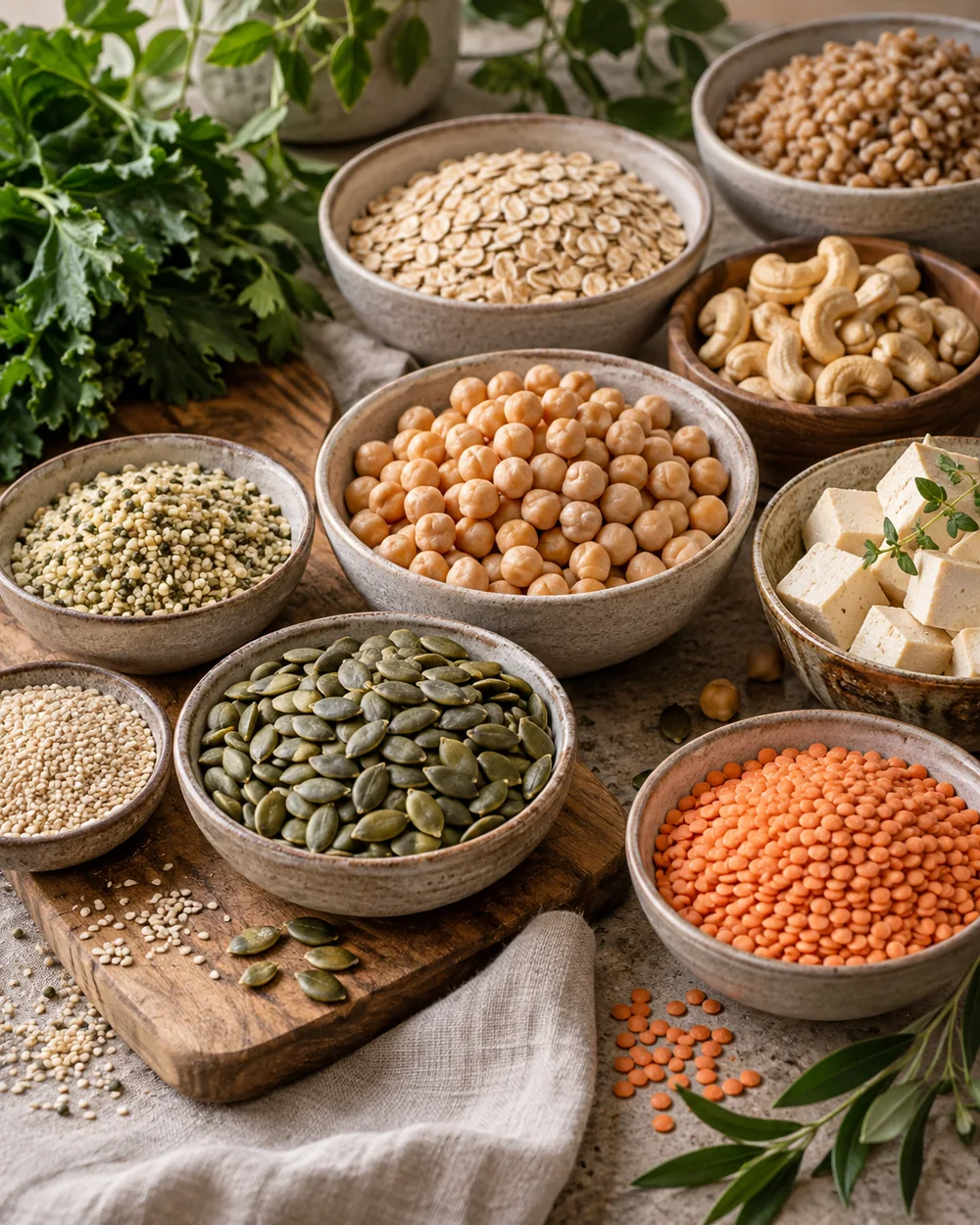 Vitamins, minerals & vegan nutrition
Zinc (Vegan Bioavailability & Food Sources)
ZincZinc is genuinely present in plant foods, but phytates in legumes, whole grains, and seeds reduce how much of it the body absorbs -- a real, NIH-acknowledged reason vegans and vegetarians typically need a higher intake target than omnivores.
Open entry →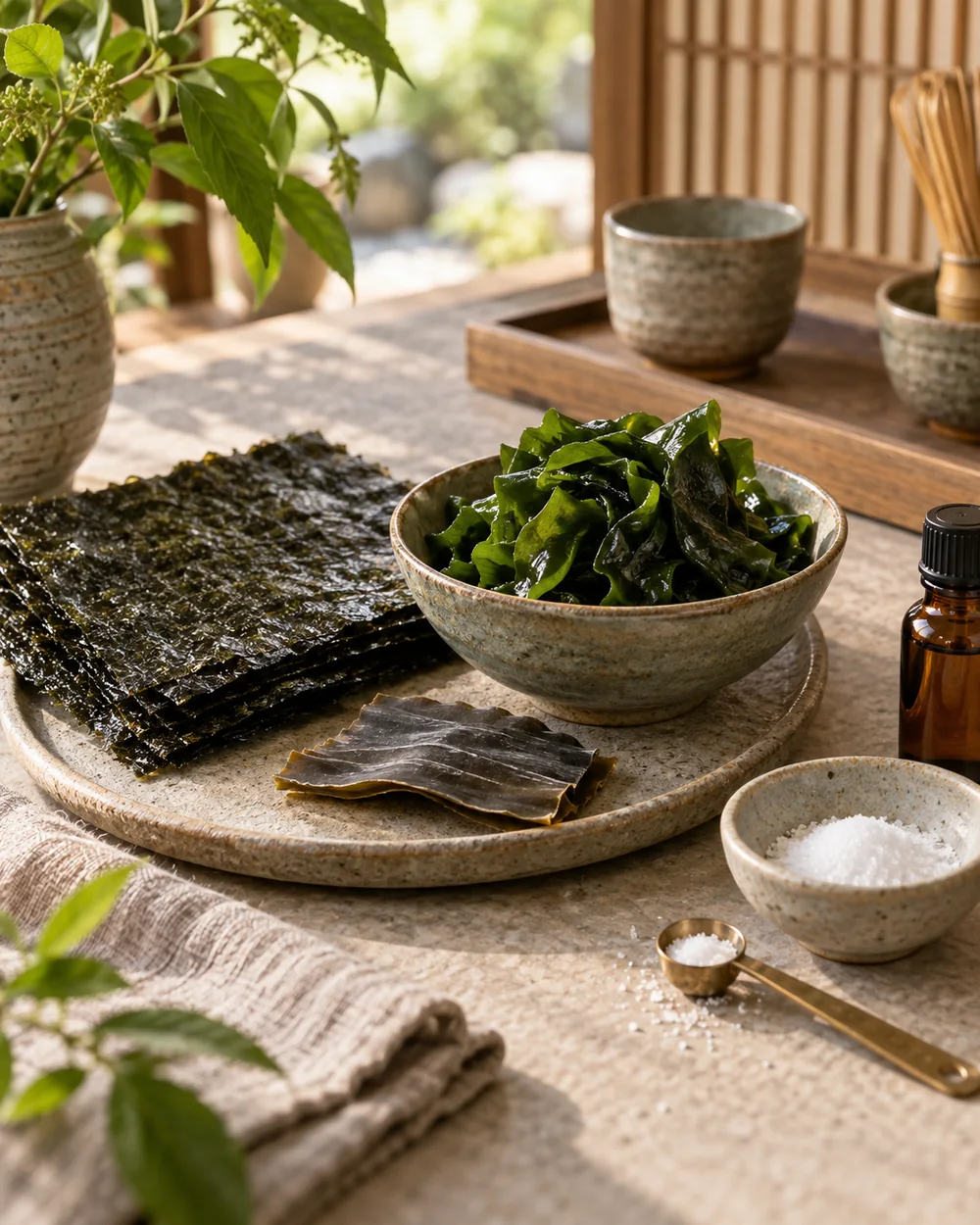 Vitamins, minerals & vegan nutrition
Iodine (Vegan Sources & Safety)
IodineIodine is a genuinely two-sided nutrition concern for vegans: seaweed, the main plant source, has such wildly variable iodine content that both deficiency and excess are documented risks, unlike most nutrients where the concern runs in only one direction.
Open entry →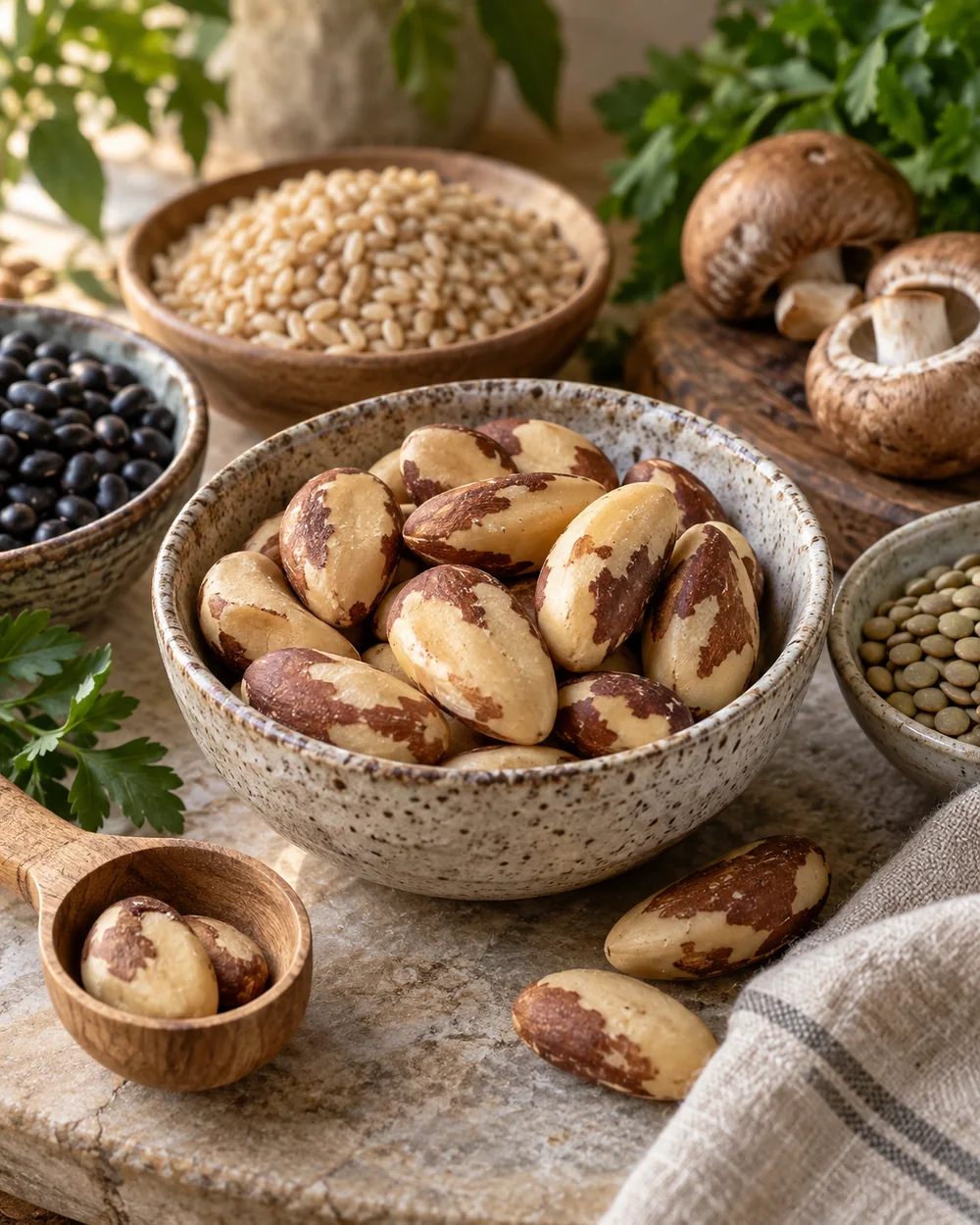 Vitamins, minerals & vegan nutrition
Selenium (Vegan Sources & Brazil Nut Variability)
SeleniumBrazil nuts are the one reliably selenium-rich plant food, but individual nuts vary so enormously in selenium content that a casual daily handful habit is a genuine, documented route to selenium toxicity, not just a theoretical concern.
Open entry →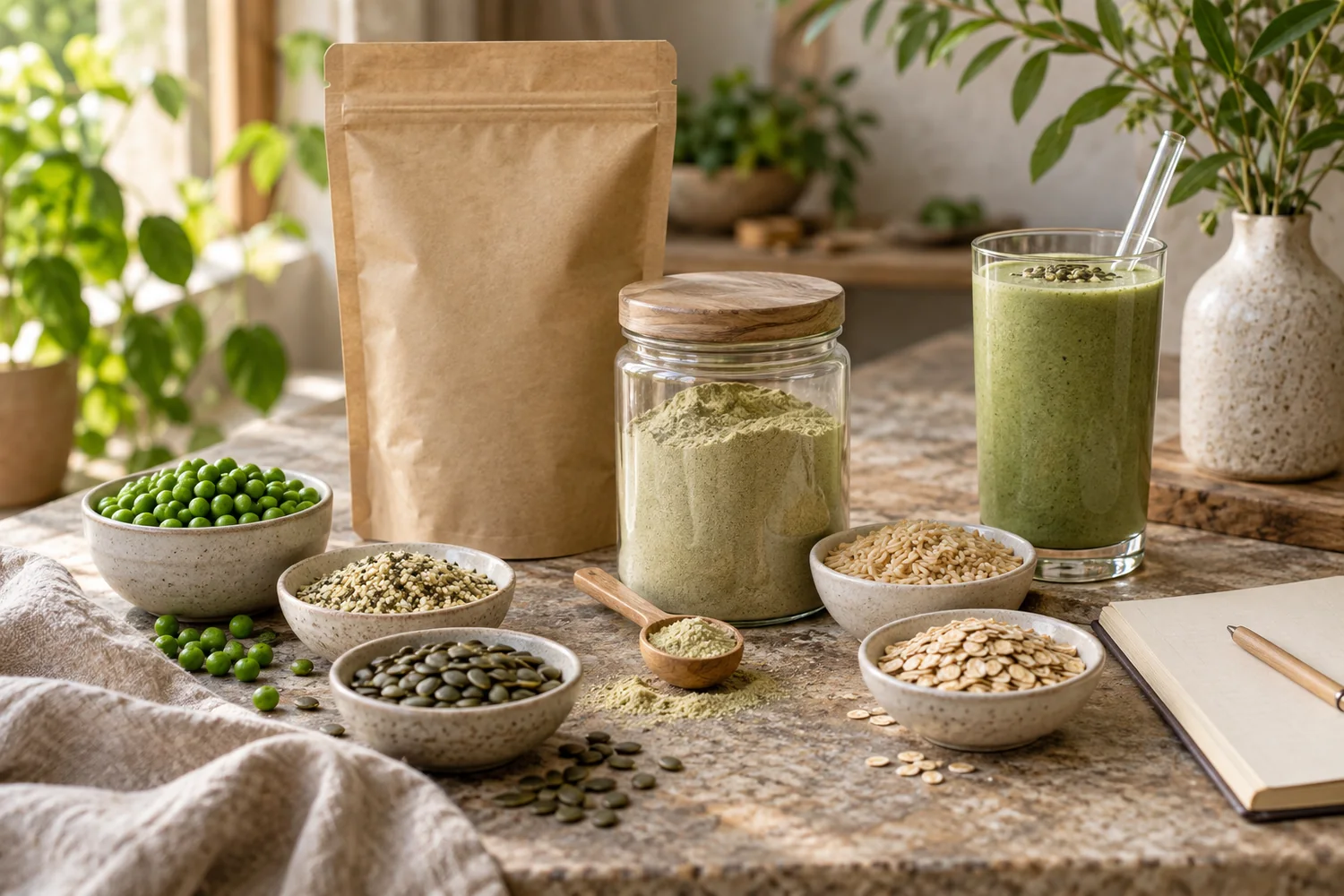 Vitamins, minerals & vegan nutrition
Plant Protein Powder (Vegan Blends)
Individual plant proteins are typically incomplete on their own, but blends that pair complementary sources -- most commonly pea and rice -- cover all nine essential amino acids, and head-to-head clinical trial data has found pea protein performs comparably to whey for muscle gains.
Open entry → Vitamins, minerals & vegan nutrition
Greens Powder (Ingredient Transparency & Evidence)
Greens powders are a convenience product, not a vegetable replacement -- dehydration and processing reduce nutrient and fiber content compared to whole vegetables, and proprietary blend labeling makes it genuinely hard to know how much of any individual ingredient a serving actually contains.
Open entry → Vitamins, minerals & vegan nutrition
Electrolytes (Hydration Evidence)
Electrolyte supplements are widely marketed as necessary for preventing cramping and hyponatremia during exercise, but endurance-sport research has found that drinking beyond thirst -- not inadequate sodium replacement -- is the stronger predisposing factor for that specific danger.
Open entry →