01
Why people use it
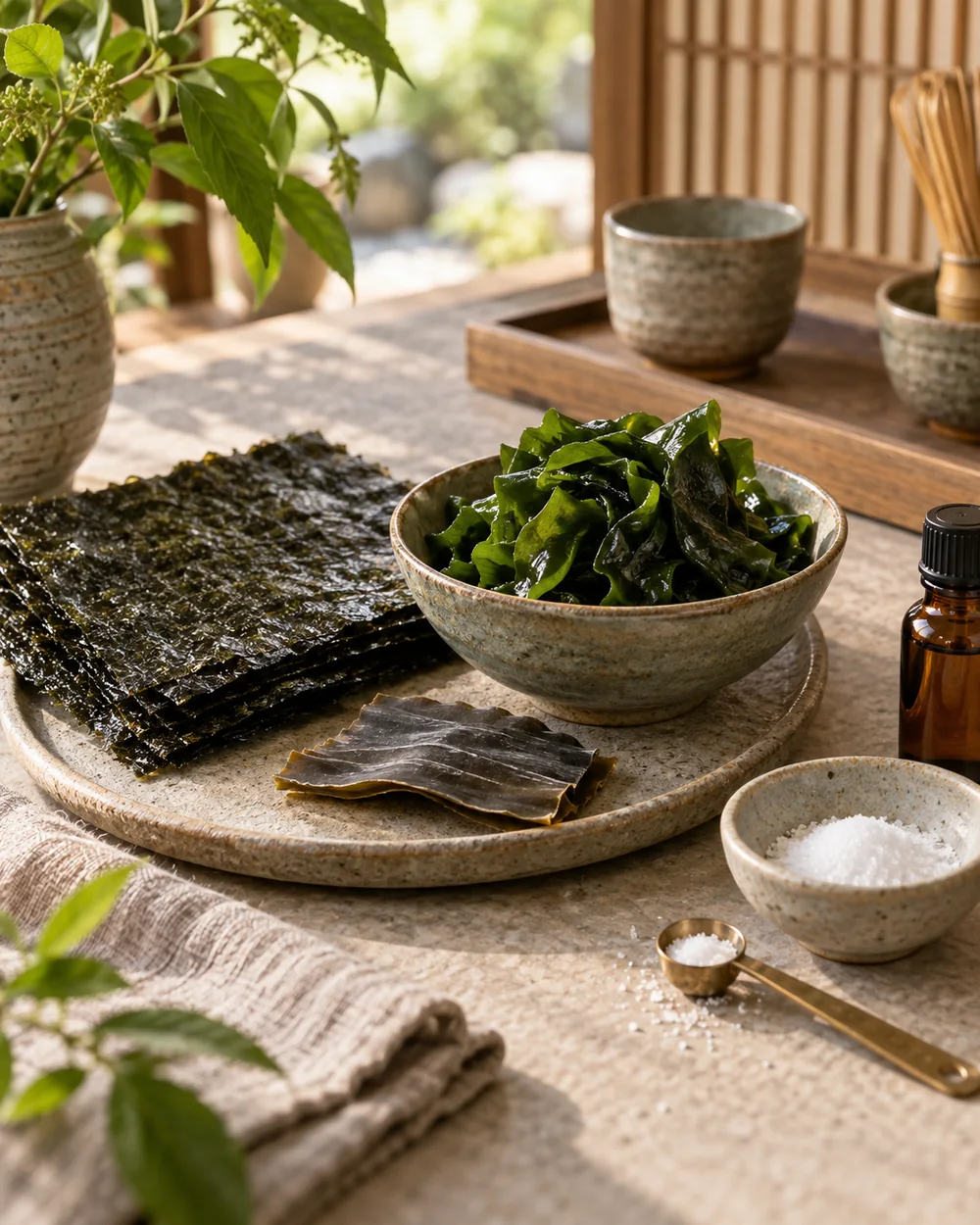
Iodine is a genuinely two-sided nutrition concern for vegans: seaweed, the main plant source, has such wildly variable iodine content that both deficiency and excess are documented risks, unlike most nutrients where the concern runs in only one direction.
- ✓Thyroid hormone production support on a plant-based diet
- ✓Meeting iodine needs without dairy, eggs, or seafood
02
What the evidence says
This is one of the few nutrients where the evidence points toward a genuinely two-directional risk rather than a single deficiency concern: vegans are a specifically named at-risk group for iodine deficiency, and separately, documented cases of iodine excess from heavy seaweed consumption have measurably altered thyroid function in study cohorts.
Hover, focus or tap each label for context.
These labels summarize the available context; they are not a clinical recommendation.03
Common forms
Hover, focus or tap a form to see what it means.
Safety note
Know before you use it
Both iodine deficiency and iodine excess can affect thyroid function, so this is not a nutrient where "more is safer" -- excessive intake, particularly from frequent or unmeasured seaweed consumption, has been linked to both iodine-induced hypothyroidism and hyperthyroidism, especially in people with pre-existing thyroid conditions. Pregnant and breastfeeding people have higher iodine needs and are a particularly important group to get this right, since iodine is critical for fetal and infant brain development. Anyone with a known thyroid condition, or anyone consuming seaweed regularly as a dietary staple rather than occasionally, should discuss iodine intake specifically with a clinician rather than assuming any amount of a "natural" source is automatically safe.
Sources & review
- Iodine - Health Professional Fact SheetNIH Office of Dietary Supplements
- Modern challenges of iodine nutrition: vegan and vegetarian dietsFrontiers in Endocrinology / PMC
- Iodine Status and Thyroid Function in a Group of Seaweed Consumers in NorwayPMC