01
Why people use it
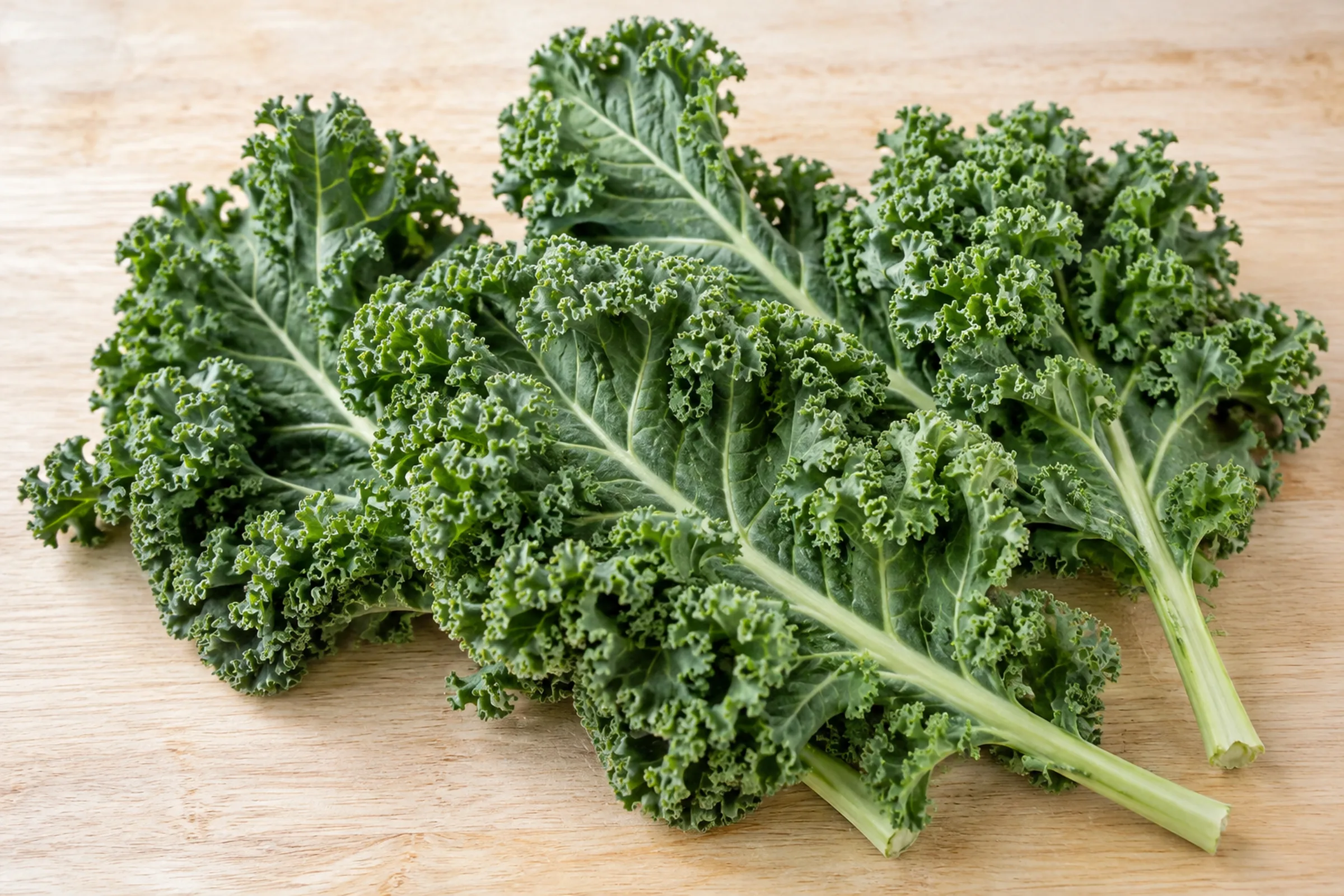
A cultivated leafy green in the same species as cabbage and broccoli, notably concentrated in vitamin K, vitamin C and vitamin A for its calorie count.
- ✓Everyday leafy-green nutrition
- ✓Vitamin K, C and A intake
- ✓Low-calorie volume in meals
02
What the evidence says
Kale's primary evidence base is compositional: USDA nutrient analysis consistently shows a high concentration of vitamin K, vitamin C, vitamin A, folate, manganese and copper relative to its calorie count. This is well-established nutrition-composition data, not a clinical-trial claim about treating or preventing any specific condition.
Hover, focus or tap each label for context.
These labels summarize the available context; they are not a clinical recommendation.03
Common forms
Hover, focus or tap a form to see what it means.
04
Food and nutrition context
Raw kale is notably low in calories while carrying a high concentration of several vitamins and minerals relative to that calorie count. The reference panel below uses 100 g of raw kale (USDA FoodData Central, FDC 168421). Cooking, chopping and storage time can all reduce some heat- or light-sensitive nutrients, particularly vitamin C.
- Total fat
- 0.9 g1% DV
- Sodium
- 38 mg2% DV
- Total carbohydrate
- 8.8 g3% DV
- Dietary fiber
- 3.6 g13% DV
- Protein
- 4.3 g
- Vitamin K
- 705 mcg587% DV
- Vitamin C
- 120 mg133% DV
- Vitamin A
- 500 mcg RAE56% DV
- Folate
- 141 mcg35% DV
- Calcium
- 150 mg12% DV
- Potassium
- 491 mg10% DV
- Iron
- 1.5 mg8% DV
Percent Daily Values use current FDA adult reference values for a 2,000-calorie diet.
USDA FoodData Central, FDC 168421 ↗Source checked September 13, 2026. Values are rounded.Safety note
Know before you use it
Kale is high in vitamin K, which is important for people taking warfarin or other vitamin K-sensitive blood thinners -- the practical guidance from most anticoagulation clinics is consistent day-to-day vitamin K intake rather than avoidance, since dose stability depends on predictability. Kale also contains oxalates, relevant for people prone to calcium-oxalate kidney stones. People with thyroid conditions sometimes ask about raw cruciferous vegetables and goitrogens; cooking reduces this effect, and ordinary dietary amounts are not typically a concern outside of existing thyroid disease under a doctor's care.
Sources & review
- FoodData Central: Kale, raw (FDC 168421)U.S. Department of Agriculture
- Vitamin K and Coumadin (Warfarin)NIH Office of Dietary Supplements