01
Why people use it
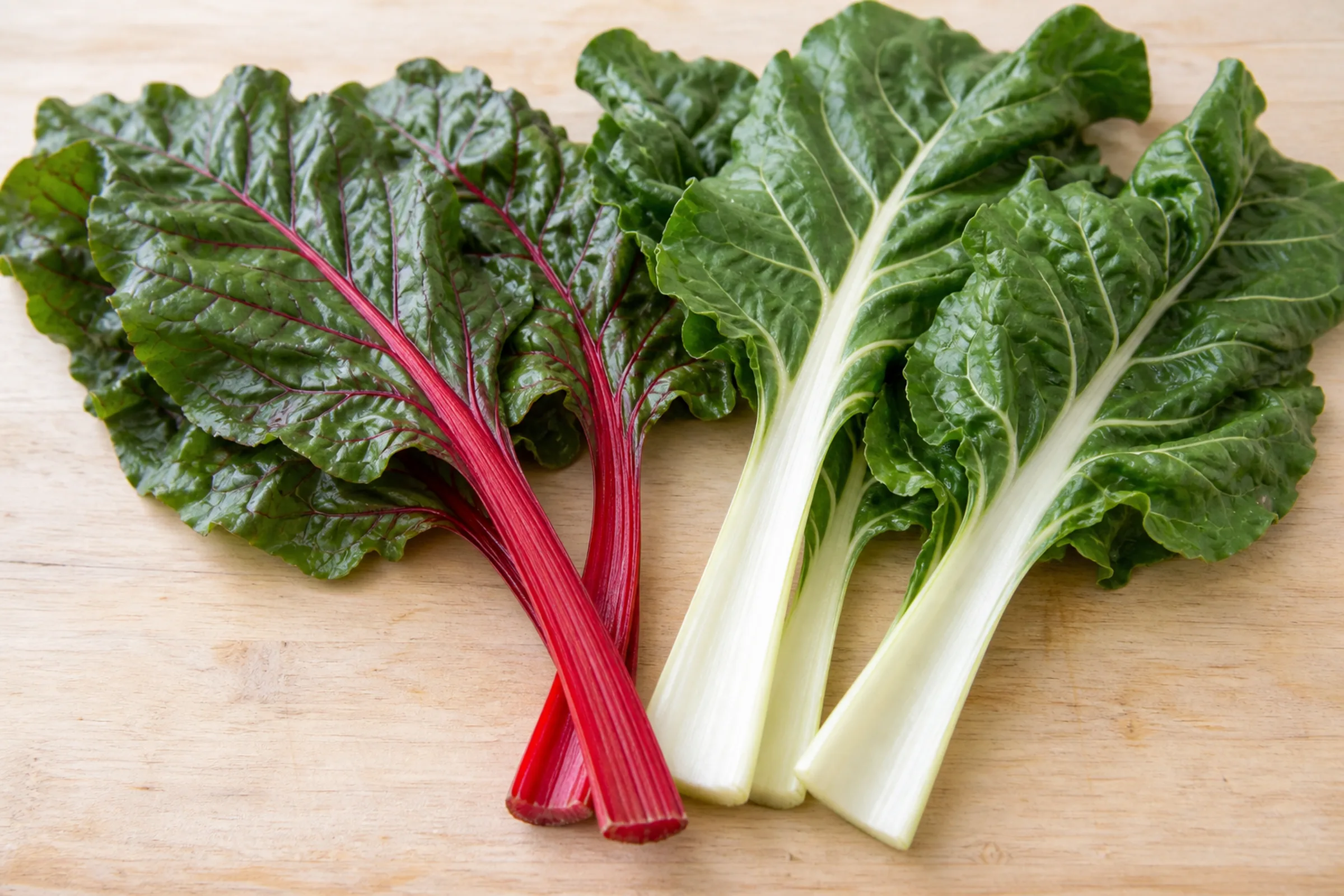
A cultivated leafy green in the same species as beets, notable for an especially high vitamin K content and one of the higher oxalate levels among common greens.
- ✓Everyday leafy-green nutrition
- ✓Vitamin K and magnesium intake
- ✓Low-calorie volume in meals
02
What the evidence says
Swiss chard's primary evidence base is compositional: USDA nutrient analysis shows an especially high concentration of vitamin K, along with magnesium, vitamin A and vitamin C, relative to its very low calorie count. This describes established nutrient composition, not a clinical claim about treating or preventing a specific condition.
Hover, focus or tap each label for context.
These labels summarize the available context; they are not a clinical recommendation.03
Common forms
Hover, focus or tap a form to see what it means.
04
Food and nutrition context
Raw Swiss chard is very low in calories while carrying an especially high concentration of vitamin K relative to that calorie count, along with meaningful magnesium, vitamin A, vitamin C, and potassium. The reference panel below uses 100 g of raw Swiss chard (USDA FoodData Central, FDC 169991). Chard is naturally higher in sodium than most leafy greens and one of the higher-oxalate vegetables, both worth noting alongside its otherwise favorable profile.
- Total fat
- 0.2 g0% DV
- Sodium
- 213 mg9% DV
- Total carbohydrate
- 3.7 g1% DV
- Dietary fiber
- 1.6 g6% DV
- Protein
- 1.8 g
- Vitamin K
- 830 mcg692% DV
- Magnesium
- 81 mg19% DV
- Vitamin A
- 306 mcg RAE34% DV
- Vitamin C
- 30 mg33% DV
- Potassium
- 379 mg8% DV
- Iron
- 1.8 mg10% DV
- Calcium
- 51 mg4% DV
Percent Daily Values use current FDA adult reference values for a 2,000-calorie diet.
USDA FoodData Central, FDC 169991 ↗Source checked September 13, 2026. Values are rounded.Safety note
Know before you use it
Swiss chard is very high in vitamin K, which matters for people on warfarin or other vitamin K-sensitive blood thinners -- consistent day-to-day intake is the usual practical guidance rather than avoidance. It is also one of the higher-oxalate leafy greens, relevant for people prone to calcium-oxalate kidney stones, and naturally higher in sodium than most vegetables (worth noting for anyone monitoring sodium intake closely, even though this is far below a processed-food sodium level).
Sources & review
- FoodData Central: Chard, swiss, raw (FDC 169991)U.S. Department of Agriculture
- Vitamin K and Coumadin (Warfarin)NIH Office of Dietary Supplements