Quinoa: Andean tradition, nutrition, forms and evidence
A complete guide to quinoa’s Andean food history, pseudocereal identity, cooked nutrition, preparation, gluten-free context and emerging human research.
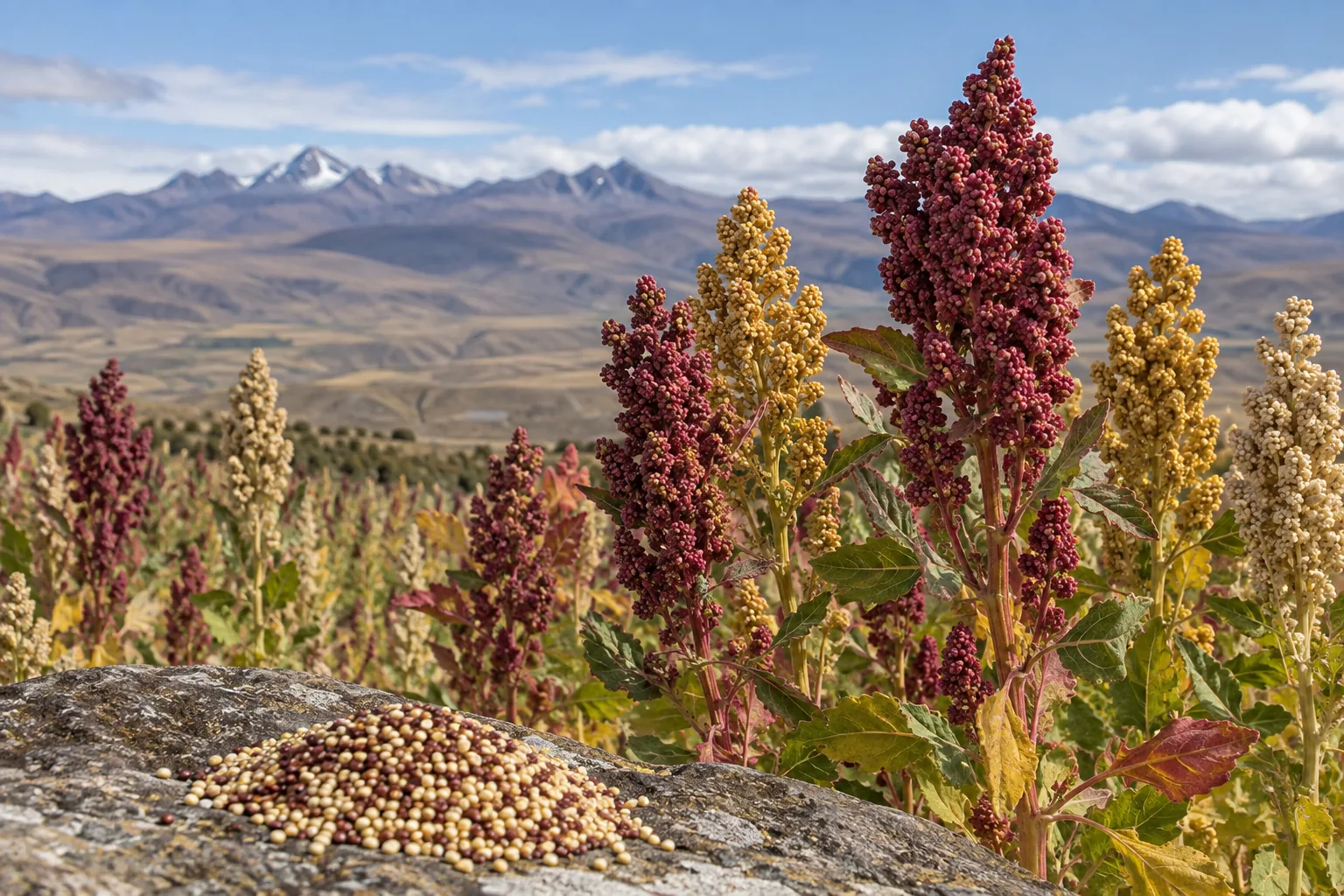
Quinoa is often marketed as a modern “superfood,” but its real story begins with thousands of years of Andean cultivation, seed diversity and food knowledge. It is a pseudocereal: botanically a seed, prepared in many of the same ways as cereal grains.
An Andean food before a global trend
FAO and crop-history research describe quinoa as an ancient Andean crop maintained through generations of regional and Indigenous cultivation. Traditional uses include cooked seed, soups, porridges, toasted preparations, flour and fermented foods.
A seed used like a grain
Quinoa is Chenopodium quinoa, not a grass such as wheat, barley or oats. Calling it a pseudocereal explains why it occupies a grain-like place in meals without erasing its botanical identity.
Rinsing, cooking and product form
Quinoa seed naturally carries bitter surface saponins. Commercial processing and rinsing reduce them; home cooks should follow the package directions. Cooked seed, flakes, flour, puffed snacks and mixed pastas differ in texture, ingredients and nutrition.
Cooked quinoa nutrition
USDA reports 120 calories, 21.3 grams carbohydrate, 4.4 grams protein, 2.8 grams fiber and 1.92 grams fat per 100 grams of cooked quinoa. Dry weights and recipe servings cannot be compared directly with this cooked reference.
What emerging human research can tell us
Systematic reviews of small controlled trials report possible changes in selected weight, glucose or cardiovascular markers. The evidence base remains small and heterogeneous, so quinoa should be presented as a nutritious food—not as a proven treatment for a health condition.