01
Why people use it
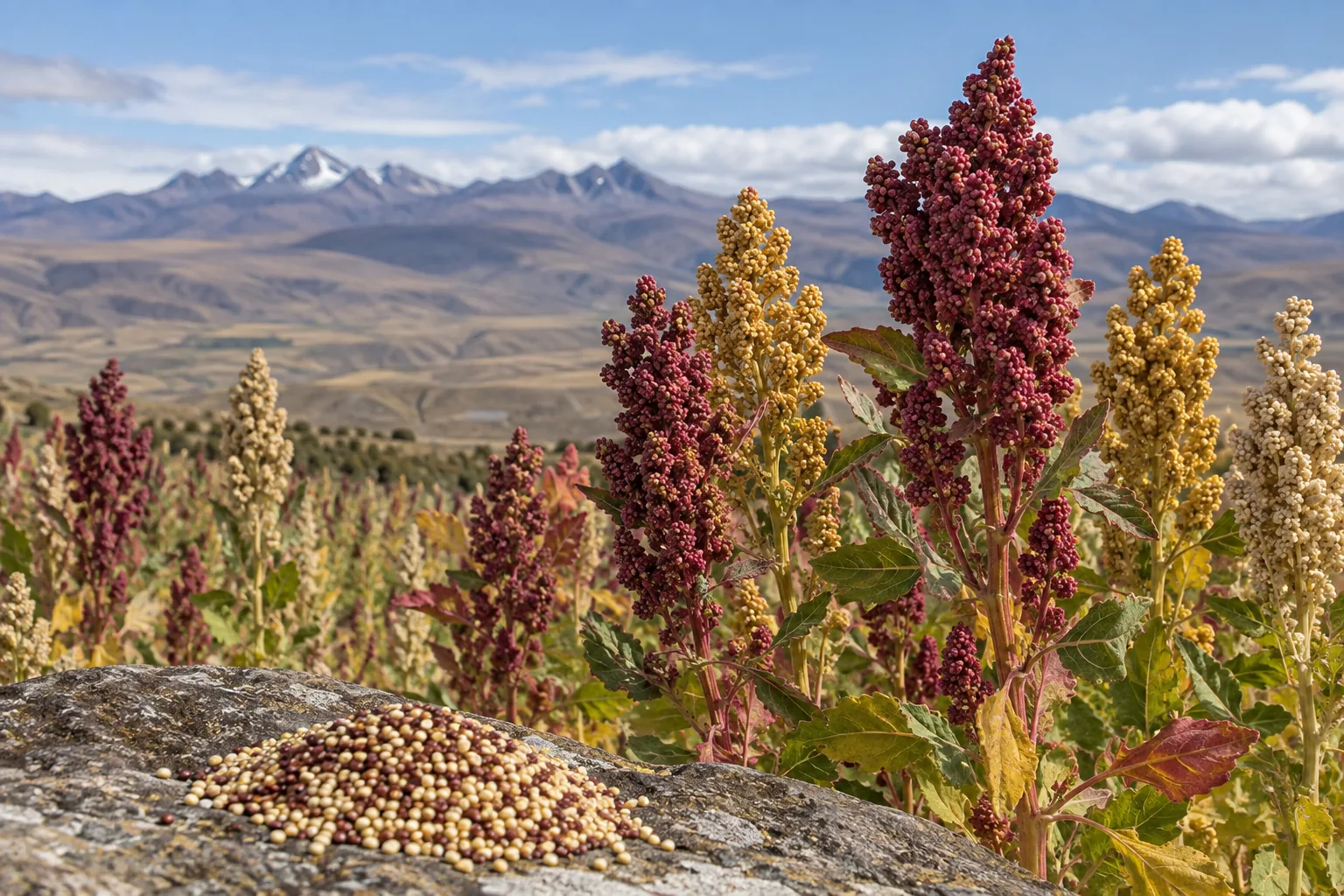
Quinoa is an Andean seed and pseudocereal with deep Indigenous food history, commonly cooked like a grain and available as whole seed, flakes, flour and processed foods.
- ✓Traditional Andean staple food
- ✓Cooked grain-style dishes
- ✓Breakfast porridges and soups
- ✓Flour and baking blends
- ✓Plant-based meal variety
02
What the evidence says
Small controlled trials and meta-analyses have examined quinoa in relation to weight, glucose and cardiovascular risk markers. Participant numbers remain limited, products and diets vary, and the findings do not establish quinoa as a treatment for metabolic or cardiovascular disease.
Hover, focus or tap each label for context.
These labels summarize the available context; they are not a clinical recommendation.03
Common forms
Hover, focus or tap a form to see what it means.
Evidence and nutrition must match the exact quinoa form. Whole cooked seed, flour, flakes, extracted protein and supplement-style products are not interchangeable.
04
Food and nutrition context
USDA FoodData Central lists cooked quinoa as a food providing carbohydrate, protein, fiber, unsaturated fat and minerals. Values vary between cooked and dry weights, colored varieties, recipes and packaged products.
- Carbohydrate
- 21.3 g
- Dietary fiber
- 2.8 g
- Protein
- 4.4 g
- Total fat
- 1.92 g
- Iron
- 1.49 mg
- Magnesium
- 64 mg
USDA values describe 100 g of cooked quinoa. Dry quinoa, recipes and packaged servings have different values.
USDA FoodData Central, FDC 168917 ↗Source checked September 8, 2026. Values are rounded.+
Traditional and practitioner context
Quinoa was domesticated in the Andes and has been cultivated for thousands of years. Aymara, Quechua and other Andean communities have maintained diverse varieties and food practices, including soups, porridges, toasted or milled seed and fermented preparations. Modern reporting should acknowledge that continuing cultural stewardship.
Safety note
Know before you use it
Quinoa is naturally gluten-free, but cross-contact or mixed ingredients can matter for celiac disease. Follow package rinsing and cooking directions, introduce fiber gradually if needed, and use the label for allergen, sodium and serving-specific information.
Read the complete Quinoa guide
A complete guide to quinoa’s Andean food history, pseudocereal identity, cooked nutrition, preparation, gluten-free context and emerging human research.
Open the full guideSources & review
- FoodData Central: Quinoa, cooked (FDC 168917)USDA
- Quinoa: an ancient crop to contribute to world food securityFood and Agriculture Organization of the United Nations
- The Global Expansion of Quinoa: Trends and LimitsFrontiers in Plant Science / PMC
- Quinoa consumption and glucose, body weight and BMI: systematic reviewPubMed
- Quinoa seed and cardiovascular risk factors: systematic reviewPubMed
- Pseudocereals in celiac diseasePubMed