Calming herbs, sleep and stress: what tradition and research each show
Valerian, passionflower, rhodiola, bacopa and tulsi are often sold together as calm-and-focus supplements. Their traditions, evidence and safety profiles are not the same.
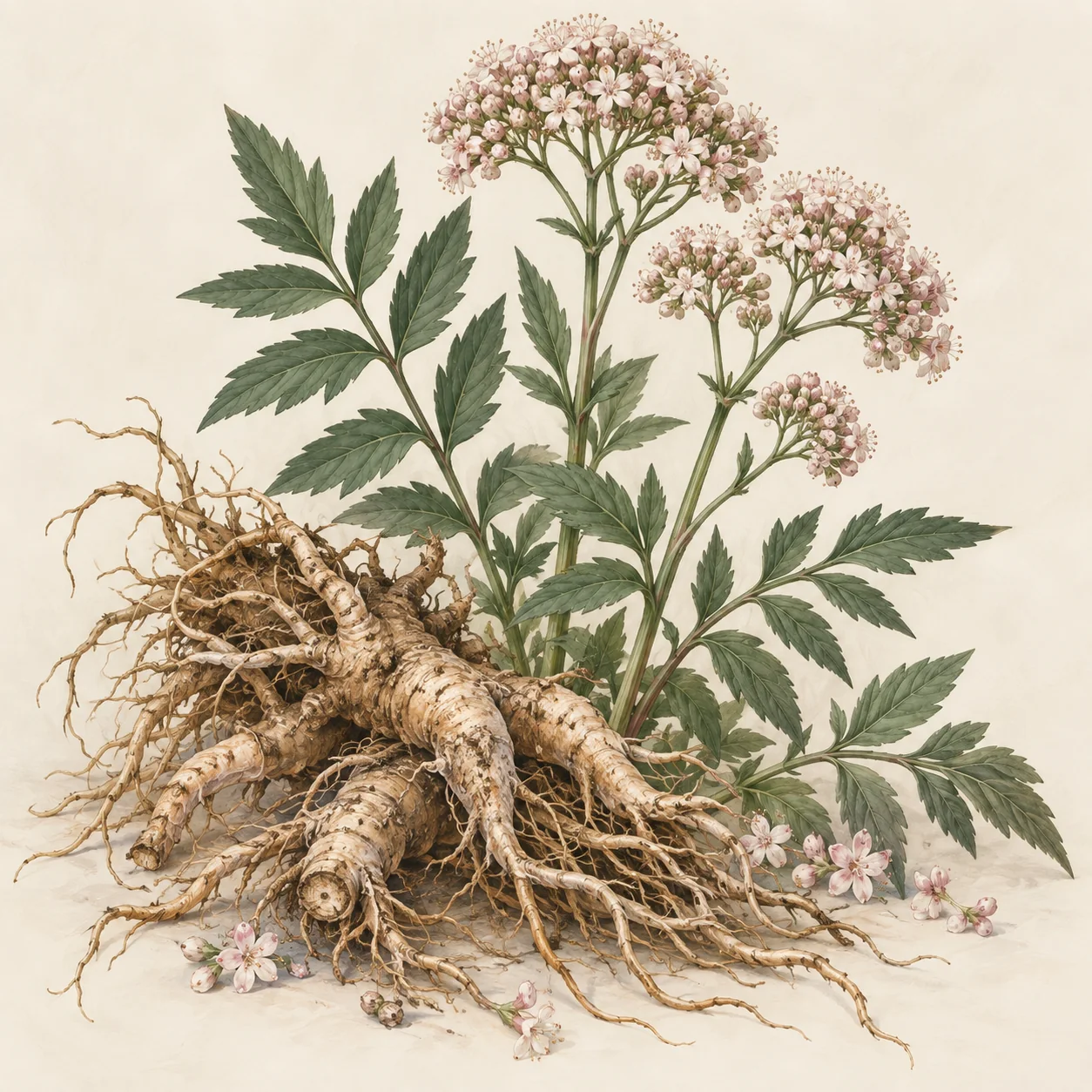
Five plants appear again and again in products marketed for rest, calm and focus: valerian root, passionflower, rhodiola, bacopa and holy basil. Each has a real tradition behind it. Each also has a small, uneven body of human research that applies to particular preparations. This guide sets the two side by side so you can see what is known, what is inherited practice, and where the safety boundaries sit.
Tradition names the plant, the part and the preparation
Valerian and passionflower carry European traditional-use registrations for mild mental stress and sleep, and passionflower also has a documented Native American history in its native Southeast. Rhodiola’s record runs through Soviet pharmacopoeial approval and Swedish herbal products. Bacopa and tulsi belong to Ayurveda, where bacopa is a medhya rasayana for the mind and tulsi is a household, devotional and culinary plant as much as a medicine. Each of those traditions specifies a plant part and a way of preparing it, which is exactly the information a supplement label often omits.
Sedating herbs and activating herbs are not interchangeable
Valerian and passionflower are traditionally evening plants and can cause drowsiness. Rhodiola sits at the other end: insomnia, agitation and irritability are among its reported effects, which is why it is usually taken earlier in the day. Bacopa’s traditional role is memory and a settled mind rather than sleep, and tulsi is taken across the day as tea. A “calm” blend that stacks several of these can pull in different directions, and any drowsiness adds to alcohol, sleep medicines and sedatives.
What the trials show, and for which product
Valerian meta-analyses find a modest subjective improvement in sleep quality but no consistent objective effect, and the American Academy of Sleep Medicine suggests against it for chronic insomnia. Passionflower has a handful of small trials suggesting less anxiety before procedures, but a Cochrane review found too little evidence for anxiety disorders. Rhodiola trials of a specific ethanolic extract are contradictory and at high risk of bias. Bacopa extracts improve some memory-recall and attention-speed measures over twelve weeks in small trials. Tulsi has about two dozen small studies and one well-designed extract trial for stress, but the WHO lists no use supported by clinical data. In every case the finding belongs to the studied extract, dose and duration, not to a tea or a different product.
Safety boundaries that apply across the group
None of the five has adequate human safety data in pregnancy or breastfeeding, and passionflower and tulsi carry specific cautions drawn from animal studies. Valerian has rare liver-injury reports, mostly with multi-ingredient products; bacopa and passionflower are rated unlikely causes by LiverTox, and rhodiola has no LiverTox entry at all. Rhodiola modestly inhibits a drug-metabolizing enzyme in one small human study, tulsi leaves lowered blood glucose in one trial, and bacopa reliably upsets the stomach when taken without food. Stop any of them before surgery unless your team says otherwise.
Sourcing and identity matter as much as dose
Wild rhodiola root harvest destroys the plant, and the whole genus was placed under CITES trade controls in 2022; buy cultivated, traceable root. “Brahmi” can mean bacopa or gotu kola, and DNA testing has found many products that do not match their label. Bacopa grows in wet mud and accumulates arsenic and mercury, so choose suppliers that test for metals. Valerian in North America is a garden escape often confused with red valerian, and passionflower must be Passiflora incarnata rather than passion fruit or an ornamental species.
Sources
- Valerian: Usefulness and Safety (NCCIH)
- Passionflower: Usefulness and Safety (NCCIH)
- Rhodiola: Usefulness and Safety (NCCIH)
- Meta-analysis of randomized controlled trials on cognitive effects of Bacopa monnieri extract (Kongkeaw et al., 2014)
- The Clinical Efficacy and Safety of Tulsi in Humans: A Systematic Review (Jamshidi and Cohen, 2017)
- Clinical Practice Guideline for the Pharmacologic Treatment of Chronic Insomnia in Adults (AASM, 2017)
- CITES CoP19 Proposal 45: Rhodiola spp.