01
Why people use it
Cumin is a warm aromatic culinary spice used across the Middle East, Mediterranean, South Asia, North Africa and Central Asia, with traditional digestive and post-meal contexts.
- ✓Global culinary seasoning
- ✓Traditional post-meal digestive use
- ✓Mild gas and bloating traditions
- ✓Bread, curry, stew and spice-blend preparation
02
What the evidence says
Cumin has substantial culinary and traditional digestive history but limited direct clinical evidence. Findings from multi-herb dyspepsia formulas or concentrated metabolic products cannot be assigned to ordinary cumin seasoning.
Hover, focus or tap each label for context.
These labels summarize the available context; they are not a clinical recommendation.03
Common forms
Hover, focus or tap a form to see what it means.
Food spice, tea, extract and essential oil are different preparations. Cumin and Nigella sativa are different botanical species.
+
Traditional and practitioner context
Cumin is deeply embedded in Middle Eastern, Mediterranean, Southwest Asian, South Asian, North African and Central Asian foodways. Traditional uses often describe warmth, appetite and comfort after meals.
+
Foraging index
High-risk identification family
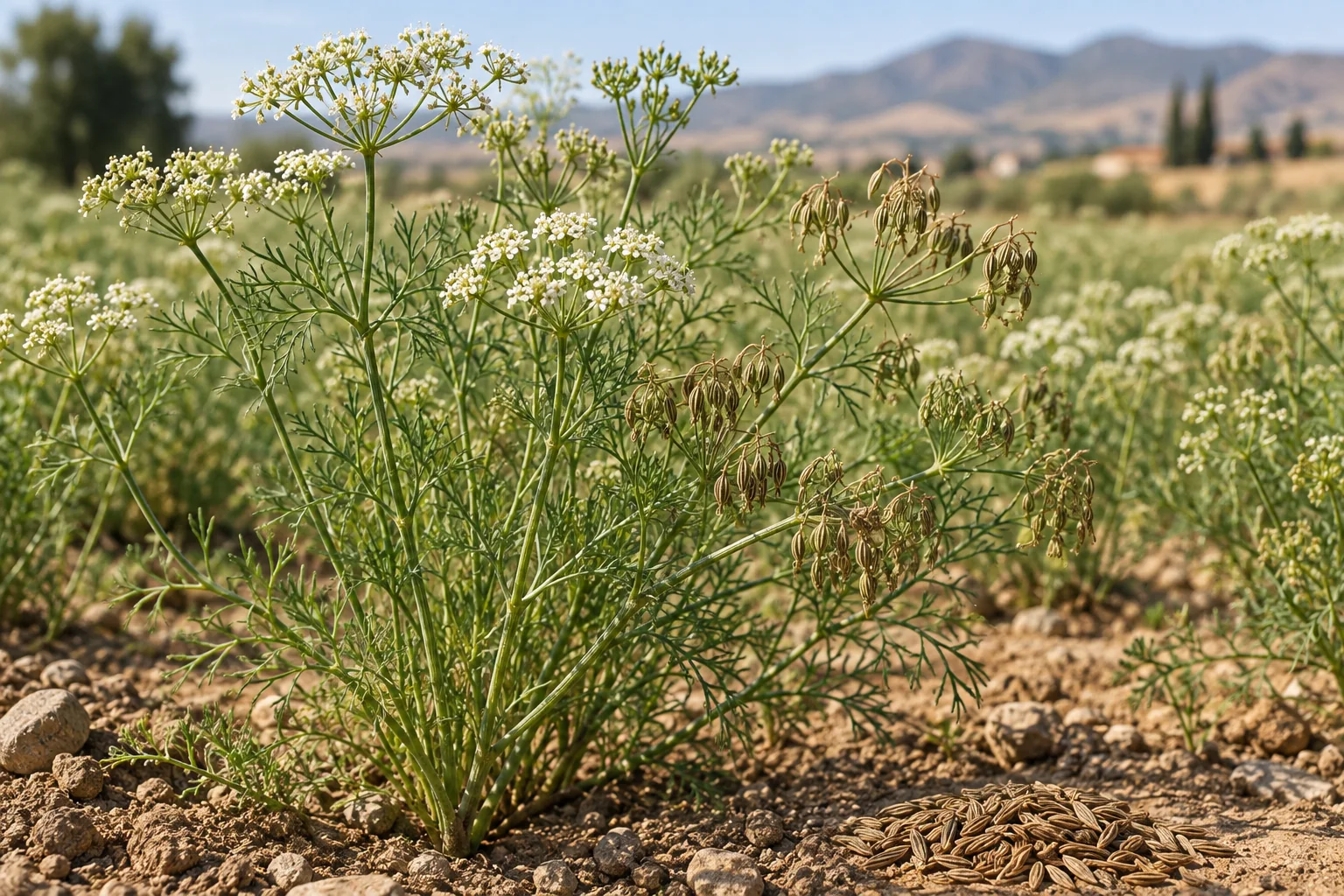
Cumin is a cultivated crop. North American wild collection is not promoted because Apiaceae includes dangerous lookalikes and one-trait identification is unsafe.
Status: cultivation preferred; no wild Apiaceae promotion. Broad occurrence never confirms identity, safe use, legal access or permission to harvest.
Read the responsible foraging guide →Safety note
Know before you use it
Ordinary food use differs from supplements and oil. Concentrated products require caution with diabetes medicines, anticoagulants or antiplatelets, rifampin, surgery and multiple medicines. Do not ingest essential oil. Never forage a wild cumin-like Apiaceae plant using smell, umbels or fruit alone because dangerous relatives exist.
Read the complete Cumin guide
Why preparation and concentration change how clove, black pepper, cumin and other familiar spices should be understood and used.
Open the full guideQuestions about Cumin
Sources & review
- USDA PLANTS profile: Cuminum cyminum (CUCY)USDA Natural Resources Conservation Service