01
Why people use it
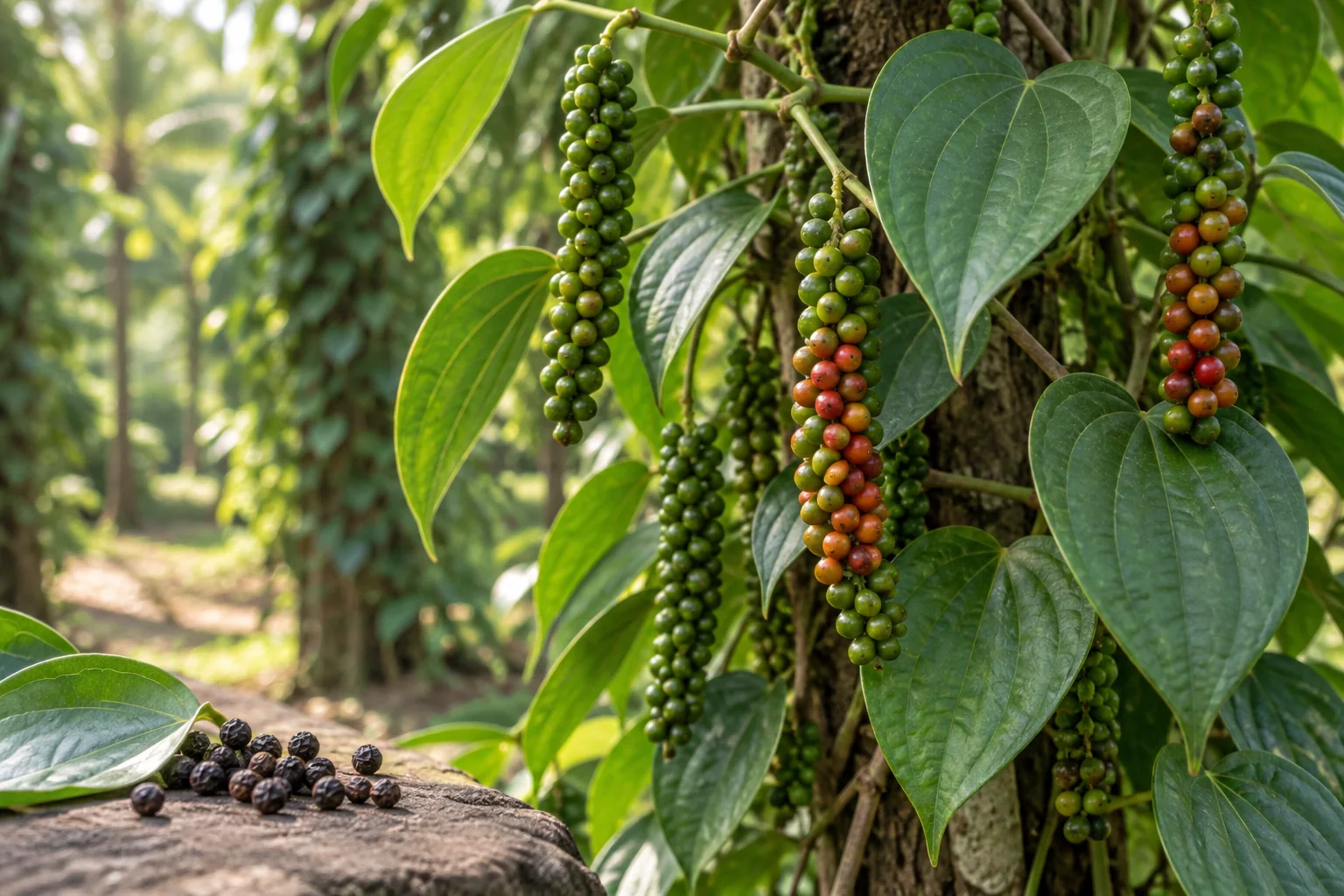
Black pepper is a globally used culinary spice from a tropical vine. Whole seasoning, volatile oil, concentrated extract and isolated piperine have very different exposure and interaction profiles.
- ✓Everyday seasoning across global cuisines
- ✓Traditional aromatic and digestive use
- ✓Food preservation and spice blends
- ✓Studied piperine bioavailability interactions
02
What the evidence says
Traditional culinary and digestive use is extensive. Research on piperine’s effects on absorption and metabolism is more relevant to safety and drug interaction than to broad disease-treatment claims for black pepper.
Hover, focus or tap each label for context.
These labels summarize the available context; they are not a clinical recommendation.03
Common forms
Hover, focus or tap a form to see what it means.
Black, green and white pepper are processing forms of Piper nigrum; extract and isolated piperine are separate concentrated exposures.
+
Traditional and practitioner context
Black pepper is associated historically with India’s Malabar Coast and became one of the world’s most traded spices. Food and traditional digestive contexts span South Asia and cuisines worldwide.
+
Foraging index
Tropical cultivated vine
Piper nigrum is not a North American wild-foraging target. Do not confuse it with chile pepper, pink peppercorn, Sichuan pepper or long pepper.
Status: cultivation or ethical supplier only. Broad occurrence never confirms identity, safe use, legal access or permission to harvest.
Read the responsible foraging guide →Safety note
Know before you use it
Food-level seasoning is distinct from concentrated piperine. Ask a pharmacist before high-dose extract or piperine when using prescription medicines, especially seizure drugs, immunosuppressants, anticoagulants or medicines with narrow dosing margins. Concentrated products may alter absorption or metabolism.
Read the complete Black pepper guide
Why preparation and concentration change how clove, black pepper, cumin and other familiar spices should be understood and used.
Open the full guideQuestions about Black pepper
Sources & review
- USDA PLANTS profile: Piper nigrum (PINI3)USDA Natural Resources Conservation Service