01
Why people use it
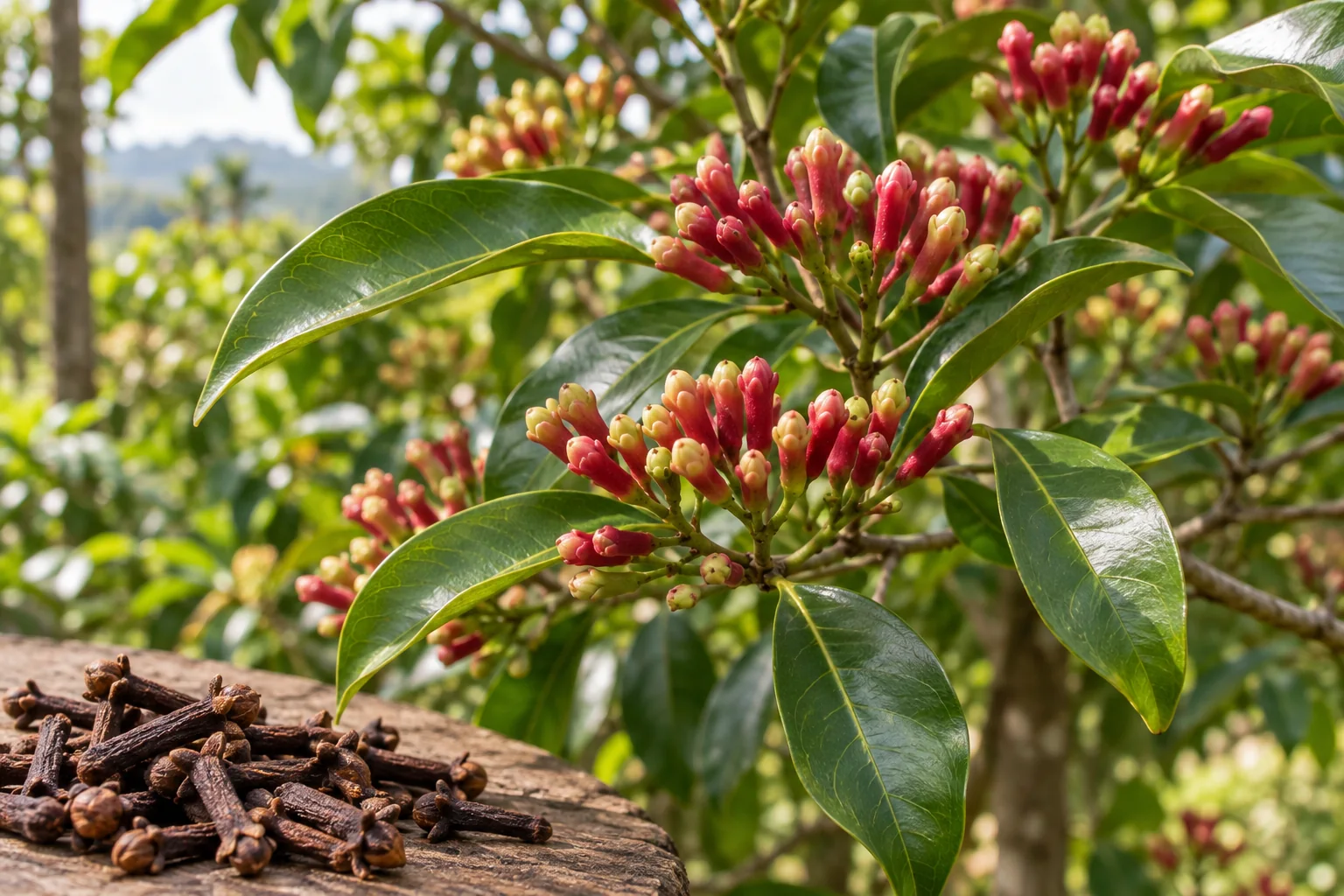
Clove is an intensely aromatic dried flower bud with Indonesian origins and a long global history in food, trade, household practice, oral comfort and traditional herbal preparations.
- ✓Global culinary spice and food preservation
- ✓Traditional temporary dental and oral comfort
- ✓Warming teas and cold-season food traditions
- ✓Breath-freshening and aromatic household use
02
What the evidence says
Traditional oral-comfort use is preparation-specific. Limited regulatory traditional-use context supports clove oil only as a temporary local measure for toothache and minor mouth or throat inflammation; it does not establish broad infection, parasite or disease treatment.
Hover, focus or tap each label for context.
These labels summarize the available context; they are not a clinical recommendation.03
Common forms
Hover, focus or tap a form to see what it means.
Whole bud, ground spice, dental formulation, extract and essential oil are not interchangeable.
+
Traditional and practitioner context
Clove originated in the Maluku Islands and became important in Indonesian, South and Southeast Asian, East African, Middle Eastern and European food and trade. Documented traditional contexts include warming foods, breath freshness, digestive preparations, aromatic household use and temporary oral comfort.
+
Foraging index
Tropical cultivated spice
Clove is a tropical cultivated tree and is not a North American wild-foraging target. Use verified culinary material and keep bud, leaf oil and essential-oil products distinct.
Status: cultivation or ethical supplier only. Broad occurrence never confirms identity, safe use, legal access or permission to harvest.
Read the responsible foraging guide →Safety note
Know before you use it
Do not ingest clove essential oil. Large eugenol exposures can cause seizures and severe liver or kidney injury, with children particularly vulnerable. Never apply undiluted oil to gums, skin or wounds. Review concentrated use with liver disease, bleeding risk, anticoagulant or antiplatelet medicines, surgery, pregnancy or breastfeeding. Fever, facial swelling, drainage, trauma, worsening pain or trouble swallowing or breathing requires prompt dental or medical care.
Read the complete Clove guide
Why preparation and concentration change how clove, black pepper, cumin and other familiar spices should be understood and used.
Open the full guideQuestions about Clove
Sources & review
- USDA PLANTS profile: Syzygium aromaticum (SYAR2)USDA Natural Resources Conservation Service